Mark Zuckerberg Outlines Vision For Personal Superintelligence
Meta CEO argues for AI power to be spread to individuals, not concentrated in few hands.
'%3E%3Crect%20width%3D'96'%20height%3D'96'%20fill%3D'%23B3261E'%2F%3E%3Ccircle%20cx%3D'30'%20cy%3D'24'%20r%3D'44'%20fill%3D'%23fff'%20opacity%3D'.12'%2F%3E%3Ccircle%20cx%3D'60'%20cy%3D'74'%20r%3D'40'%20fill%3D'%23000'%20opacity%3D'.10'%2F%3E%3C%2Fg%3E%3Cg%20fill%3D'%23fff'%3E%3Crect%20x%3D'29'%20y%3D'49'%20width%3D'8'%20height%3D'19'%20rx%3D'1'%2F%3E%3Crect%20x%3D'39'%20y%3D'40'%20width%3D'9'%20height%3D'28'%20rx%3D'1'%2F%3E%3Crect%20x%3D'50'%20y%3D'45'%20width%3D'8'%20height%3D'23'%20rx%3D'1'%2F%3E%3Crect%20x%3D'60'%20y%3D'53'%20width%3D'7'%20height%3D'15'%20rx%3D'1'%2F%3E%3Crect%20x%3D'41'%20y%3D'34'%20width%3D'5'%20height%3D'6'%2F%3E%3C%2Fg%3E%3C%2Fsvg%3E)
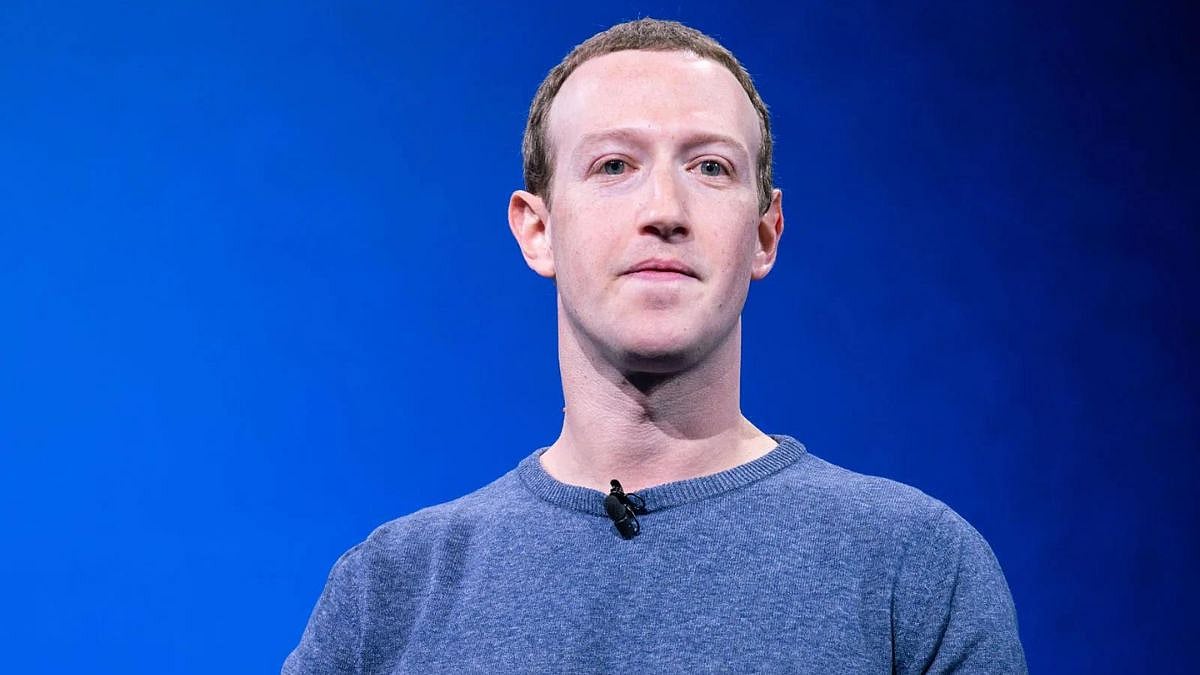
Mark Zuckerberg, CEO of Meta, has published an essay titled 'The Future is for Everyone', in which he argues that the power of artificial intelligence (AI) must be spread to individuals rather than concentrated among a handful of labs, companies, or governments.
In the essay, Zuckerberg uses a courtroom analogy to make his case, stating that if only one person had a superintelligent lawyer, they would have an unfair advantage in court. However, if everyone had access to such a lawyer, justice would be carried out more fairly and efficiently.
Zuckerberg extends this analogy to cybersecurity and business, arguing that if only one person or company had a superintelligent tool, they could dominate everyone else unfairly. He believes that universal access to AI would level the playing field and prevent any single entity from having too much power.
The Meta CEO is critical of AI labs that warn of existential risk while pursuing paths that concentrate control. He argues that trusting an 'absolute power' to behave benevolently has rarely produced safe outcomes historically.
Instead, Zuckerberg proposes a vision for 'personal superintelligence', in which every person has an AI agent that understands their goals and works on their behalf. These agents would be accessible through devices such as smart glasses and would carry strong privacy protections, similar to the end-to-end encryption used in WhatsApp.
Zuckerberg also points to tools for creation, education, and scientific discovery, citing his own daughter's use of AI to code and produce videos. He also mentions Meta's Biohub, which has released open-source biological models to aid drug discovery.
On employment, Zuckerberg pushes back against fears of mass job displacement, arguing that individual capability could grow as fast as automation if AI is distributed broadly. He cites Meta's data center project in Louisiana, where local teachers received a $50,000 bonus from increased tax revenue, as a model for the 'community compact' approach he wants to replicate elsewhere.
Finally, Zuckerberg proposes that frontier AI labs share intermediate training checkpoints with the government, so officials can harden critical infrastructure without delaying public access to new models. He argues that restricting AI capabilities to prevent misuse in cybersecurity and bioweapons risk is not the solution, but rather, a more collaborative approach is needed.
The essay outlines Meta's philosophy for the future of AI and its potential impact on society. As AI continues to advance, it is likely that the debate over its concentration of power will only continue to grow.
In the end, Zuckerberg's vision for personal superintelligence is one that prioritizes individual access to AI and promotes a more collaborative approach to its development. Whether this vision becomes a reality remains to be seen, but it is clear that the future of AI will have a significant impact on society and the world at large.
Frequently asked questions
What is Mark Zuckerberg's vision for the future of AI?
Mark Zuckerberg's vision is for 'personal superintelligence', in which every person has an AI agent that understands their goals and works on their behalf.
Why does Zuckerberg argue against concentrating AI power in a few hands?
Zuckerberg argues that concentrating AI power in a few hands would give them an unfair advantage and potentially lead to misuse, whereas universal access would level the playing field and promote fairness.