Dubai Housing Market Sees 16% Sales Drop
Dubai's residential property sales fell 16% in early 2026, with prices dipping 7%.
'%3E%3Crect%20width%3D'96'%20height%3D'96'%20fill%3D'%23B3261E'%2F%3E%3Ccircle%20cx%3D'30'%20cy%3D'24'%20r%3D'44'%20fill%3D'%23fff'%20opacity%3D'.12'%2F%3E%3Ccircle%20cx%3D'60'%20cy%3D'74'%20r%3D'40'%20fill%3D'%23000'%20opacity%3D'.10'%2F%3E%3C%2Fg%3E%3Cg%20fill%3D'%23fff'%3E%3Crect%20x%3D'29'%20y%3D'49'%20width%3D'8'%20height%3D'19'%20rx%3D'1'%2F%3E%3Crect%20x%3D'39'%20y%3D'40'%20width%3D'9'%20height%3D'28'%20rx%3D'1'%2F%3E%3Crect%20x%3D'50'%20y%3D'45'%20width%3D'8'%20height%3D'23'%20rx%3D'1'%2F%3E%3Crect%20x%3D'60'%20y%3D'53'%20width%3D'7'%20height%3D'15'%20rx%3D'1'%2F%3E%3Crect%20x%3D'41'%20y%3D'34'%20width%3D'5'%20height%3D'6'%2F%3E%3C%2Fg%3E%3C%2Fsvg%3E)
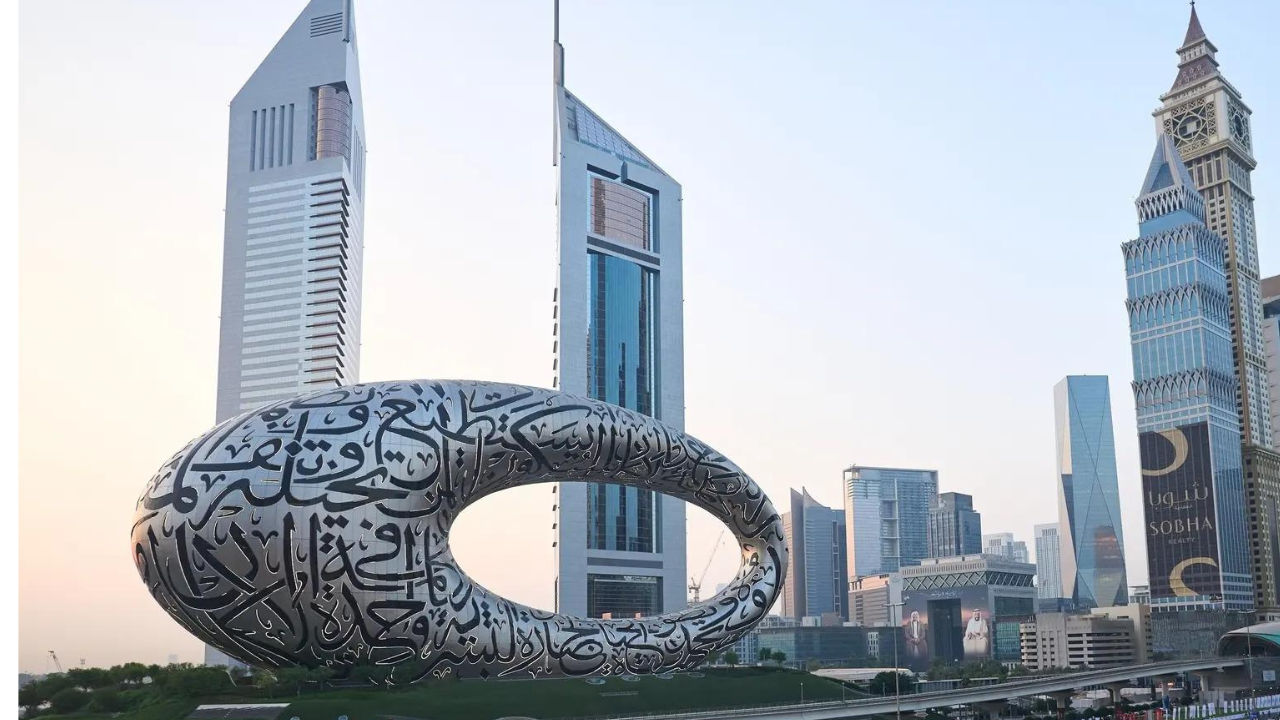
A significant slowdown has been observed in Dubai's residential property market, with sales decreasing by 16% in the early part of 2026. This decline is largely attributed to the regional geopolitical tensions that have impacted buyer sentiment and demand.
Despite the current slowdown, it is worth noting that sales remain 15% higher than they were in the first half of 2024. This suggests that while the market may be experiencing a downturn, it is still performing better than it was a couple of years ago.
In terms of prices, there was a slight decline observed between February and April 2026. However, it is important to consider the context of the previous year, which was a record year for Dubai's property market. The market had experienced significant growth and activity in 2025, which may have contributed to the current slowdown.
The geopolitical tensions in the region are a major factor in the slowdown of the Dubai property market. As tensions rise, buyer sentiment and demand tend to decrease, leading to a decline in sales and prices. This is a common phenomenon in markets that are heavily influenced by regional and global events.
Dubai's property market has historically been sensitive to regional geopolitical developments. The market has experienced fluctuations in the past, often in response to changes in the regional political landscape. As such, the current slowdown is not entirely unexpected, and it will be important to monitor the market's response to ongoing geopolitical developments.
The slowdown in Dubai's property market may have implications for investors and buyers who are considering purchasing property in the region. While the market may be experiencing a downturn, it is still possible to find opportunities for investment and growth. However, it will be important for buyers to carefully consider the current market conditions and to approach any investment decisions with caution.
In the broader context, the slowdown in Dubai's property market reflects the complex and interconnected nature of global real estate markets. As regional and global events continue to evolve, it will be important to monitor the impact on property markets around the world.
The significance of the slowdown in Dubai's property market extends beyond the regional context, as it may have implications for global property markets and investor sentiment. As such, it will be important to continue monitoring the market's developments and to consider the potential implications for investors and buyers.
In conclusion, the slowdown in Dubai's residential property market is a significant development that reflects the complex interplay of regional geopolitical tensions and market dynamics. While the market may be experiencing a downturn, it is still possible to find opportunities for investment and growth, and it will be important to continue monitoring the market's response to ongoing developments.