Men Harassing Girls Thrashed, Face Blackened in Nainital
Two men accused of harassing girls in Nainital publicly punished by villagers, handed over to police.
'%3E%3Crect%20width%3D'96'%20height%3D'96'%20fill%3D'%23B3261E'%2F%3E%3Ccircle%20cx%3D'30'%20cy%3D'24'%20r%3D'44'%20fill%3D'%23fff'%20opacity%3D'.12'%2F%3E%3Ccircle%20cx%3D'60'%20cy%3D'74'%20r%3D'40'%20fill%3D'%23000'%20opacity%3D'.10'%2F%3E%3C%2Fg%3E%3Cg%20fill%3D'%23fff'%3E%3Crect%20x%3D'29'%20y%3D'49'%20width%3D'8'%20height%3D'19'%20rx%3D'1'%2F%3E%3Crect%20x%3D'39'%20y%3D'40'%20width%3D'9'%20height%3D'28'%20rx%3D'1'%2F%3E%3Crect%20x%3D'50'%20y%3D'45'%20width%3D'8'%20height%3D'23'%20rx%3D'1'%2F%3E%3Crect%20x%3D'60'%20y%3D'53'%20width%3D'7'%20height%3D'15'%20rx%3D'1'%2F%3E%3Crect%20x%3D'41'%20y%3D'34'%20width%3D'5'%20height%3D'6'%2F%3E%3C%2Fg%3E%3C%2Fsvg%3E)
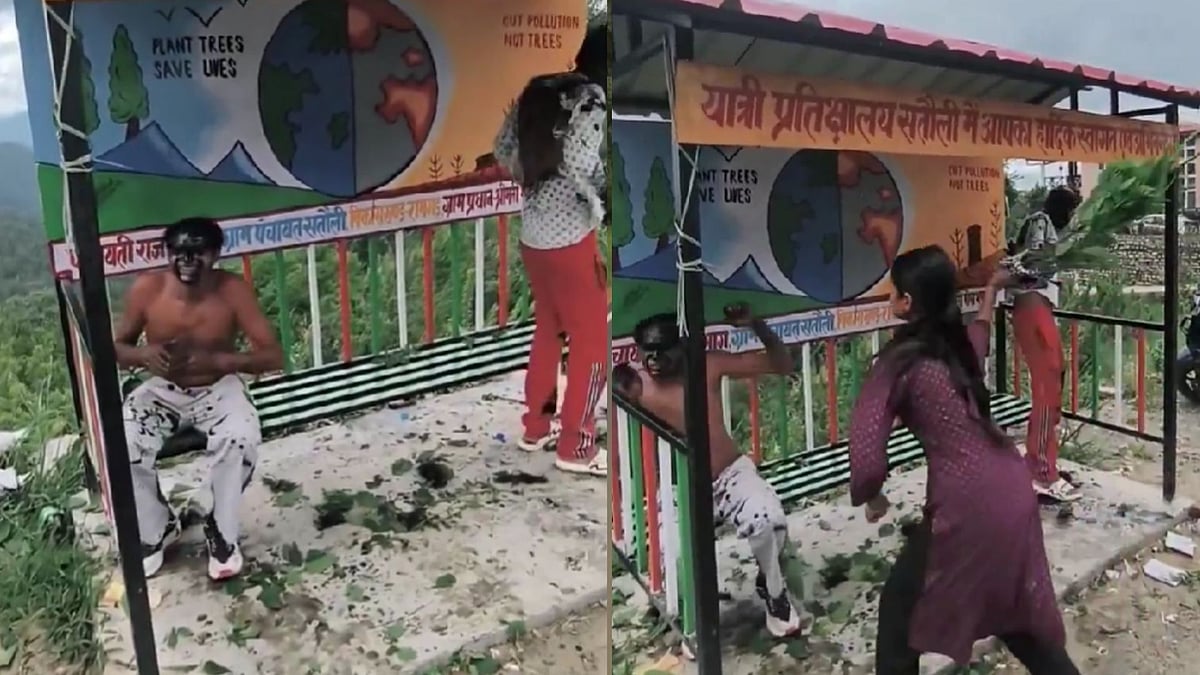
A dramatic incident of public punishment has come to light in Uttarakhand's Nainital district, where two men accused of harassing local girls were thrashed and had their faces blackened by villagers before being handed over to the police.
The incident took place in Satoli village, located in the Mukteshwar region, where the two men, residents of Moradabad in Uttar Pradesh, allegedly made inappropriate remarks at local girls while passing through the village in a vehicle.
The villagers and the women involved intercepted the duo, leading to a public confrontation. The accused were hit with slippers, and their faces were blackened with a dark substance. They were also rubbed with 'Bicchu Booti' or stinging nettle, a wild plant known for causing an intense burning, itching, and stinging sensation when it comes into contact with the skin.
The plant, which grows naturally in the Himalayan region, has long been known for both its medicinal uses and its painful sting. The use of 'Bicchu Booti' as a form of punishment is not uncommon in the region, where it is believed to have a deterrent effect on those who engage in inappropriate behavior.
After the public punishment, the accused were handed over to the local police, who are expected to take further legal action in the matter. The incident has triggered widespread discussion online, with users expressing sharply divided opinions on the use of public punishment as a means of dealing with alleged harassment.
Many people applauded the women and villagers for standing up against alleged harassment and teaching the accused a lesson. Others, however, expressed concerns about the use of public punishment, citing the need for a more formal and legal approach to dealing with such incidents.
The incident highlights the ongoing issue of harassment and the need for effective measures to prevent and address such incidents. While some may view public punishment as a means of achieving immediate justice, others may see it as a form of vigilantism that can have unintended consequences.
In any case, the incident in Nainital serves as a reminder of the importance of addressing harassment and ensuring that those who engage in such behavior are held accountable. The use of 'Bicchu Booti' as a form of punishment may be seen as a unique aspect of this incident, but it also underscores the need for a more nuanced and multifaceted approach to dealing with harassment and related issues.
The incident has sparked a wider conversation about the role of community in addressing harassment and the need for a more collaborative approach to preventing and addressing such incidents. As the incident continues to generate discussion and debate, it remains to be seen how the authorities will respond to the incident and what measures will be taken to prevent similar incidents in the future.
In conclusion, the incident in Nainital highlights the complexities and challenges of addressing harassment and the need for a more comprehensive and nuanced approach to dealing with such incidents. While public punishment may be seen as a means of achieving immediate justice, it is essential to ensure that such incidents are addressed through a formal and legal framework that prioritizes the safety and well-being of all individuals involved.
Frequently asked questions
What happened to the men accused of harassing girls in Nainital?
The men were publicly punished by villagers, who blackened their faces, hit them with slippers, and rubbed them with stinging nettle before handing them over to the police.
What is 'Bicchu Booti' and why was it used as a form of punishment?
'Bicchu Booti' or stinging nettle is a wild plant known for causing an intense burning, itching, and stinging sensation when it comes into contact with the skin. It was used as a form of punishment in the incident in Nainital, reportedly as a deterrent against inappropriate behavior.