Supreme Court Bars Unqualified Teachers
SC orders schools, colleges to hire qualified teachers. No unqualified appointments allowed.
'%3E%3Crect%20width%3D'96'%20height%3D'96'%20fill%3D'%23B3261E'%2F%3E%3Ccircle%20cx%3D'30'%20cy%3D'24'%20r%3D'44'%20fill%3D'%23fff'%20opacity%3D'.12'%2F%3E%3Ccircle%20cx%3D'60'%20cy%3D'74'%20r%3D'40'%20fill%3D'%23000'%20opacity%3D'.10'%2F%3E%3C%2Fg%3E%3Cg%20fill%3D'%23fff'%3E%3Crect%20x%3D'29'%20y%3D'49'%20width%3D'8'%20height%3D'19'%20rx%3D'1'%2F%3E%3Crect%20x%3D'39'%20y%3D'40'%20width%3D'9'%20height%3D'28'%20rx%3D'1'%2F%3E%3Crect%20x%3D'50'%20y%3D'45'%20width%3D'8'%20height%3D'23'%20rx%3D'1'%2F%3E%3Crect%20x%3D'60'%20y%3D'53'%20width%3D'7'%20height%3D'15'%20rx%3D'1'%2F%3E%3Crect%20x%3D'41'%20y%3D'34'%20width%3D'5'%20height%3D'6'%2F%3E%3C%2Fg%3E%3C%2Fsvg%3E)
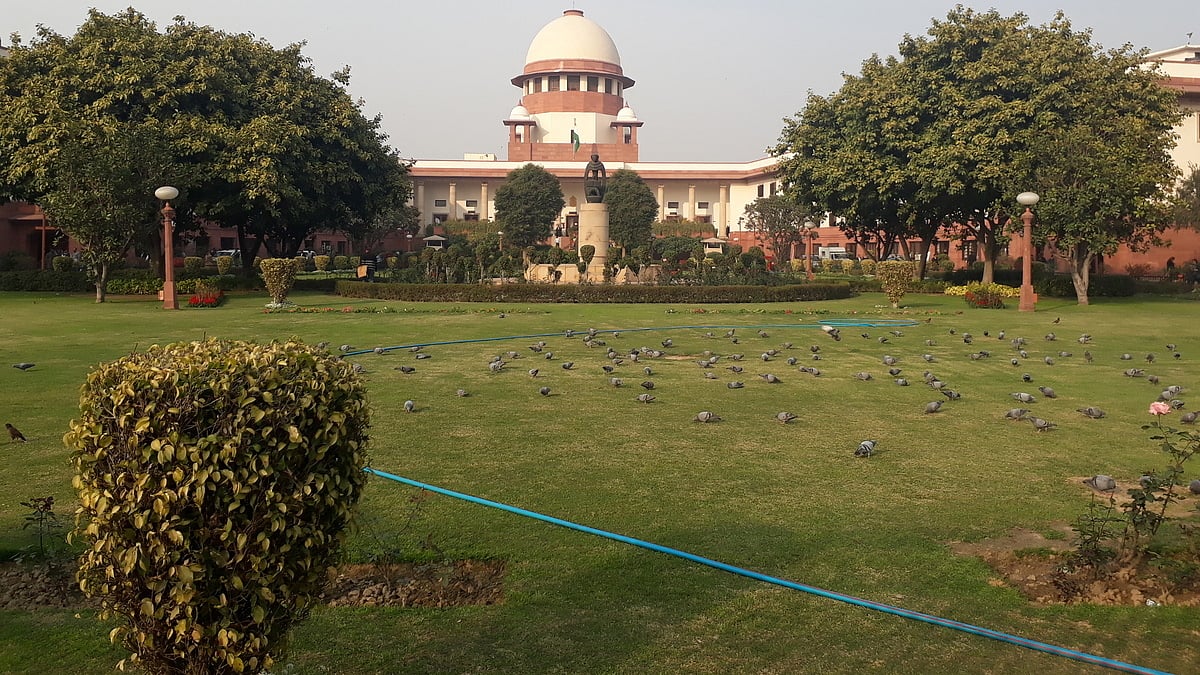
The Supreme Court has issued an interim order that prohibits the appointment or continuation of unqualified teachers in schools and colleges. This order was passed by a bench comprising Chief Justice of India Surya Kant, Justice Joymalya Bagchi, and Justice V. Mohana while hearing a Public Interest Litigation (PIL) that challenges statutory schemes related to the provincialisation of teachers and employees of educational institutions.
The court has directed that teachers should not be appointed or continued in service in schools or colleges without possessing the requisite qualifications prescribed under the applicable laws, including the Right to Education (RTE) Act, National Council for Teacher Education (NCTE) Act, and University Grants Commission (UGC) Act.
The PIL in question challenges the constitutional validity of statutory schemes that allow teachers and other employees of educational institutions to enter substantive Government service without undergoing a fair, transparent, and competitive recruitment process. The petition raises concerns over the manner in which such employees are brought into Government service and whether the statutory schemes are consistent with constitutional requirements governing public employment.
The Supreme Court has issued notice in the matter, with the interim direction on teacher qualifications continuing as the case is considered further. This means that schools and colleges will have to ensure that they hire teachers who possess the prescribed qualifications under the relevant statutory framework.
The RTE Act, NCTE Act, and UGC Act prescribe specific qualifications for teachers in schools and higher education institutions. The RTE Act, for example, requires teachers to have a Bachelor's degree and a diploma in elementary education. The NCTE Act regulates teacher education and prescribes qualifications for teachers in schools. The UGC Act, on the other hand, regulates higher education and prescribes qualifications for teachers in colleges and universities.
The Supreme Court's order is a significant step towards ensuring that teachers in schools and colleges possess the requisite qualifications. This is expected to improve the quality of education in the country and ensure that students receive education from qualified teachers.
The order will have a significant impact on the education sector, particularly on schools and colleges that have appointed unqualified teachers. These institutions will have to take steps to ensure that their teachers possess the prescribed qualifications, which may involve providing training or terminating the services of unqualified teachers.
In conclusion, the Supreme Court's order is a welcome step towards improving the quality of education in the country. It is expected to have a positive impact on the education sector and ensure that students receive education from qualified teachers.
The Supreme Court's decision is also significant because it highlights the importance of qualifications for teachers. The court's order makes it clear that qualifications are essential for teachers and that unqualified teachers should not be appointed or continued in service.
The case is still pending in the Supreme Court, and the final decision is yet to be made. However, the interim order has sent a clear message to schools and colleges that they must hire qualified teachers. This is a significant step towards improving the quality of education in the country and ensuring that students receive education from qualified teachers.
The Supreme Court's order is also expected to have a positive impact on the teacher education sector. The order may lead to an increase in demand for teacher education programs, which will help to improve the quality of teachers in the country.
Overall, the Supreme Court's order is a significant step towards improving the quality of education in the country. It is expected to have a positive impact on the education sector and ensure that students receive education from qualified teachers.
Frequently asked questions
What is the Supreme Court's order on teacher qualifications?
The Supreme Court has ordered that teachers should not be appointed or continued in service in schools or colleges without possessing the requisite qualifications prescribed under the applicable laws, including the Right to Education (RTE) Act, National Council for Teacher Education (NCTE) Act, and University Grants Commission (UGC) Act.
Why did the Supreme Court pass this order?
The Supreme Court passed this order while hearing a Public Interest Litigation (PIL) that challenges statutory schemes related to the provincialisation of teachers and employees of educational institutions.