China Urges Global AI Governance Framework
China calls for international cooperation on AI development, citing risks to humanity.
'%3E%3Crect%20width%3D'96'%20height%3D'96'%20fill%3D'%234A235A'%2F%3E%3Ccircle%20cx%3D'30'%20cy%3D'24'%20r%3D'44'%20fill%3D'%23fff'%20opacity%3D'.12'%2F%3E%3Ccircle%20cx%3D'60'%20cy%3D'74'%20r%3D'40'%20fill%3D'%23000'%20opacity%3D'.10'%2F%3E%3C%2Fg%3E%3Cg%20fill%3D'none'%20stroke%3D'%23fff'%20stroke-width%3D'3'%3E%3Ccircle%20cx%3D'48'%20cy%3D'48'%20r%3D'16'%2F%3E%3Cellipse%20cx%3D'48'%20cy%3D'48'%20rx%3D'6.5'%20ry%3D'16'%2F%3E%3Cline%20x1%3D'32'%20y1%3D'42'%20x2%3D'64'%20y2%3D'42'%2F%3E%3Cline%20x1%3D'32'%20y1%3D'54'%20x2%3D'64'%20y2%3D'54'%2F%3E%3C%2Fg%3E%3C%2Fsvg%3E)
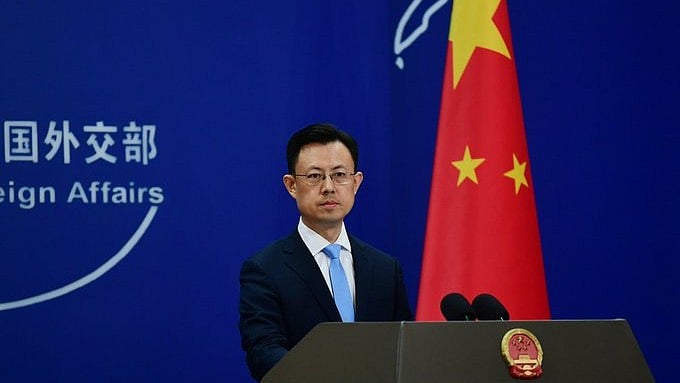
China has called for a global governance framework for artificial intelligence, citing the need for international cooperation to prevent the technology from posing risks to humanity.
The call was made by Foreign Ministry spokesperson Guo Jiakun, who emphasized the importance of developing AI for the benefit of all people.
Guo's comments came in response to concerns raised by AI experts in the US, who have warned that the rapid development of AI could pose unprecedented risks to humanity.
Some researchers have warned that advanced AI systems could potentially kill humanity by the end of the decade, with one scientist estimating a greater than 10 per cent chance of this occurring.
China has proposed that the United Nations play a key role in global AI governance, and has expressed its willingness to work with other countries to develop a framework for the technology.
The country's call for international cooperation on AI development reflects a growing recognition of the need for regulation and governance in the field.
As AI continues to develop at a rapid pace, there is a growing concern that it could pose significant risks to humanity if left unchecked.
China's proposal for a global governance framework is seen as a step towards addressing these concerns and ensuring that AI is developed in a way that benefits all people.
The development of AI has been rapid in recent years, with significant advances in areas such as machine learning and natural language processing.
However, this rapid development has also raised concerns about the potential risks of the technology, including the possibility of job displacement and the potential for AI systems to be used for malicious purposes.
In response to these concerns, there is a growing recognition of the need for regulation and governance in the field of AI.
This includes the development of frameworks for the development and deployment of AI systems, as well as the establishment of standards for the testing and validation of AI.
China's call for a global governance framework for AI reflects this growing recognition of the need for regulation and governance in the field.
The country's proposal is seen as a step towards addressing the concerns surrounding AI and ensuring that the technology is developed in a way that benefits all people.
In the long term, the development of a global governance framework for AI could have significant implications for the future of the technology.
It could help to ensure that AI is developed in a way that is safe, transparent, and accountable, and that it is used for the benefit of all people.
This could involve the establishment of international standards for the development and deployment of AI systems, as well as the development of frameworks for the testing and validation of AI.
It could also involve the establishment of mechanisms for monitoring and regulating the development of AI, in order to prevent the technology from posing risks to humanity.
Overall, China's call for a global governance framework for AI reflects a growing recognition of the need for regulation and governance in the field, and is seen as a step towards addressing the concerns surrounding the technology.
The development of such a framework could have significant implications for the future of AI, and could help to ensure that the technology is developed in a way that benefits all people.
Frequently asked questions
What is China's proposal for AI governance?
China has proposed that the United Nations play a key role in global AI governance, and has expressed its willingness to work with other countries to develop a framework for the technology.
What are the potential risks of AI?
The potential risks of AI include job displacement, the possibility of AI systems being used for malicious purposes, and the possibility of advanced AI systems posing a threat to humanity.