Uttarakhand HC Criticizes Police Over Activist Detention
Court questions police authority, directs officer to respond. Activist detained on way to protest.
'%3E%3Crect%20width%3D'96'%20height%3D'96'%20fill%3D'%231A5276'%2F%3E%3Ccircle%20cx%3D'30'%20cy%3D'24'%20r%3D'44'%20fill%3D'%23fff'%20opacity%3D'.12'%2F%3E%3Ccircle%20cx%3D'60'%20cy%3D'74'%20r%3D'40'%20fill%3D'%23000'%20opacity%3D'.10'%2F%3E%3C%2Fg%3E%3Cg%20fill%3D'%23fff'%3E%3Cpath%20d%3D'M31%2041%20L48%2031%20L65%2041%20Z'%2F%3E%3Crect%20x%3D'33'%20y%3D'43'%20width%3D'4'%20height%3D'17'%2F%3E%3Crect%20x%3D'41'%20y%3D'43'%20width%3D'4'%20height%3D'17'%2F%3E%3Crect%20x%3D'51'%20y%3D'43'%20width%3D'4'%20height%3D'17'%2F%3E%3Crect%20x%3D'59'%20y%3D'43'%20width%3D'4'%20height%3D'17'%2F%3E%3Crect%20x%3D'30'%20y%3D'62'%20width%3D'36'%20height%3D'4'%20rx%3D'1'%2F%3E%3C%2Fg%3E%3C%2Fsvg%3E)
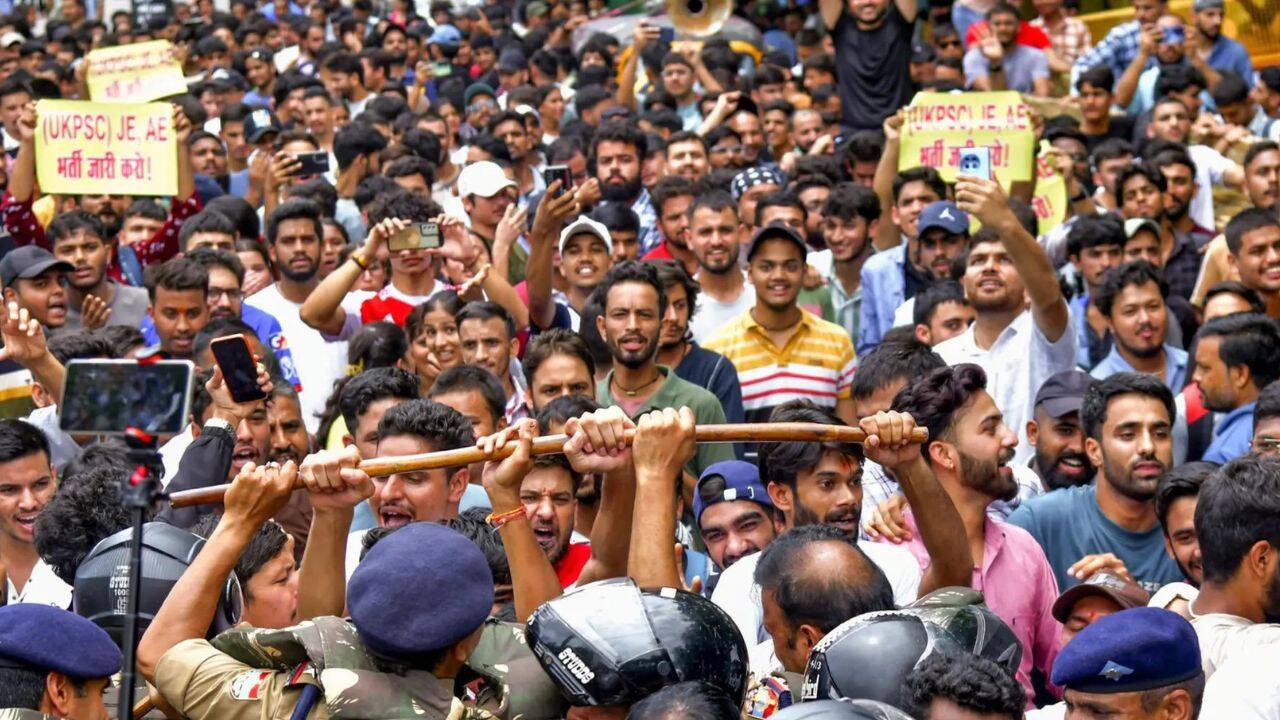
The Uttarakhand High Court has strongly criticized the police for detaining activist Prabhat Dhyani, who was on his way to a protest. The court questioned the police's authority to stop citizens from exercising their constitutional rights, specifically the right to protest.
The court's criticism came in the form of a strong statement, where it asked the authorities if their role was to protect the government's image or to uphold the people's rights. This statement highlights the court's concern over the police's actions and their potential impact on citizens' fundamental rights.
The court has directed the involved officer to be made a party to the case, which means the officer will have to respond to the allegations and provide an explanation for the detention. Additionally, notices have been issued to senior police officials, requiring them to respond to the court's queries.
The detention of Prabhat Dhyani has sparked concerns over the police's attitude towards citizens who exercise their right to protest. The court's intervention in this matter is seen as a significant step towards upholding the constitutional rights of citizens.
The Uttarakhand High Court's decision is also being viewed as a reminder to the police that their role is to protect and serve the people, not just the government. The court's criticism of the police's actions is a clear indication that the judiciary will not tolerate any attempts to suppress citizens' rights.
In recent times, there have been several instances where the police have been accused of suppressing protests and detaining activists. The Uttarakhand High Court's decision in this case is likely to have implications for such cases in the future.
The court's direction to the involved officer and senior police officials to respond to the allegations is a significant step towards ensuring that the police are held accountable for their actions. The outcome of this case will be closely watched, as it has the potential to set a precedent for similar cases in the future.
In conclusion, the Uttarakhand High Court's criticism of the police's detention of Prabhat Dhyani is a significant development that highlights the importance of upholding citizens' constitutional rights. The court's intervention in this matter is a reminder that the judiciary will not tolerate any attempts to suppress citizens' rights, and that the police must be held accountable for their actions.
The case is a testament to the importance of an independent judiciary in ensuring that the rights of citizens are protected. The Uttarakhand High Court's decision is likely to have far-reaching implications, and it will be interesting to see how the case unfolds in the future.
The court's strong statement on the police's role in protecting citizens' rights is a significant development that is likely to have implications for the future. The case is a reminder that the police must always act in a manner that upholds the constitutional rights of citizens, and that any attempts to suppress these rights will not be tolerated.
The Uttarakhand High Court's decision is a victory for citizens' rights and a reminder that the judiciary is committed to upholding the constitution. The case is likely to have significant implications for the future, and it will be closely watched by citizens and activists across the country.
In the end, the Uttarakhand High Court's criticism of the police's detention of Prabhat Dhyani is a significant development that highlights the importance of upholding citizens' constitutional rights. The court's intervention in this matter is a reminder that the judiciary will not tolerate any attempts to suppress citizens' rights, and that the police must be held accountable for their actions.
What it means for the people of India is that the judiciary is committed to protecting their rights and ensuring that the police do not overstep their authority. The case is a significant development that is likely to have far-reaching implications, and it will be interesting to see how it unfolds in the future.
The Uttarakhand High Court's decision is a significant step towards upholding the constitutional rights of citizens, and it is likely to have implications for similar cases in the future. The case is a reminder that the police must always act in a manner that upholds the constitutional rights of citizens, and that any attempts to suppress these rights will not be tolerated.
The court's strong statement on the police's role in protecting citizens' rights is a significant development that is likely to have implications for the future. The case is a reminder that the judiciary is committed to upholding the constitution, and that the police must be held accountable for their actions.
In conclusion, the Uttarakhand High Court's criticism of the police's detention of Prabhat Dhyani is a significant development that highlights the importance of upholding citizens' constitutional rights. The court's intervention in this matter is a reminder that the judiciary will not tolerate any attempts to suppress citizens' rights, and that the police must be held accountable for their actions.
Frequently asked questions
What was the Uttarakhand High Court's decision in the case of Prabhat Dhyani's detention?
The court criticized the police for detaining the activist and directed the involved officer to respond to the allegations.
Why was Prabhat Dhyani detained by the police?
He was detained on his way to a protest, sparking concerns over the police's attitude towards citizens who exercise their right to protest.