Warren Buffett Excludes Gates Foundation From Annual Donations
Warren Buffett omits Gates Foundation, donates to family foundations instead.
'%3E%3Crect%20width%3D'96'%20height%3D'96'%20fill%3D'%230B6E4F'%2F%3E%3Ccircle%20cx%3D'30'%20cy%3D'24'%20r%3D'44'%20fill%3D'%23fff'%20opacity%3D'.12'%2F%3E%3Ccircle%20cx%3D'60'%20cy%3D'74'%20r%3D'40'%20fill%3D'%23000'%20opacity%3D'.10'%2F%3E%3C%2Fg%3E%3Cg%20fill%3D'none'%20stroke%3D'%23fff'%20stroke-width%3D'3.2'%20stroke-linecap%3D'round'%20stroke-linejoin%3D'round'%3E%3Cpolyline%20points%3D'31%2C59%2041%2C49%2049%2C54%2063%2C37'%2F%3E%3Cpolyline%20points%3D'55%2C37%2063%2C37%2063%2C45'%2F%3E%3C%2Fg%3E%3C%2Fsvg%3E)
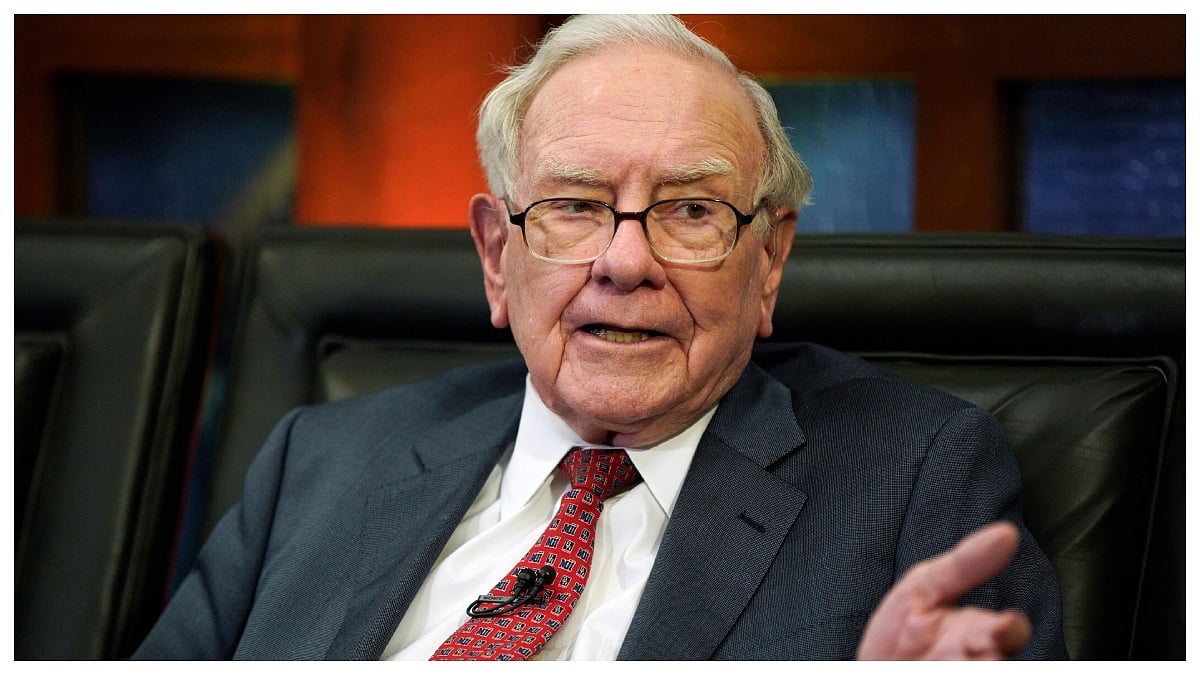
Warren Buffett, the 95-year-old Berkshire Hathaway chairman, has made a significant change to his annual charitable stock gifts. For the first time in two decades, he has excluded the Gates Foundation from his donations, instead directing this year's gifts to four family-linked foundations.
The decision comes amidst an ongoing review into the Gates Foundation's ties with the late sex offender Jeffrey Epstein. Buffett has stated that he has not spoken with Bill Gates since the issue was made public. In an interview with CNBC, Buffett acknowledged that he had made mistakes in the past, including choosing friends who were not what they seemed.
Buffett will donate 9 million Class B shares of Berkshire to the Susan Thompson Buffett Foundation, and 1 million shares each to the Sherwood Foundation, the Howard G. Buffett Foundation, and the NoVo Foundation. This move marks a break from his 2006 commitment to make annual gifts of Berkshire shares to the Gates Foundation throughout his lifetime.
The Gates Foundation had been the largest recipient of Buffett's annual donations, receiving over $47 billion worth of stock since 2006. However, the ongoing review into its ties with Epstein has led to a reevaluation of their relationship. Buffett has stated that his goal is to dispose of all his Berkshire shares within the next eight years, with the hope that his children will be able to carry out the disposal by December 31, 2034.
The review into the Gates Foundation's ties with Epstein remains unresolved, and it is unclear when or if Buffett will resume his donations to the foundation. For now, his focus is on supporting his family-linked foundations, which will receive the bulk of his charitable stock gifts.
The decision has significant implications for the philanthropic community, as Buffett's donations have had a major impact on the work of the Gates Foundation over the years. The foundation's omission from this year's gifts is a notable shift in Buffett's charitable giving strategy.
Buffett's comments on the matter suggest that he is taking a cautious approach, awaiting the outcome of the review before making any further decisions. His statement that he has made mistakes in the past, including choosing friends who were not what they seemed, suggests a sense of introspection and a willingness to reevaluate his relationships.
The situation highlights the importance of due diligence and transparency in philanthropic giving. As one of the most prominent philanthropists in the world, Buffett's actions set a precedent for others to follow. His decision to exclude the Gates Foundation from his donations serves as a reminder that even the most well-intentioned gifts can have unintended consequences.
In the end, Buffett's decision is a significant development in the world of philanthropy, and its implications will be closely watched in the coming months and years. As the philanthropic community continues to evolve, it is likely that we will see more emphasis on transparency and accountability in charitable giving.
The news of Buffett's decision has sparked a wider conversation about the role of philanthropy in society, and the importance of responsible giving. As the world's wealthiest individuals continue to make significant donations to charitable causes, it is essential that they do so in a way that is transparent, accountable, and responsible.
In conclusion, Warren Buffett's decision to exclude the Gates Foundation from his annual donations is a significant development that highlights the importance of transparency and accountability in philanthropic giving. As the philanthropic community continues to evolve, it is likely that we will see more emphasis on responsible giving and a greater focus on the impact of charitable donations.