German Startup Makes Wood Wind Turbine Blades
A German startup is testing wooden wind turbine blades. They aim to reduce waste.
'%3E%3Crect%20width%3D'96'%20height%3D'96'%20fill%3D'%230B6E4F'%2F%3E%3Ccircle%20cx%3D'30'%20cy%3D'24'%20r%3D'44'%20fill%3D'%23fff'%20opacity%3D'.12'%2F%3E%3Ccircle%20cx%3D'60'%20cy%3D'74'%20r%3D'40'%20fill%3D'%23000'%20opacity%3D'.10'%2F%3E%3C%2Fg%3E%3Cg%20fill%3D'none'%20stroke%3D'%23fff'%20stroke-width%3D'3.2'%20stroke-linecap%3D'round'%20stroke-linejoin%3D'round'%3E%3Cpolyline%20points%3D'31%2C59%2041%2C49%2049%2C54%2063%2C37'%2F%3E%3Cpolyline%20points%3D'55%2C37%2063%2C37%2063%2C45'%2F%3E%3C%2Fg%3E%3C%2Fsvg%3E)
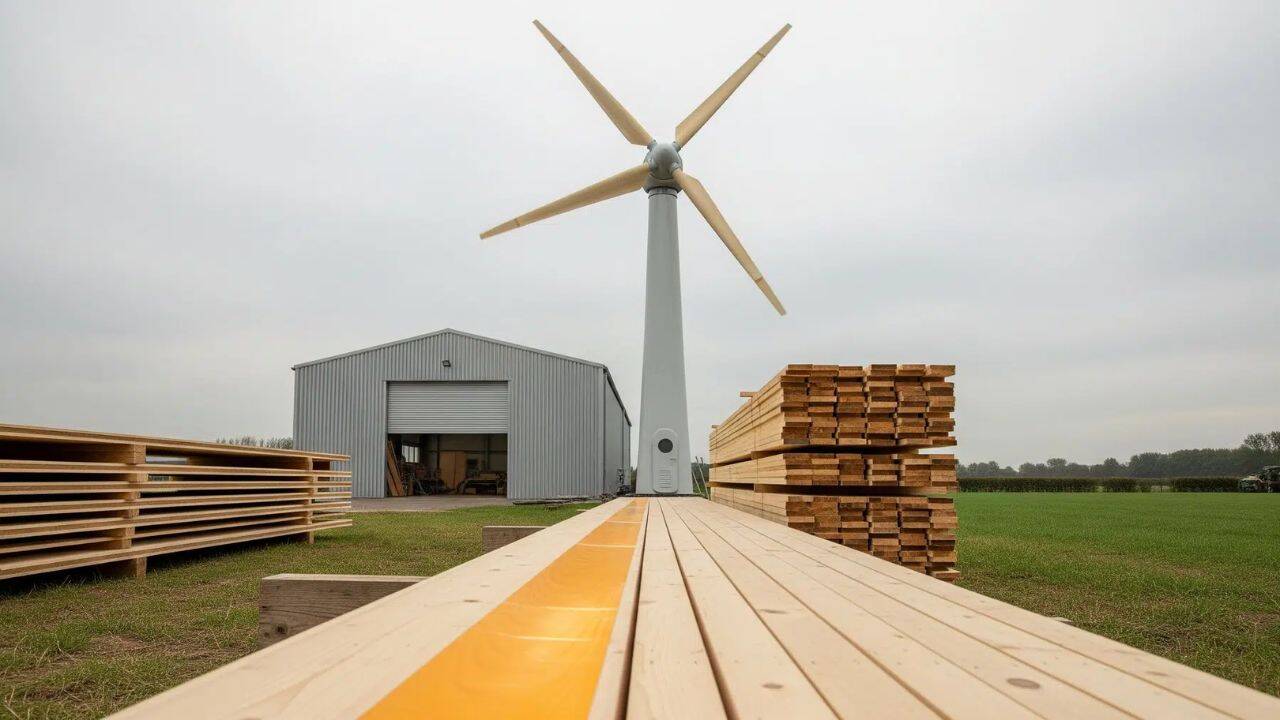
A German startup has developed a new way to make wind turbine blades using laminated veneer lumber, a type of engineered wood. This innovation could provide a sustainable alternative to traditional fiberglass composite blades. The startup is currently testing the initial prototypes in the field to assess their performance and durability.
The use of wooden blades is a response to the growing problem of waste generated by conventional wind turbine blades. Fiberglass composite blades are difficult to recycle and often end up in landfills at the end of their life cycle. The German startup's solution aims to reduce this waste and provide a more environmentally friendly option for the wind energy industry.
The startup's wooden blades are made from laminated veneer lumber, which is a type of engineered wood that is strong, durable, and resistant to fatigue. The material is also renewable and can be sourced from sustainable forests. The use of wooden blades could also reduce the carbon footprint of wind turbine production, as the manufacturing process for fiberglass composite blades is energy-intensive.
The initial prototypes are being tested in a real-world setting to evaluate their performance and identify areas for improvement. The startup plans to use the data collected from these tests to refine its design and develop larger models that can be used in commercial wind energy projects.
The development of wooden wind turbine blades is a significant innovation in the field of renewable energy. As the demand for wind energy continues to grow, the need for sustainable and environmentally friendly solutions will become increasingly important. The German startup's use of wooden blades could be a key part of this solution, providing a more sustainable alternative to traditional fiberglass composite blades.
The use of wooden blades could also have economic benefits for the wind energy industry. The production of fiberglass composite blades is a complex and expensive process, and the use of wooden blades could reduce costs and make wind energy more competitive with other forms of energy production.
In conclusion, the development of wooden wind turbine blades by a German startup is a significant innovation in the field of renewable energy. The use of laminated veneer lumber provides a sustainable alternative to traditional fiberglass composite blades, reducing waste and the carbon footprint of wind turbine production. As the demand for wind energy continues to grow, the development of wooden blades could play a key role in making the industry more sustainable and environmentally friendly.
The success of this innovation could have far-reaching implications for the wind energy industry, and it will be interesting to see how it develops in the coming years. With the potential to reduce waste, lower costs, and make wind energy more sustainable, the use of wooden wind turbine blades is an exciting development that could help to shape the future of renewable energy.
The German startup's innovation is a testament to the power of creativity and innovation in addressing the environmental challenges faced by the wind energy industry. As the world continues to transition towards a more sustainable and renewable energy mix, the development of wooden wind turbine blades could be an important step towards a more environmentally friendly future.
In the future, we can expect to see more developments in this area, with the potential for wooden blades to become a standard feature of wind turbines. The use of sustainable materials in wind turbine production could also inspire other industries to follow suit, leading to a more widespread adoption of environmentally friendly practices.
The development of wooden wind turbine blades is a significant step forward for the wind energy industry, and it will be exciting to see how this innovation develops in the coming years. With its potential to reduce waste, lower costs, and make wind energy more sustainable, the use of wooden blades could play a key role in shaping the future of renewable energy.
The startup's plans for larger models aimed at commercial projects are also a positive sign for the future of the industry. As the demand for wind energy continues to grow, the need for sustainable and environmentally friendly solutions will become increasingly important. The development of wooden wind turbine blades could be a key part of this solution, providing a more sustainable alternative to traditional fiberglass composite blades.
In conclusion, the development of wooden wind turbine blades by a German startup is a significant innovation in the field of renewable energy. The use of laminated veneer lumber provides a sustainable alternative to traditional fiberglass composite blades, reducing waste and the carbon footprint of wind turbine production. As the demand for wind energy continues to grow, the development of wooden blades could play a key role in making the industry more sustainable and environmentally friendly.
The success of this innovation could have far-reaching implications for the wind energy industry, and it will be interesting to see how it develops in the coming years. With the potential to reduce waste, lower costs, and make wind energy more sustainable, the use of wooden wind turbine blades is an exciting development that could help to shape the future of renewable energy.
Frequently asked questions
What material are the new wind turbine blades made of?
The new wind turbine blades are made of laminated veneer lumber, a type of engineered wood.
What is the benefit of using wooden wind turbine blades?
The use of wooden wind turbine blades reduces waste and the carbon footprint of wind turbine production, and could also lower costs and make wind energy more sustainable.