BCI Bars 2026 NALSAR Graduates' Enrolment
NALSAR students protested CJI Surya Kant's convocation invite. BCI withholds enrolment.
'%3E%3Crect%20width%3D'96'%20height%3D'96'%20fill%3D'%231B5E20'%2F%3E%3Ccircle%20cx%3D'30'%20cy%3D'24'%20r%3D'44'%20fill%3D'%23fff'%20opacity%3D'.12'%2F%3E%3Ccircle%20cx%3D'60'%20cy%3D'74'%20r%3D'40'%20fill%3D'%23000'%20opacity%3D'.10'%2F%3E%3C%2Fg%3E%3Cg%3E%3Ccircle%20cx%3D'48'%20cy%3D'48'%20r%3D'15'%20fill%3D'%23fff'%2F%3E%3Cpath%20d%3D'M43%2034%20Q50%2048%2043%2062'%20fill%3D'none'%20stroke%3D'%238a94a6'%20stroke-width%3D'2.4'%2F%3E%3Cpath%20d%3D'M47%2033%20Q54%2048%2047%2063'%20fill%3D'none'%20stroke%3D'%238a94a6'%20stroke-width%3D'1.8'%20stroke-dasharray%3D'1.5%203'%2F%3E%3C%2Fg%3E%3C%2Fsvg%3E)
The Bar Council of India (BCI) has directed all State Bar Councils to withhold the enrolment of students graduating from NALSAR University of Law in 2026. This decision comes after a controversy over students' opposition to an invitation extended to Chief Justice of India Surya Kant for the university's convocation.
The controversy began when a group of graduating students urged NALSAR authorities to reconsider inviting Justice Surya Kant as the convocation's chief guest. Their objection was linked to remarks made by the Chief Justice during a July 22 Supreme Court hearing concerning alleged police action against protesters at Delhi's Jantar Mantar.
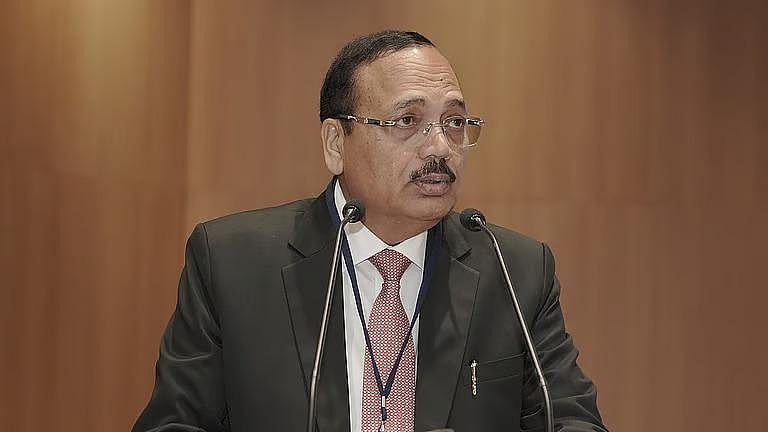
BCI chairperson Manan Kumar Mishra stated that no 2026 NALSAR graduate should be enrolled as an advocate until further instructions are issued. The council has also sought a detailed, authenticated report from the university identifying students and others who allegedly played a leading role in organising or coordinating the campaign.
The BCI has asked NALSAR to submit copies of representations, petitions and other communications related to the invitation, along with the names of signatories. Mishra alleged that some members of the university's academic staff were involved in misleading, instigating and misguiding students, and claimed there was groupism and internal political activity among some faculty members.
The BCI cited its regulatory role in legal education, stating that it could not remain a mute spectator. The council's decision to withhold enrolment is seen as a significant move, as it affects the future of NALSAR's 2026 graduates.
NALSAR University of Law is a premier institution in India, and the controversy surrounding the convocation invitation has sparked debate about the role of students in challenging judicial authority. The BCI's decision is likely to have far-reaching implications for the legal education sector.
In a later update, the BCI modified its earlier directions, allowing 2026 passed-out students of NALSAR to seek enrolment with the State Bar Council of their choice. However, the factual inquiry will continue, and the council's decision is subject to further review.
The controversy highlights the complexities of the relationship between the judiciary, legal education, and student activism. As the regulator of legal education, the BCI's decision to withhold enrolment reflects its commitment to maintaining standards and discipline within the legal profession.
The incident has sparked a wider debate about the limits of student activism and the role of the judiciary in addressing social and political issues. The BCI's decision is likely to be closely watched by the legal community, as it sets a precedent for the regulation of legal education and the behaviour of law students.
In conclusion, the BCI's decision to withhold the enrolment of NALSAR's 2026 graduates reflects its commitment to maintaining standards and discipline within the legal profession. The controversy surrounding the convocation invitation has sparked a wider debate about the role of students in challenging judicial authority and the limits of student activism.
Frequently asked questions
Why did NALSAR students protest CJI Surya Kant's convocation invite?
The students objected to remarks made by the Chief Justice during a July 22 Supreme Court hearing concerning alleged police action against protesters at Delhi's Jantar Mantar.
What is the BCI's role in the controversy?
The BCI is the regulator of legal education and has directed all State Bar Councils to withhold the enrolment of NALSAR's 2026 graduates.