Defence Acquisition Council Clears ₹1.10 Lakh Crore Deals
Rajnath Singh-led council approves defence deals, boosts indigenous procurement. 98% of procurements to come from Indian industry.
'%3E%3Crect%20width%3D'96'%20height%3D'96'%20fill%3D'%231A5276'%2F%3E%3Ccircle%20cx%3D'30'%20cy%3D'24'%20r%3D'44'%20fill%3D'%23fff'%20opacity%3D'.12'%2F%3E%3Ccircle%20cx%3D'60'%20cy%3D'74'%20r%3D'40'%20fill%3D'%23000'%20opacity%3D'.10'%2F%3E%3C%2Fg%3E%3Cg%20fill%3D'%23fff'%3E%3Cpath%20d%3D'M31%2041%20L48%2031%20L65%2041%20Z'%2F%3E%3Crect%20x%3D'33'%20y%3D'43'%20width%3D'4'%20height%3D'17'%2F%3E%3Crect%20x%3D'41'%20y%3D'43'%20width%3D'4'%20height%3D'17'%2F%3E%3Crect%20x%3D'51'%20y%3D'43'%20width%3D'4'%20height%3D'17'%2F%3E%3Crect%20x%3D'59'%20y%3D'43'%20width%3D'4'%20height%3D'17'%2F%3E%3Crect%20x%3D'30'%20y%3D'62'%20width%3D'36'%20height%3D'4'%20rx%3D'1'%2F%3E%3C%2Fg%3E%3C%2Fsvg%3E)
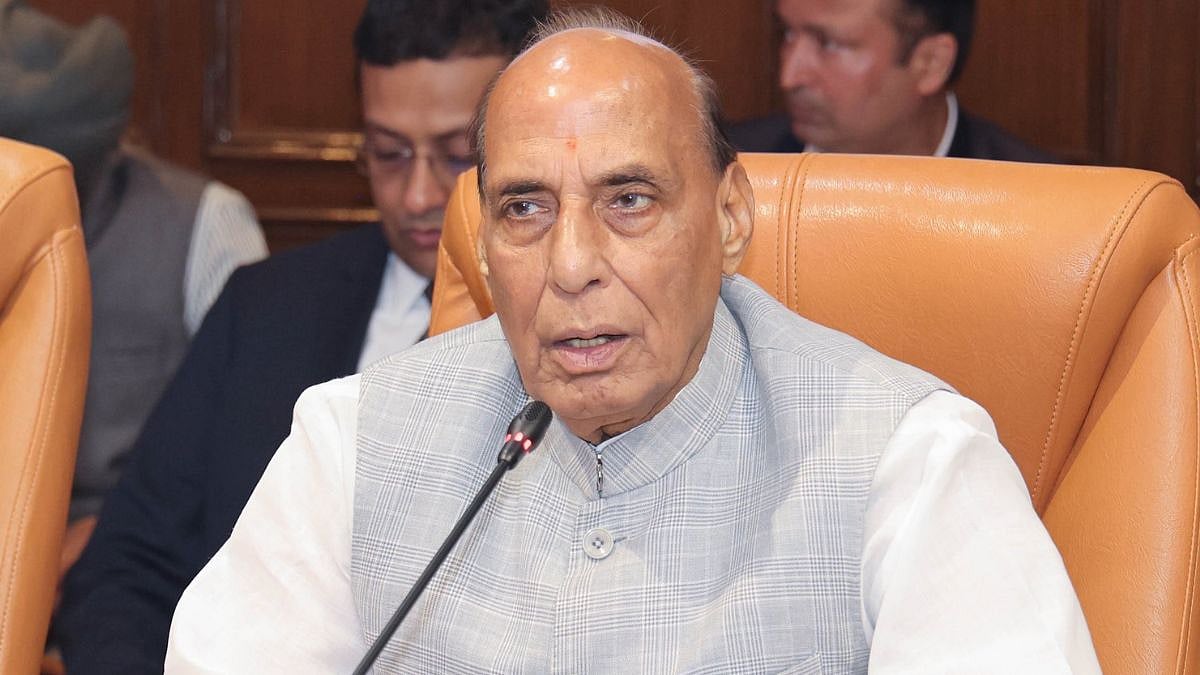
The Defence Acquisition Council (DAC), chaired by Defence Minister Rajnath Singh, has approved capital acquisition proposals worth over ₹1.10 lakh crore for the armed forces. The approvals cover a range of platforms and systems for the Army, Navy, and Air Force, aimed at strengthening operational capabilities and reducing dependence on foreign suppliers.
The DAC cleared proposals for various equipment, including Chemical, Biological, Radiological and Nuclear (CBRN) reconnaissance vehicles, High Mobility Vehicles, and Advanced Light Helicopters (ALHs) for the Indian Army. The CBRN vehicles will be equipped to detect and identify hazardous agents, while High Mobility Vehicles will improve logistics and mobility in difficult terrain.
For the Indian Navy, the council granted Acceptance of Necessity for Arudhra Radars and the design, development, and procurement of Marine Gas Turbines. The Arudhra systems will replace existing Air Route Surveillance Radars at naval air stations, while the indigenous development of Marine Gas Turbines is expected to reduce reliance on foreign vendors.
The Indian Air Force will also receive a boost in capabilities, with approvals covering multiple proposals to enhance the combat capabilities of fighter aircraft, transport platforms, and helicopters. The DAC also cleared procurement of Ground-Based Multi-Purpose Jammers and the Defence Forces Secure Access Card system.
The approvals underline the government's focus on strengthening the domestic defence industry while enhancing the armed forces' operational readiness. Approximately 98% of the planned procurement will come from Indian industry, highlighting the government's commitment to indigenous procurement.
The Defence Ministry's move is expected to have a significant impact on the country's defence capabilities and reduce its dependence on foreign suppliers. The indigenous development of equipment and systems will also provide a boost to the domestic defence industry, creating new opportunities for Indian companies.
The DAC's approvals are a significant step towards modernizing the armed forces and enhancing their operational capabilities. The focus on indigenous procurement will also help to reduce the country's reliance on foreign suppliers and promote self-reliance in defence production.
In recent years, the government has taken several steps to promote indigenous defence production and reduce dependence on foreign suppliers. The DAC's approvals are a significant milestone in this effort and are expected to have a lasting impact on the country's defence capabilities.
The government's commitment to indigenous procurement is also expected to have a positive impact on the domestic economy, creating new opportunities for Indian companies and promoting economic growth. The DAC's approvals are a significant step towards achieving the government's goal of promoting self-reliance in defence production and reducing dependence on foreign suppliers.
In conclusion, the Defence Acquisition Council's approvals are a significant milestone in the government's effort to modernize the armed forces and promote indigenous defence production. The focus on indigenous procurement will help to reduce the country's reliance on foreign suppliers and promote self-reliance in defence production, creating new opportunities for Indian companies and promoting economic growth.
Frequently asked questions
What is the total value of the defence deals cleared by the DAC?
The total value of the defence deals cleared by the DAC is over ₹1.10 lakh crore.
What percentage of the procurements will come from Indian industry?
Approximately 98% of the planned procurement will come from Indian industry.