Owaisi Slams Allahabad HC Ruling on Hijab
Owaisi criticizes court ruling, calls it attack on Islam.
'%3E%3Crect%20width%3D'96'%20height%3D'96'%20fill%3D'%231A5276'%2F%3E%3Ccircle%20cx%3D'30'%20cy%3D'24'%20r%3D'44'%20fill%3D'%23fff'%20opacity%3D'.12'%2F%3E%3Ccircle%20cx%3D'60'%20cy%3D'74'%20r%3D'40'%20fill%3D'%23000'%20opacity%3D'.10'%2F%3E%3C%2Fg%3E%3Cg%20fill%3D'%23fff'%3E%3Cpath%20d%3D'M31%2041%20L48%2031%20L65%2041%20Z'%2F%3E%3Crect%20x%3D'33'%20y%3D'43'%20width%3D'4'%20height%3D'17'%2F%3E%3Crect%20x%3D'41'%20y%3D'43'%20width%3D'4'%20height%3D'17'%2F%3E%3Crect%20x%3D'51'%20y%3D'43'%20width%3D'4'%20height%3D'17'%2F%3E%3Crect%20x%3D'59'%20y%3D'43'%20width%3D'4'%20height%3D'17'%2F%3E%3Crect%20x%3D'30'%20y%3D'62'%20width%3D'36'%20height%3D'4'%20rx%3D'1'%2F%3E%3C%2Fg%3E%3C%2Fsvg%3E)
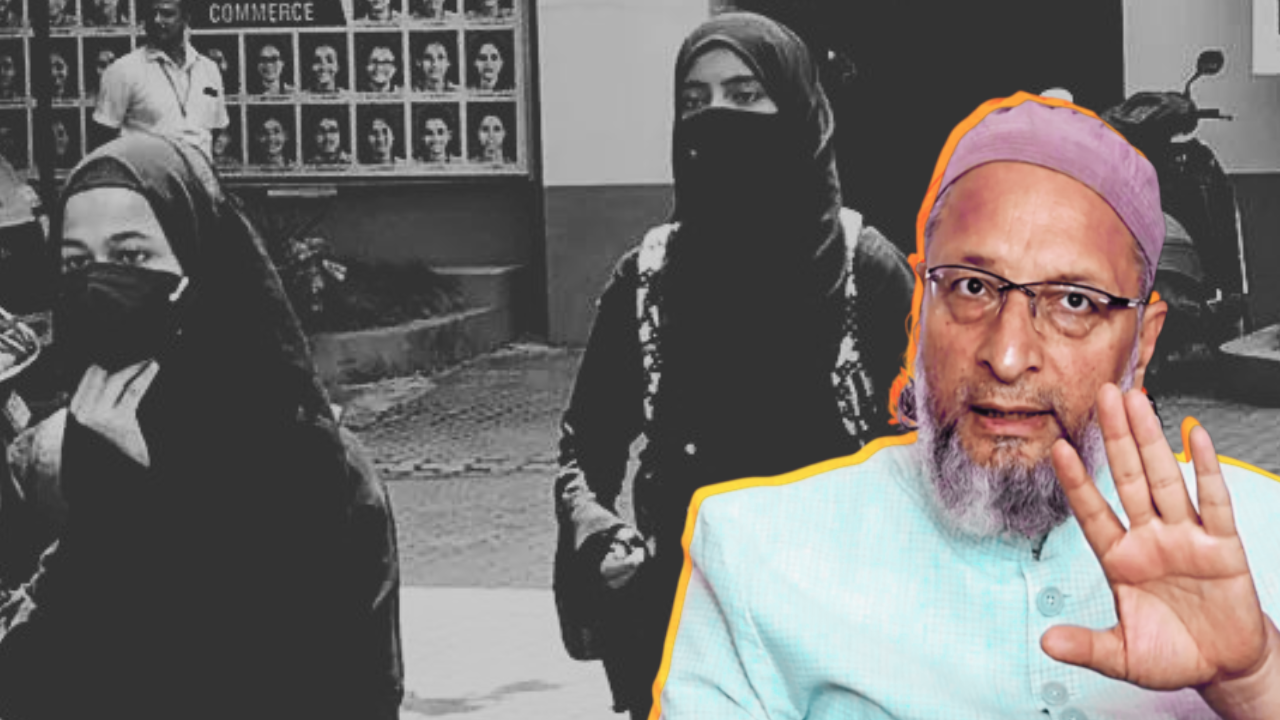
Asaduddin Owaisi, a prominent Indian politician, has strongly criticized the recent Allahabad High Court ruling that denied a student the right to wear a hijab in school.
The court's decision was based on the grounds that the student had not provided sufficient religious documentation to support her claim. The judges emphasized that students are expected to follow the uniform rules set by their schools, and that there is no enforceable right to change these policies.
Owaisi has labeled the ruling as an attack on Islam and individual religious liberties. He believes that the court's decision undermines the fundamental right to freedom of religion, which is guaranteed by the Indian Constitution.
The Allahabad High Court's ruling has sparked a heated debate about the role of religion in public schools. While some argue that uniforms are essential for promoting discipline and equality, others believe that students should be allowed to express their religious identity through their attire.
The court's decision has also been criticized by other Muslim leaders and organizations, who argue that it is an attempt to restrict the rights of Muslim students. They believe that the ruling is discriminatory and goes against the principles of secularism and diversity.
In recent years, there have been several instances of students being barred from wearing the hijab in schools and colleges. This has led to widespread protests and debates about the issue. The Allahabad High Court's ruling is likely to add fuel to the fire, with many arguing that it is an attack on the rights of Muslim students.
Owaisi's criticism of the ruling is significant, as he is a prominent leader of the All India Majlis-e-Ittehadul Muslimeen (AIMIM) party. His comments are likely to resonate with many Muslims across the country, who feel that their rights are being eroded.
The issue of the hijab in schools is a complex one, with different opinions and perspectives. While some argue that it is a matter of personal choice, others believe that it is a symbol of religious identity that should be respected.
In conclusion, the Allahabad High Court's ruling on the hijab has sparked a heated debate about the role of religion in public schools. Owaisi's criticism of the ruling highlights the need for a more nuanced and inclusive approach to the issue, one that respects the rights of all students to express their religious identity.
The ruling is significant not only for the Muslim community but also for the broader issue of religious freedom in India. It highlights the need for a more balanced approach to the issue, one that takes into account the rights of all individuals to practice their faith without fear of discrimination or persecution.
As the debate continues, it is essential to remember that the issue of the hijab in schools is not just about religion; it is also about the rights of individuals to express themselves and their identity. It is crucial to find a solution that respects the rights of all students, regardless of their religious background.
The Indian Constitution guarantees the right to freedom of religion, and it is essential to uphold this right in all aspects of life, including education. The Allahabad High Court's ruling has raised important questions about the role of religion in public schools, and it is crucial to address these questions in a fair and balanced manner.
In the end, the issue of the hijab in schools is a complex one that requires a nuanced and inclusive approach. It is essential to respect the rights of all students to express their religious identity, while also promoting discipline and equality in schools. By finding a balance between these competing interests, we can create a more inclusive and diverse education system that respects the rights of all individuals.
Frequently asked questions
What was the Allahabad High Court's ruling on the hijab?
The court denied a student the right to wear a hijab in school, citing insufficient religious documentation.
Why has Owaisi criticized the ruling?
Owaisi believes the ruling is an attack on Islam and individual religious liberties, undermining the fundamental right to freedom of religion.