US Senate Advances Russia-Iran Sanctions Bill
US Senate votes to fast-track bill, India and China may face tariffs
'%3E%3Crect%20width%3D'96'%20height%3D'96'%20fill%3D'%234A235A'%2F%3E%3Ccircle%20cx%3D'30'%20cy%3D'24'%20r%3D'44'%20fill%3D'%23fff'%20opacity%3D'.12'%2F%3E%3Ccircle%20cx%3D'60'%20cy%3D'74'%20r%3D'40'%20fill%3D'%23000'%20opacity%3D'.10'%2F%3E%3C%2Fg%3E%3Cg%20fill%3D'none'%20stroke%3D'%23fff'%20stroke-width%3D'3'%3E%3Ccircle%20cx%3D'48'%20cy%3D'48'%20r%3D'16'%2F%3E%3Cellipse%20cx%3D'48'%20cy%3D'48'%20rx%3D'6.5'%20ry%3D'16'%2F%3E%3Cline%20x1%3D'32'%20y1%3D'42'%20x2%3D'64'%20y2%3D'42'%2F%3E%3Cline%20x1%3D'32'%20y1%3D'54'%20x2%3D'64'%20y2%3D'54'%2F%3E%3C%2Fg%3E%3C%2Fsvg%3E)
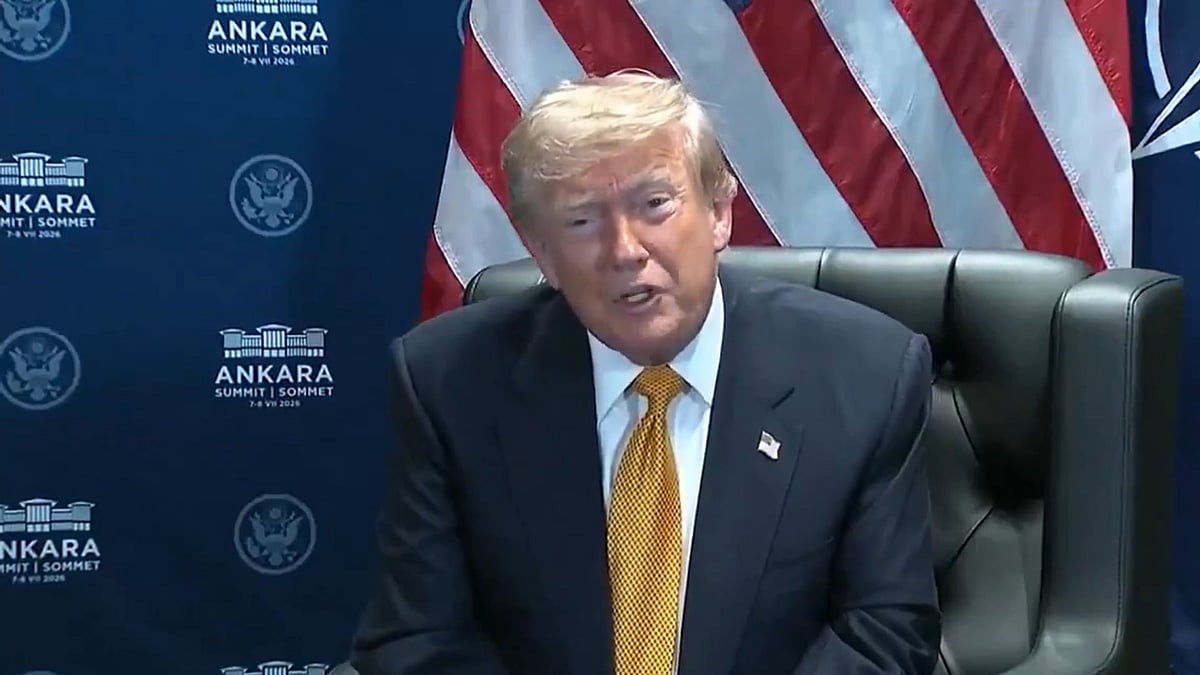
The US Senate has voted to fast-track a bill that would allow President Donald Trump to impose sanctions on major buyers of oil from Russia and Iran. The bill, known as the Lindsey O Graham Sanctioning Russia and Iran Act of 2026, was passed with a vote of 86-12, with bipartisan support.
The bill aims to impose primary and secondary sanctions against Russia and actors supporting its war in Ukraine, as well as restrict the Iranian regime's ability to support terrorism and build its nuclear programme.
Senators voted on the cloture motion after a meeting with visiting Ukrainian President Volodymyr Zelenskyy, who was in the Senate gallery to bid a final farewell to the late Senator Lindsey Graham.
The bill has 62 co-sponsors and is widely expected to pass in the 100-member Senate. However, it may face resistance in the House, where Democrats are not keen to expand Trump's tariff authority.
Senator Richard Blumenthal said the bill empowers the president to impose tariffs up to 100 per cent on the five largest purchasers of Russian oil and gas, which would affect countries such as India and China.
Blumenthal stated that the bill is carefully crafted to avoid hitting US allies, but would target China and India, which are the main purchasers of Russian oil and gas.
The bill's passage has significant implications for India and China, which could face tariffs on their purchases of Russian oil and gas.
The US Senate's decision to fast-track the bill comes amid ongoing tensions between the US and Russia, as well as the US and Iran.
The bill's supporters argue that it is necessary to combat Vladimir Putin's war machine and to restrict the Iranian regime's ability to support terrorism.
However, opponents of the bill argue that it would give Trump too much power to impose tariffs, which could have negative consequences for the US economy.
The bill's fate in the House remains uncertain, but its passage in the Senate marks a significant step towards imposing sanctions on Russia and Iran.
The implications of the bill's passage will be closely watched by India and China, which could face significant economic consequences if the bill becomes law.
In conclusion, the US Senate's decision to fast-track the Lindsey O Graham Sanctioning Russia and Iran Act of 2026 has significant implications for international relations and global trade.
The bill's passage marks a major development in the US's efforts to impose sanctions on Russia and Iran, and its fate in the House will be closely watched in the coming days.
Frequently asked questions
What is the Lindsey O Graham Sanctioning Russia and Iran Act of 2026?
The bill is a US Senate proposal that aims to impose sanctions on major buyers of oil from Russia and Iran.
Which countries may face tariffs under the bill?
India and China, which are the main purchasers of Russian oil and gas, may face tariffs under the bill.