Salabega: Muslim Poet-Saint Revered by Lord Jagannath
Salabega, a 17th-century Muslim poet-saint, is revered for his devotion to Lord Jagannath. His story is a testament to the power of faith.
'%3E%3Crect%20width%3D'96'%20height%3D'96'%20fill%3D'%23B3261E'%2F%3E%3Ccircle%20cx%3D'30'%20cy%3D'24'%20r%3D'44'%20fill%3D'%23fff'%20opacity%3D'.12'%2F%3E%3Ccircle%20cx%3D'60'%20cy%3D'74'%20r%3D'40'%20fill%3D'%23000'%20opacity%3D'.10'%2F%3E%3C%2Fg%3E%3Cg%20fill%3D'%23fff'%3E%3Crect%20x%3D'29'%20y%3D'49'%20width%3D'8'%20height%3D'19'%20rx%3D'1'%2F%3E%3Crect%20x%3D'39'%20y%3D'40'%20width%3D'9'%20height%3D'28'%20rx%3D'1'%2F%3E%3Crect%20x%3D'50'%20y%3D'45'%20width%3D'8'%20height%3D'23'%20rx%3D'1'%2F%3E%3Crect%20x%3D'60'%20y%3D'53'%20width%3D'7'%20height%3D'15'%20rx%3D'1'%2F%3E%3Crect%20x%3D'41'%20y%3D'34'%20width%3D'5'%20height%3D'6'%2F%3E%3C%2Fg%3E%3C%2Fsvg%3E)
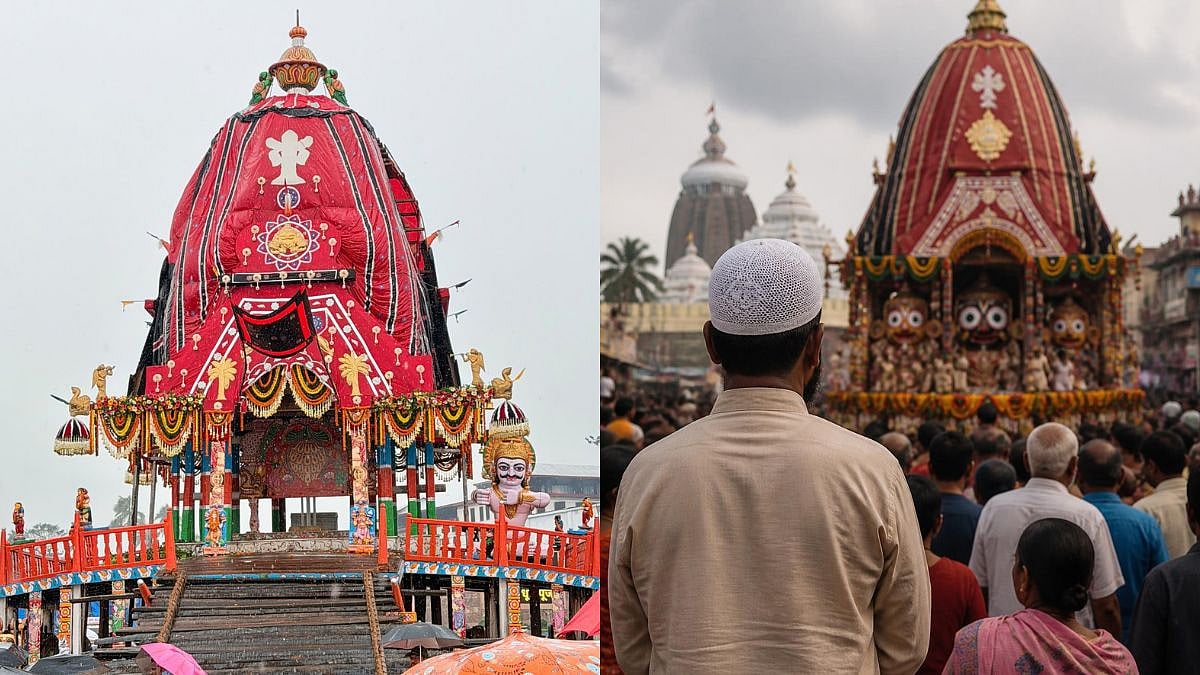
In the city of Puri, Odisha, the annual Jagannath Rath Yatra is a grand celebration that attracts millions of devotees. One of the most significant aspects of this festival is the pause of Lord Jagannath's Nandighosha chariot at the samadhi pitha of Salabega, a 17th-century Muslim poet-saint.
Salabega was born to a Mughal military commander, Lalbeg, and a Hindu Brahmin widow. Despite being raised in a Muslim household, Salabega's life took a dramatic turn when he suffered serious injuries during a military campaign. His mother, a devout Hindu, prayed to Lord Jagannath for his recovery, and Salabega was miraculously cured.
This incident sparked a deep devotion in Salabega for Lord Jagannath, and he dedicated his life to the deity. Although non-Hindus were not permitted to enter the Jagannath Temple in Puri, Salabega's devotion never wavered. He expressed his love for Lord Jagannath through heartfelt bhajans and poems in Odia, which continue to be sung across Odisha to this day.
One of the most popular legends associated with Salabega tells of his deep desire to witness the Rath Yatra. While returning from Vrindavan, he feared he would miss the procession and prayed fervently to Lord Jagannath. Tradition holds that the Lord's chariot miraculously halted near Salabega's samadhi until he arrived to offer his prayers.
To this day, during the Rath Yatra, Lord Jagannath's chariot pauses briefly near Salabega's shrine on Grand Road in Puri, commemorating the enduring bond between the devotee and the deity. This pause is a testament to the power of Salabega's devotion and a reminder that faith knows no boundaries.
Salabega's story is a remarkable example of how devotion can transcend religious and social boundaries. Despite being a Muslim, he was able to connect with Lord Jagannath on a deep level, and his poetry and bhajans continue to inspire generations of devotees.
The annual Jagannath Rath Yatra is a celebration of the divine bond between Lord Jagannath and his devotees. The festival is a time of great joy and revelry, and the pause of the chariot at Salabega's samadhi is a poignant reminder of the power of faith and devotion.
In a world where religious and social boundaries often seem insurmountable, Salabega's story is a beacon of hope. His devotion to Lord Jagannath is a testament to the fact that faith can bring people together, regardless of their background or creed.
As the Jagannath Rath Yatra continues to be celebrated with great fervor and enthusiasm, Salabega's legacy lives on. His poetry and bhajans continue to inspire devotees, and his story serves as a reminder of the transformative power of faith and devotion.
In conclusion, Salabega's story is a powerful reminder of the enduring bond between a devotee and the divine. His devotion to Lord Jagannath is a testament to the fact that faith can transcend boundaries and bring people together. As we celebrate the Jagannath Rath Yatra, we are reminded of the importance of devotion and the power of faith to transform our lives.
The significance of Salabega's story extends beyond the realm of religious devotion. It highlights the importance of tolerance, acceptance, and inclusivity in our society. In a world where differences often seem to divide us, Salabega's story shows us that faith can be a unifying force that brings people together.
As we reflect on Salabega's legacy, we are reminded of the importance of embracing diversity and promoting inclusivity. His story is a powerful reminder that faith is a personal and deeply individual experience that can bring people together, regardless of their background or creed.
In the end, Salabega's story is a testament to the power of faith and devotion to transform our lives. His legacy continues to inspire devotees, and his poetry and bhajans remain a powerful reminder of the enduring bond between a devotee and the divine.