India Aims for E20 Ethanol Blending Goal
India to surpass E20 goal, plans flex-fuel vehicles. Ethanol blending to reduce oil dependency.
'%3E%3Crect%20width%3D'96'%20height%3D'96'%20fill%3D'%230B6E4F'%2F%3E%3Ccircle%20cx%3D'30'%20cy%3D'24'%20r%3D'44'%20fill%3D'%23fff'%20opacity%3D'.12'%2F%3E%3Ccircle%20cx%3D'60'%20cy%3D'74'%20r%3D'40'%20fill%3D'%23000'%20opacity%3D'.10'%2F%3E%3C%2Fg%3E%3Cg%20fill%3D'none'%20stroke%3D'%23fff'%20stroke-width%3D'3.2'%20stroke-linecap%3D'round'%20stroke-linejoin%3D'round'%3E%3Cpolyline%20points%3D'31%2C59%2041%2C49%2049%2C54%2063%2C37'%2F%3E%3Cpolyline%20points%3D'55%2C37%2063%2C37%2063%2C45'%2F%3E%3C%2Fg%3E%3C%2Fsvg%3E)
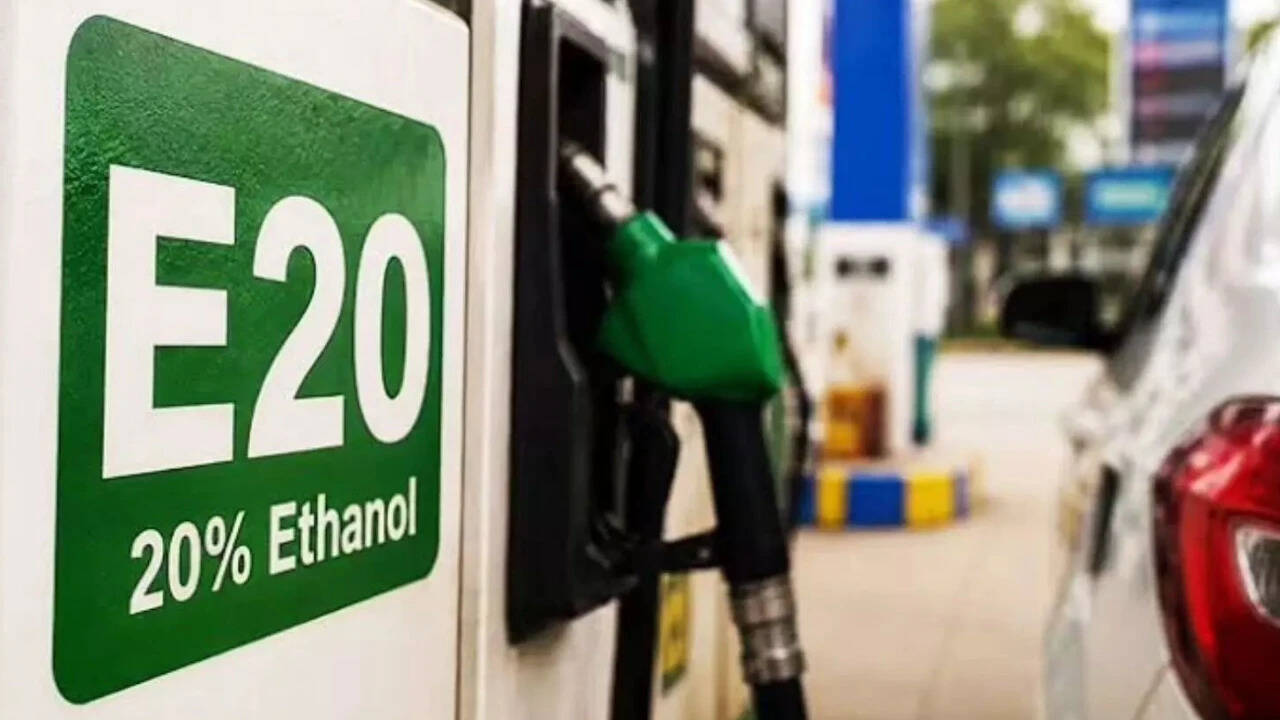
India is poised to achieve its target of blending 20% ethanol with petrol, with the government planning to introduce flex-fuel vehicles that can support higher ethanol blends. This move is part of a broader strategy to reduce the country's dependence on imported crude oil.
The government is also exploring the potential of biofuels in diesel engines, which could further decrease India's reliance on fossil fuels. Additionally, ethanol producers are being encouraged to diversify their product offerings and explore new technologies such as compressed biogas.
The introduction of flex-fuel vehicles is expected to play a crucial role in achieving the E20 ethanol blending goal. These vehicles are designed to run on a mixture of petrol and ethanol, and can support higher ethanol blends than traditional vehicles.
The government's push for ethanol blending is driven by the need to reduce India's oil import bill. The country currently imports a significant portion of its oil requirements, which puts a strain on its foreign exchange reserves. By promoting the use of ethanol and other biofuels, the government hopes to reduce its dependence on imported oil and create a more sustainable energy mix.
The ethanol industry is also being urged to adopt sustainable practices and explore new technologies. This includes investing in compressed biogas, which can be used as a fuel for vehicles and other applications. By promoting the use of biofuels and encouraging sustainable practices, the government hopes to create a more environmentally friendly energy sector.
The plans for introducing flex-fuel vehicles and promoting ethanol blending are part of a larger effort to reduce India's carbon footprint and create a more sustainable energy mix. The government has set ambitious targets for reducing greenhouse gas emissions and promoting the use of renewable energy sources.
In the coming years, India is expected to see a significant increase in the use of ethanol and other biofuels. This will not only help reduce the country's dependence on imported oil but also create new opportunities for the ethanol industry and promote sustainable development.
The success of the E20 ethanol blending program will depend on the ability of the government and the ethanol industry to work together to promote the use of biofuels. This will require investments in new technologies, infrastructure, and marketing efforts to raise awareness about the benefits of ethanol blending.
Overall, the government's plans for introducing flex-fuel vehicles and promoting ethanol blending are an important step towards creating a more sustainable energy mix and reducing India's dependence on imported oil.
The initiative is expected to have a positive impact on the environment and the economy, and will help India achieve its goals of reducing greenhouse gas emissions and promoting sustainable development.
Frequently asked questions
What is the E20 ethanol blending goal?
The E20 ethanol blending goal refers to the target of blending 20% ethanol with petrol.
Why is the government promoting ethanol blending?
The government is promoting ethanol blending to reduce India's dependence on imported crude oil and create a more sustainable energy mix.