Mumbai Court Denies Bail To Brothers In Railway Ticket Scam
Two brothers accused of forging documents to book VIP railway tickets. Bail denied due to serious offence and ongoing investigation.
'%3E%3Crect%20width%3D'96'%20height%3D'96'%20fill%3D'%23B3261E'%2F%3E%3Ccircle%20cx%3D'30'%20cy%3D'24'%20r%3D'44'%20fill%3D'%23fff'%20opacity%3D'.12'%2F%3E%3Ccircle%20cx%3D'60'%20cy%3D'74'%20r%3D'40'%20fill%3D'%23000'%20opacity%3D'.10'%2F%3E%3C%2Fg%3E%3Cg%20fill%3D'%23fff'%3E%3Crect%20x%3D'29'%20y%3D'49'%20width%3D'8'%20height%3D'19'%20rx%3D'1'%2F%3E%3Crect%20x%3D'39'%20y%3D'40'%20width%3D'9'%20height%3D'28'%20rx%3D'1'%2F%3E%3Crect%20x%3D'50'%20y%3D'45'%20width%3D'8'%20height%3D'23'%20rx%3D'1'%2F%3E%3Crect%20x%3D'60'%20y%3D'53'%20width%3D'7'%20height%3D'15'%20rx%3D'1'%2F%3E%3Crect%20x%3D'41'%20y%3D'34'%20width%3D'5'%20height%3D'6'%2F%3E%3C%2Fg%3E%3C%2Fsvg%3E)
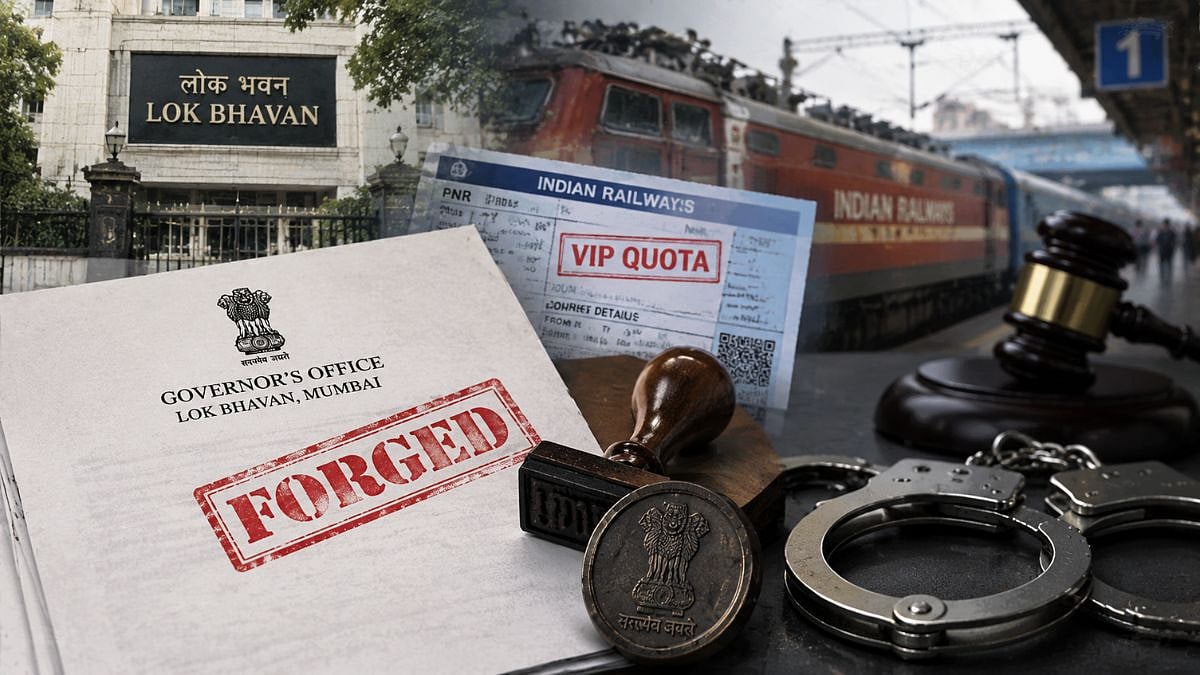
A Mumbai sessions court has refused to grant bail to two brothers, Sagar Thakkar and Amrish Thakkar, who were arrested for allegedly booking railway tickets under the VIP quota using forged documents. The brothers, aged 32 and 41, were arrested by the Malabar Hill police and accused of forging letterheads, stamps, and seals of the Lok Bhavan office.
The defence argued that the brothers were falsely implicated and had no connection to the crime. However, the prosecution objected, stating that Amrish was the main accused and had obtained an image of the letterhead of the Personal Assistant of the Governor, which was then used to forge documents.
The investigation revealed that ten forged letterheads were recovered from Amrish, and hard disks of the computer were seized. Sagar was also found to have forged rubber stamps and other materials. The court considered the evidence and observed that the accused had obtained nearly 400 E-tickets on VIP quota using the forged documents.
The court rejected the bail application, citing the serious nature of the offence and the possibility of tampering with evidence or pressuring witnesses. The judge stated that the investigation agency needed to be given the opportunity to conduct a fair investigation.
The case involves the alleged forgery of documents to book railway tickets under the VIP quota, which is a serious offence. The court's decision to deny bail reflects the gravity of the crime and the need for a thorough investigation.
The Mumbai police have been cracking down on railway ticket scams in recent months, and this case is part of a larger effort to prevent the misuse of VIP quotas. The use of forged documents to book tickets is a serious offence, and the court's decision sends a strong message that such crimes will not be tolerated.
The investigation is ongoing, and the police are working to uncover the extent of the scam and identify any other individuals involved. The case highlights the need for vigilance and strict enforcement of laws to prevent the misuse of VIP quotas and other privileges.
In conclusion, the Mumbai sessions court's decision to deny bail to the two brothers accused of railway ticket forgery reflects the serious nature of the offence and the need for a thorough investigation. The case is a reminder of the importance of preventing the misuse of VIP quotas and other privileges, and the need for strict enforcement of laws to prevent such crimes.
The court's decision is also a reflection of the efforts being made by the Mumbai police to crack down on railway ticket scams and prevent the misuse of VIP quotas. The case is ongoing, and the police are working to uncover the extent of the scam and identify any other individuals involved.
The accused brothers will now have to remain in custody until the investigation is complete and the case is heard in court. The court's decision to deny bail is a significant development in the case, and it will be interesting to see how the investigation unfolds in the coming weeks and months.
The case has significant implications for the prevention of railway ticket scams and the misuse of VIP quotas in Mumbai. The court's decision sends a strong message that such crimes will not be tolerated, and it highlights the need for vigilance and strict enforcement of laws to prevent the misuse of privileges.
In the end, the court's decision to deny bail to the two brothers accused of railway ticket forgery is a significant step towards preventing the misuse of VIP quotas and other privileges in Mumbai. The case is ongoing, and it will be interesting to see how the investigation unfolds in the coming weeks and months.
Frequently asked questions
What is the case about?
The case involves two brothers accused of forging documents to book railway tickets under the VIP quota.
Why was bail denied?
Bail was denied due to the serious nature of the offence and the possibility of tampering with evidence or pressuring witnesses.