Indore Sets World Record For Waste Segregation Selfies
Indore achieves global record, citizens click 5.46 lakh selfies with segregated waste
'%3E%3Crect%20width%3D'96'%20height%3D'96'%20fill%3D'%23B3261E'%2F%3E%3Ccircle%20cx%3D'30'%20cy%3D'24'%20r%3D'44'%20fill%3D'%23fff'%20opacity%3D'.12'%2F%3E%3Ccircle%20cx%3D'60'%20cy%3D'74'%20r%3D'40'%20fill%3D'%23000'%20opacity%3D'.10'%2F%3E%3C%2Fg%3E%3Cg%20fill%3D'%23fff'%3E%3Crect%20x%3D'29'%20y%3D'49'%20width%3D'8'%20height%3D'19'%20rx%3D'1'%2F%3E%3Crect%20x%3D'39'%20y%3D'40'%20width%3D'9'%20height%3D'28'%20rx%3D'1'%2F%3E%3Crect%20x%3D'50'%20y%3D'45'%20width%3D'8'%20height%3D'23'%20rx%3D'1'%2F%3E%3Crect%20x%3D'60'%20y%3D'53'%20width%3D'7'%20height%3D'15'%20rx%3D'1'%2F%3E%3Crect%20x%3D'41'%20y%3D'34'%20width%3D'5'%20height%3D'6'%2F%3E%3C%2Fg%3E%3C%2Fsvg%3E)
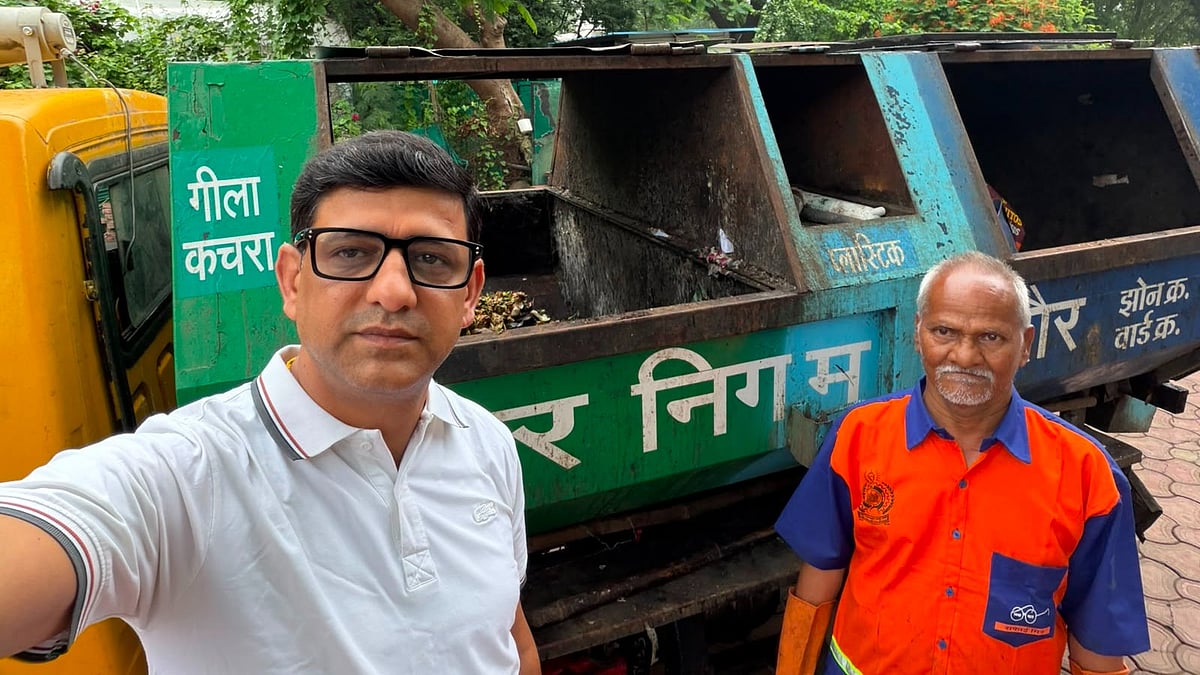
Indore, Madhya Pradesh, has set a new benchmark in the World Book of Records (London) by collecting 5,46,724 'Segregation Selfies' from its citizens. The achievement is part of the Union Ministry of Housing and Urban Affairs' 'Safai Apnao, Bimari Bhagao' campaign, which aimed to collect five lakh segregation selfies.
The Indore Municipal Corporation (IMC) successfully surpassed the target by more than 46,000 selfies, making it one of the largest citizen-driven waste segregation initiatives in the country. The record showcases the city's deeply ingrained culture of waste segregation and public participation, with residents voluntarily segregating waste into six categories: wet waste, dry waste, domestic hazardous waste, sanitary waste, e-waste, and other waste categories.
To achieve this feat, the IMC converted all 85 municipal wards into campaign zones, mobilizing citizens on an unprecedented scale. Sanitation workers, door-to-door waste collection teams, cleanliness volunteers, educational institutions, resident welfare associations, traders' bodies, NGOs, and social organizations all played a crucial role in encouraging participation.
Special activities were organized at designated selfie points, public places, and on waste collection vehicles to promote the campaign. Mayor Pushyamitra Bhargav attributed the achievement to the collective civic commitment of Indore's residents, stating that cleanliness is not just the responsibility of the IMC, but a shared duty of all citizens.
Municipal commissioner Kshitij Singhal emphasized that waste segregation at source is the foundation of a clean and healthy city. He added that the campaign has inspired lakhs of residents to strengthen the city's cleanliness movement through active participation.
The success of the campaign is a testament to Indore's evolved sanitation culture, which has been developed over years of disciplined civic behavior. The city's residents have once again demonstrated that collective efforts can lead to remarkable achievements, even world records.
Indore's reputation as India's cleanest city has been reinforced by this achievement, which highlights the city's commitment to sanitation and public participation. The campaign serves as a model for other cities to follow, demonstrating the importance of citizen-driven initiatives in maintaining a clean and healthy environment.
In conclusion, Indore's world record for waste segregation selfies is a significant achievement that showcases the city's dedication to sanitation and public participation. The campaign's success is a result of the collective efforts of the city's residents, sanitation workers, and civic authorities, and serves as an inspiration for other cities to follow in its footsteps.
The achievement is also a reminder of the importance of waste segregation in maintaining a clean and healthy city. By segregating waste at source, citizens can play a crucial role in reducing pollution and promoting a sustainable environment. As Indore continues to set new benchmarks in sanitation, it is likely to remain a model for other cities to follow.
The city's sanitation culture is a result of years of disciplined civic behavior, and the campaign has inspired lakhs of residents to strengthen the city's cleanliness movement. The success of the campaign is a testament to the power of collective efforts and citizen-driven initiatives in achieving remarkable results.
In the end, Indore's world record for waste segregation selfies is a significant achievement that highlights the city's commitment to sanitation and public participation. The campaign serves as a model for other cities to follow, and its success is a reminder of the importance of waste segregation in maintaining a clean and healthy environment.
Frequently asked questions
What is the significance of Indore's world record for waste segregation selfies?
The record showcases the city's deeply ingrained culture of waste segregation and public participation, and serves as a model for other cities to follow.
How did the Indore Municipal Corporation achieve this feat?
The IMC converted all 85 municipal wards into campaign zones, mobilizing citizens on an unprecedented scale, and organized special activities to promote the campaign.