India Celebrates 80 Years of Independence with Mixed Economic Progress
India marks 80 years of independence with economic growth, but still faces challenges like poverty and inequality.
'%3E%3Crect%20width%3D'96'%20height%3D'96'%20fill%3D'%230B6E4F'%2F%3E%3Ccircle%20cx%3D'30'%20cy%3D'24'%20r%3D'44'%20fill%3D'%23fff'%20opacity%3D'.12'%2F%3E%3Ccircle%20cx%3D'60'%20cy%3D'74'%20r%3D'40'%20fill%3D'%23000'%20opacity%3D'.10'%2F%3E%3C%2Fg%3E%3Cg%20fill%3D'none'%20stroke%3D'%23fff'%20stroke-width%3D'3.2'%20stroke-linecap%3D'round'%20stroke-linejoin%3D'round'%3E%3Cpolyline%20points%3D'31%2C59%2041%2C49%2049%2C54%2063%2C37'%2F%3E%3Cpolyline%20points%3D'55%2C37%2063%2C37%2063%2C45'%2F%3E%3C%2Fg%3E%3C%2Fsvg%3E)
As India prepares to celebrate its 80th Independence Day, the country's economic progress is a mixed bag. On one hand, India's nominal GDP has reached Rs 346.36 lakh crore in 2025-26, with real growth of 7.7%. The current GDP is estimated to be between $3.95 trillion to $4.2 trillion. The equity market has also grown significantly, with several trillion dollars in capitalisation. Micro, Small, and Medium Enterprises (MSMEs) contribute 31% of GDP and 49% of exports.
However, despite this growth, India still faces significant economic challenges. Poverty, unemployment, and inequality remain major concerns. The country's economic freedom is also limited by corruption, bureaucratic friction, and delayed justice. Furthermore, there is a poverty of dignity, where economically vulnerable workers are exploited and manipulated through fear, insecurity, or humiliation.
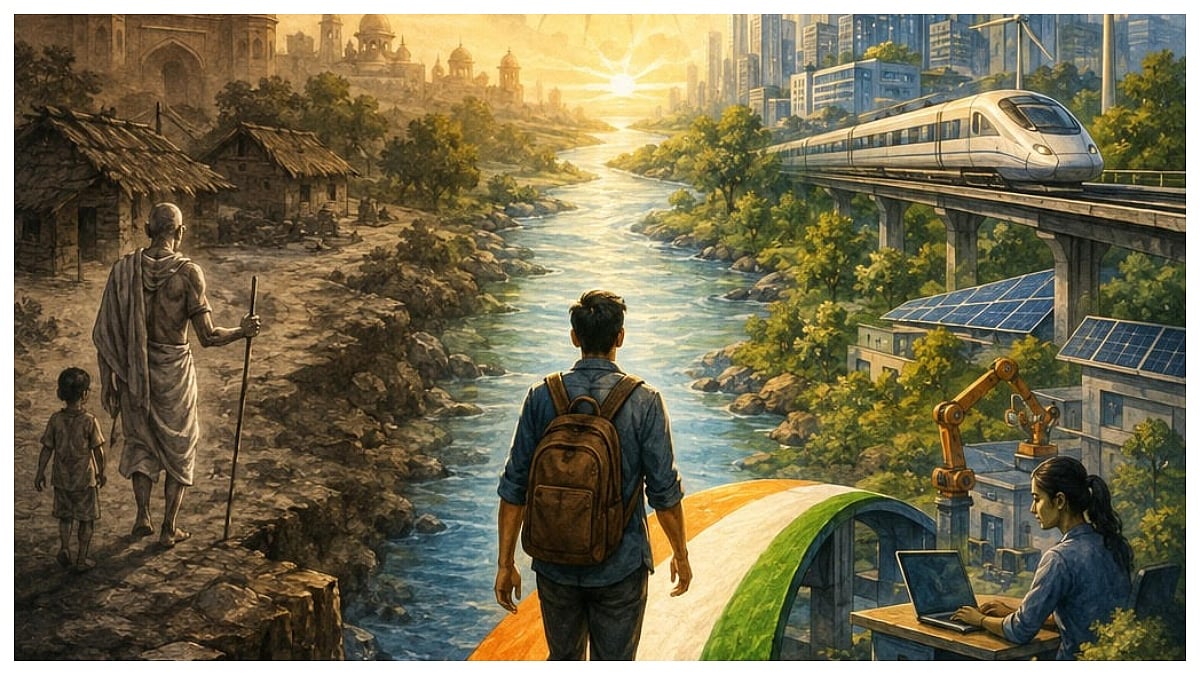
India's economic transformation has been a long process, with key milestones including institution-building after 1947, economic liberalisation in 1991, and successive reforms thereafter. Since 2014, the country has seen accelerated infrastructure development, digitalisation, financial inclusion, and expanding trade agreements. However, the journey to economic freedom is not yet complete.
The concept of economic freedom is complex and multifaceted. It involves not just the ability to choose one's rulers, but also the means to choose one's future. Economic freedom must include freedom from exploitation, of the wage, of the workplace, and of the individual. It requires a society where workers are treated with dignity and respect, and where they have access to equal opportunities and resources.
As India celebrates its 80th Independence Day, it is essential to reflect on the country's economic progress and the challenges that still need to be addressed. The government, businesses, and civil society must work together to create an economy that is inclusive, equitable, and just. This requires a commitment to institution-building, economic reform, and social welfare.
In conclusion, India's economic freedom is a work in progress. While the country has made significant strides in recent decades, there is still much to be done to address the challenges of poverty, inequality, and exploitation. As the country celebrates its 80th Independence Day, it is essential to remember that economic freedom is not just a statistical concept, but a fundamental human right.
The journey to economic freedom requires a long-term commitment to reform and development. It requires a society that values dignity, equality, and justice. As India looks to the future, it is essential to build on the progress that has been made, while also addressing the challenges that still need to be overcome.
India's economic story is one of hope and resilience. Despite the challenges, the country has made significant progress in recent decades. The future looks bright, with a growing economy, a thriving equity market, and a commitment to reform and development. However, the journey to economic freedom is not yet complete, and it will require a sustained effort from all stakeholders to create a society that is truly free and equitable.
In the end, economic freedom is not just a statistical concept, but a fundamental human right. It is the right to choose one's future, to pursue one's dreams, and to live a life of dignity and respect. As India celebrates its 80th Independence Day, it is essential to remember that economic freedom is a journey, not a destination. It requires a long-term commitment to reform, development, and social welfare.
The government, businesses, and civil society must work together to create an economy that is inclusive, equitable, and just. This requires a commitment to institution-building, economic reform, and social welfare. It also requires a society that values dignity, equality, and justice. As India looks to the future, it is essential to build on the progress that has been made, while also addressing the challenges that still need to be overcome.
In conclusion, India's economic freedom is a work in progress. While the country has made significant strides in recent decades, there is still much to be done to address the challenges of poverty, inequality, and exploitation. As the country celebrates its 80th Independence Day, it is essential to remember that economic freedom is not just a statistical concept, but a fundamental human right.
Frequently asked questions
What is the current GDP of India?
The current GDP of India is estimated to be between $3.95 trillion to $4.2 trillion.
What are the major economic challenges facing India?
The major economic challenges facing India include poverty, unemployment, inequality, corruption, and bureaucratic friction.