Tata Capital Unfazed By RBI's Proposed NBFC Norms
Tata Capital CEO says revolving credit exposure is below 5%.
'%3E%3Crect%20width%3D'96'%20height%3D'96'%20fill%3D'%230B6E4F'%2F%3E%3Ccircle%20cx%3D'30'%20cy%3D'24'%20r%3D'44'%20fill%3D'%23fff'%20opacity%3D'.12'%2F%3E%3Ccircle%20cx%3D'60'%20cy%3D'74'%20r%3D'40'%20fill%3D'%23000'%20opacity%3D'.10'%2F%3E%3C%2Fg%3E%3Cg%20fill%3D'none'%20stroke%3D'%23fff'%20stroke-width%3D'3.2'%20stroke-linecap%3D'round'%20stroke-linejoin%3D'round'%3E%3Cpolyline%20points%3D'31%2C59%2041%2C49%2049%2C54%2063%2C37'%2F%3E%3Cpolyline%20points%3D'55%2C37%2063%2C37%2063%2C45'%2F%3E%3C%2Fg%3E%3C%2Fsvg%3E)
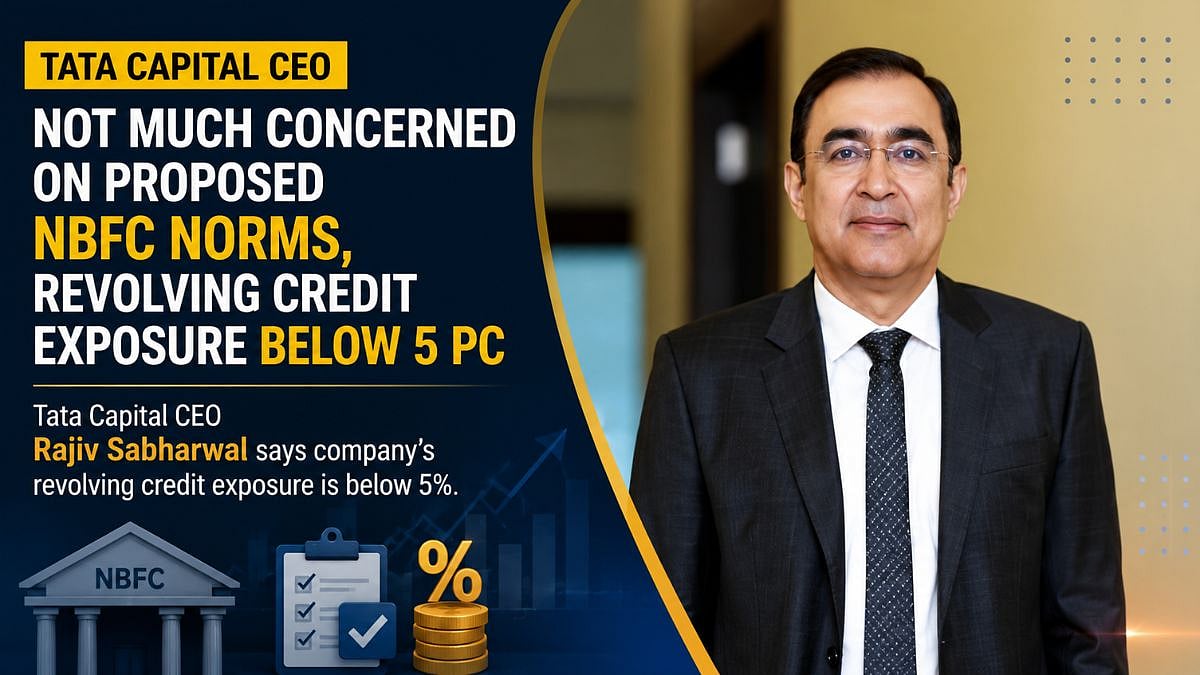
Tata Capital, a non-bank lender, is not concerned about the proposed norms by the Reserve Bank of India (RBI) for non-banking finance companies (NBFCs). The company's revolving credit exposure is less than 5%, according to its Managing Director and CEO, Rajiv Sabharwal.
The RBI proposed on August 6 that NBFCs should offer credit products structured like term loans and not offer revolving credit products. Revolving credit allows borrowers to repeatedly draw money, repay it, and borrow again up to a set maximum limit. Examples of revolving credit include credit cards and personal lines of credit.
Sabharwal stated that the company's exposure to revolving credit is minimal, and it will submit its feedback to the RBI on the draft norms. The regulator has asked for feedback, and Tata Capital is still collating data to determine the specific parameters of its response.
The proposed regulations aim to restrict NBFCs from offering revolving credit products, but this restriction will not apply to NBFCs authorized by the RBI to issue credit cards. The sanctioned limit is disbursed in one or more installments and is repayable according to a predetermined amortization schedule.
The RBI has given regulated entities and stakeholders until August 28 to submit their feedback and suggestions on the draft norms. Industry bodies can submit their own feedback, while Tata Capital will independently share its views with the regulator.
Sabharwal noted that it is too early to assess the final impact of the proposed regulations. He also stated that there is not much to be concerned about at this stage.
Tata Capital's response to the proposed norms is significant, as it is one of the major NBFCs in the country. The company's feedback will be crucial in shaping the final regulations.
The proposed norms are part of the RBI's efforts to regulate the NBFC sector and prevent any potential risks to the financial system. The regulator has been closely monitoring the sector, and the proposed norms are expected to have a significant impact on the industry.
In conclusion, Tata Capital is not concerned about the proposed norms, and its revolving credit exposure is below 5%. The company will submit its feedback to the RBI, and the regulator will consider the feedback before finalizing the regulations.
The proposed norms are a significant development in the NBFC sector, and their impact will be closely watched by the industry and regulators. The final regulations will be crucial in shaping the future of the sector and ensuring its stability.
The RBI's efforts to regulate the NBFC sector are part of its broader efforts to maintain financial stability and prevent any potential risks to the economy. The proposed norms are a step in the right direction, and their impact will be significant in the coming months and years.
The NBFC sector is a critical part of the financial system, and its regulation is essential to maintaining stability and preventing any potential risks. The proposed norms are a significant development in this regard, and their impact will be closely watched by the industry and regulators.
In the end, the proposed norms will have a significant impact on the NBFC sector, and Tata Capital's response will be crucial in shaping the final regulations. The company's feedback will be considered by the RBI, and the final regulations will be significant in maintaining financial stability and preventing any potential risks to the economy.
Frequently asked questions
What is the proposed norm by RBI for NBFCs?
The RBI has proposed that NBFCs should offer credit products structured like term loans and not offer revolving credit products.
What is the deadline for submitting feedback on the draft norms?
The deadline for submitting feedback is August 28.