Tamil Nadu Women Scammed Into Shaving Heads For Fake ₹15,000 Scheme
Women in Tamil Nadu's Salem district were tricked into shaving their heads for a fake government scheme. The scammer promised ₹15,000 to women and ₹6,000 to men.
'%3E%3Crect%20width%3D'96'%20height%3D'96'%20fill%3D'%23B3261E'%2F%3E%3Ccircle%20cx%3D'30'%20cy%3D'24'%20r%3D'44'%20fill%3D'%23fff'%20opacity%3D'.12'%2F%3E%3Ccircle%20cx%3D'60'%20cy%3D'74'%20r%3D'40'%20fill%3D'%23000'%20opacity%3D'.10'%2F%3E%3C%2Fg%3E%3Cg%20fill%3D'%23fff'%3E%3Crect%20x%3D'29'%20y%3D'49'%20width%3D'8'%20height%3D'19'%20rx%3D'1'%2F%3E%3Crect%20x%3D'39'%20y%3D'40'%20width%3D'9'%20height%3D'28'%20rx%3D'1'%2F%3E%3Crect%20x%3D'50'%20y%3D'45'%20width%3D'8'%20height%3D'23'%20rx%3D'1'%2F%3E%3Crect%20x%3D'60'%20y%3D'53'%20width%3D'7'%20height%3D'15'%20rx%3D'1'%2F%3E%3Crect%20x%3D'41'%20y%3D'34'%20width%3D'5'%20height%3D'6'%2F%3E%3C%2Fg%3E%3C%2Fsvg%3E)
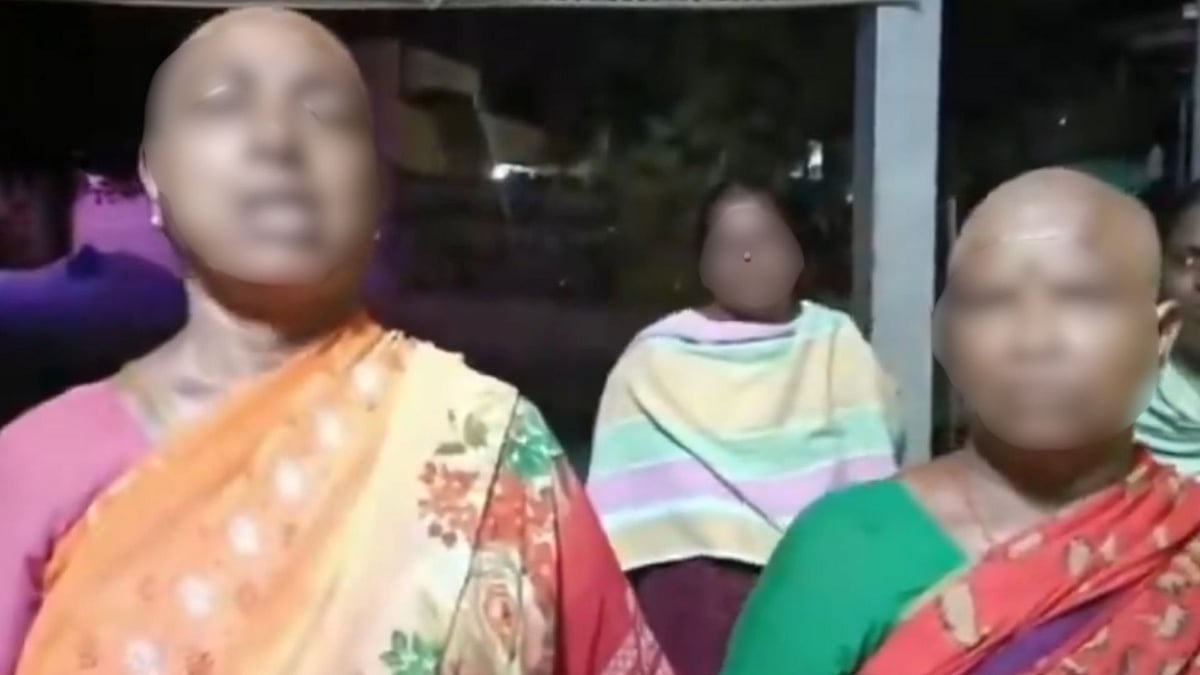
A bizarre scam has come to light in Tamil Nadu's Salem district, where several women were duped into shaving their heads as part of a fake government scheme. The scammer, posing as an official from the Tehsildar's office, contacted residents over the phone and claimed that the state government had launched a preventive campaign against a new infectious disease.
The scammer told the women that shaving their heads would prevent the spread of the disease and that they would receive ₹15,000 as financial assistance. Men were promised ₹6,000, while college students were offered ₹45,000 along with a free laptop. The scammer even convinced one woman by saying that her name had already been shortlisted for the government programme.
Three women believed the claims and got their heads shaved, only to realize later that they had fallen prey to a carefully planned scam. When they tried to contact the scammer to claim their money, their calls went unanswered and the phone was eventually switched off.
This incident highlights the increasing number of fake government schemes and impersonation scams in India. Fraudsters often misuse the names of government offices or officials to gain the trust of unsuspecting citizens before convincing them to part with money or undergo unnecessary procedures.
The police have launched a search for the unidentified scammer and are investigating the matter. The incident has also raised awareness about the importance of verifying information before taking any action.
The government has warned citizens to be cautious of such scams and to verify the authenticity of any scheme or programme before participating. Official government schemes are always announced through authorized channels, and citizens should be wary of any scheme that promises unrealistic benefits or requires them to undergo unnecessary procedures.
The victims of the scam are now left to deal with the aftermath of their ordeal, and the incident serves as a reminder to be vigilant and cautious when dealing with unknown individuals or schemes.
The police are urging citizens to come forward and report any similar incidents, and to be aware of the tactics used by scammers to deceive people. By being informed and cautious, citizens can protect themselves from falling prey to such scams.
In recent years, there has been a rise in cases of fake government schemes and impersonation scams in India. These scams often target vulnerable citizens, such as the elderly or those in need of financial assistance. The government has taken steps to combat these scams, but it is essential for citizens to be aware of the risks and to take necessary precautions to protect themselves.
The incident in Tamil Nadu's Salem district is a reminder that scams can happen anywhere, and it is crucial for citizens to be vigilant and cautious when dealing with unknown individuals or schemes. By being informed and aware, citizens can protect themselves and their loved ones from falling prey to such scams.
In conclusion, the scam in Tamil Nadu's Salem district is a stark reminder of the importance of verifying information and being cautious when dealing with unknown individuals or schemes. Citizens must be aware of the tactics used by scammers and take necessary precautions to protect themselves. By being informed and vigilant, citizens can prevent themselves from falling prey to such scams and ensure their safety and well-being.
Frequently asked questions
What was the scam about?
The scammer promised women ₹15,000 to shave their heads as part of a fake government scheme to prevent the spread of a new infectious disease.
How many women fell prey to the scam?
Three women believed the claims and got their heads shaved.