RBI: Digital Payments Rise, But Cash Demand Remains Strong
Cash demand remains strong in India, especially in rural areas. Digital payments adoption rises, but cash in circulation grows at double-digit rates.
'%3E%3Crect%20width%3D'96'%20height%3D'96'%20fill%3D'%23B3261E'%2F%3E%3Ccircle%20cx%3D'30'%20cy%3D'24'%20r%3D'44'%20fill%3D'%23fff'%20opacity%3D'.12'%2F%3E%3Ccircle%20cx%3D'60'%20cy%3D'74'%20r%3D'40'%20fill%3D'%23000'%20opacity%3D'.10'%2F%3E%3C%2Fg%3E%3Cg%20fill%3D'%23fff'%3E%3Crect%20x%3D'29'%20y%3D'49'%20width%3D'8'%20height%3D'19'%20rx%3D'1'%2F%3E%3Crect%20x%3D'39'%20y%3D'40'%20width%3D'9'%20height%3D'28'%20rx%3D'1'%2F%3E%3Crect%20x%3D'50'%20y%3D'45'%20width%3D'8'%20height%3D'23'%20rx%3D'1'%2F%3E%3Crect%20x%3D'60'%20y%3D'53'%20width%3D'7'%20height%3D'15'%20rx%3D'1'%2F%3E%3Crect%20x%3D'41'%20y%3D'34'%20width%3D'5'%20height%3D'6'%2F%3E%3C%2Fg%3E%3C%2Fsvg%3E)
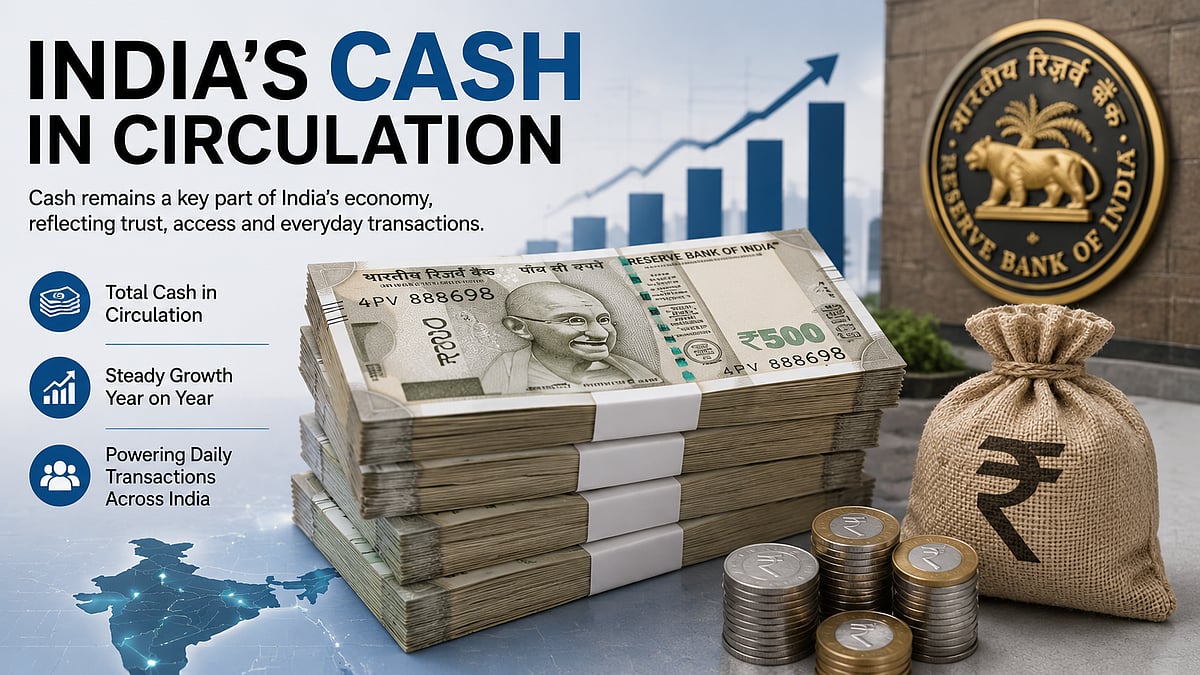
The Reserve Bank of India (RBI) Deputy Governor, Shirish Chandra Murmu, has noted that despite the significant rise in digital payments adoption in India over the last decade, cash demand remains strong, particularly in rural and semi-urban areas.
This trend is observed among low-income groups, older populations, and small businesses. According to Murmu, the currency in circulation continues to grow at double-digit rates, even as the share of individual transactions in cash declines due to the increasing adoption of digital payments.
Murmu stated that this combination makes it challenging to predict future demand, which complicates planning for production and distribution capacity. He emphasized that cash remains a significant mode of payment in the Indian economy and that preserving trust in it is crucial for maintaining monetary sovereignty.
The RBI has been managing the currency scale, producing between 28 and 30 billion banknotes annually across six denominations and disposing of roughly 21 billion pieces a year. Currently, there are 176 billion banknotes in circulation in India, which is a significant volume considering the logistics involved.
In comparison, there were approximately 56 billion US dollar bills and 30 billion euro banknotes in circulation at the end of last year. However, Murmu noted that the denomination mix in India is weighted towards lower-value notes, which naturally means more pieces change hands for the same value of transactions.
To ensure the durability of currency, the RBI is exploring ways to extend the life of banknotes, including surface coatings on the substrate and polymer notes for lower denominations. The regulator is also working to reduce the carbon footprint of the cash cycle by optimizing the distribution network for efficiency and improving the disposal of banknote briquettes.
The RBI's efforts to manage the currency scale and ensure the durability of banknotes are crucial for maintaining the trust of the public in the Indian economy. As the adoption of digital payments continues to rise, it is essential to strike a balance between the growth of digital payments and the demand for cash.
The Indian economy's reliance on cash is not unique, and many countries face similar challenges in managing their currency scales. However, the RBI's proactive approach to addressing these challenges is a positive step towards maintaining the stability of the Indian economy.
In conclusion, the RBI's observations on the strong demand for cash in India, despite the rise in digital payments, highlight the need for a balanced approach to managing the currency scale and ensuring the durability of banknotes. As the Indian economy continues to evolve, it is essential to prioritize the maintenance of monetary sovereignty and the trust of the public in the economy.
The significance of this trend lies in its implications for the Indian economy and the RBI's role in managing the currency scale. The strong demand for cash in rural and semi-urban areas underscores the need for the RBI to continue its efforts to ensure the availability of cash and maintain the trust of the public in the economy.
Overall, the RBI's efforts to manage the currency scale and ensure the durability of banknotes are critical for maintaining the stability of the Indian economy. As the adoption of digital payments continues to rise, it is essential to strike a balance between the growth of digital payments and the demand for cash, and the RBI's proactive approach to addressing these challenges is a positive step towards achieving this balance.
Frequently asked questions
Why does cash demand remain strong in India?
Cash demand remains strong in India, especially in rural and semi-urban areas, among low-income groups, older populations, and small businesses.
What is the RBI doing to ensure the durability of currency?
The RBI is exploring ways to extend the life of banknotes, including surface coatings on the substrate and polymer notes for lower denominations, and is working to reduce the carbon footprint of the cash cycle.