63,000 MP Schools Lack Internet
MP schools face digital divide, thousands lack internet, electricity, computers
'%3E%3Crect%20width%3D'96'%20height%3D'96'%20fill%3D'%23B3261E'%2F%3E%3Ccircle%20cx%3D'30'%20cy%3D'24'%20r%3D'44'%20fill%3D'%23fff'%20opacity%3D'.12'%2F%3E%3Ccircle%20cx%3D'60'%20cy%3D'74'%20r%3D'40'%20fill%3D'%23000'%20opacity%3D'.10'%2F%3E%3C%2Fg%3E%3Cg%20fill%3D'%23fff'%3E%3Crect%20x%3D'29'%20y%3D'49'%20width%3D'8'%20height%3D'19'%20rx%3D'1'%2F%3E%3Crect%20x%3D'39'%20y%3D'40'%20width%3D'9'%20height%3D'28'%20rx%3D'1'%2F%3E%3Crect%20x%3D'50'%20y%3D'45'%20width%3D'8'%20height%3D'23'%20rx%3D'1'%2F%3E%3Crect%20x%3D'60'%20y%3D'53'%20width%3D'7'%20height%3D'15'%20rx%3D'1'%2F%3E%3Crect%20x%3D'41'%20y%3D'34'%20width%3D'5'%20height%3D'6'%2F%3E%3C%2Fg%3E%3C%2Fsvg%3E)
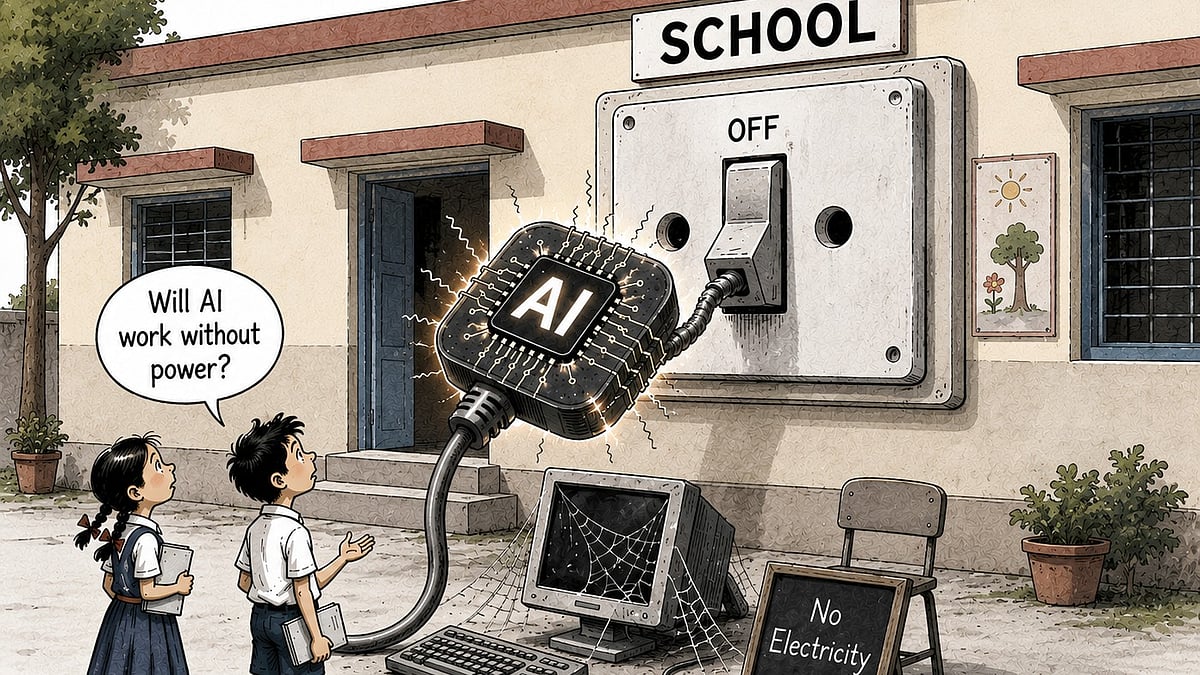
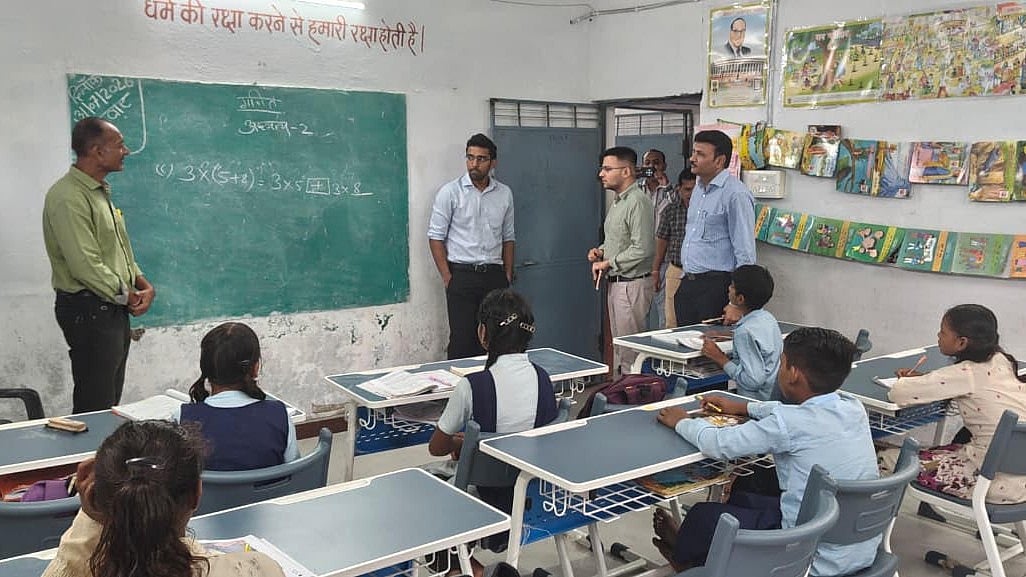
The Madhya Pradesh government's plan to introduce Artificial Intelligence education in government schools is facing a reality check due to the lack of basic infrastructure in thousands of schools. According to the Performance Grading Index 2025-26 data, 63,136 government schools in the state do not have internet connectivity, while 38,958 schools are without computers and 7,718 schools still function without electricity.
The data reveals a wide digital divide in the state, with many schools lacking the basic infrastructure needed for digital education. Computers meant for teaching-learning activities are unavailable in 45,743 schools, making digital education inaccessible for a large section of students.
The PGI report assessed districts on digital learning using parameters such as internet access, availability of computers and laptops, smart classrooms, student access to digital devices, and trained teachers. The report found that even major urban districts recorded only average marks in digital learning indicators.
Indore scored 21 out of 50, Bhopal scored 20, Gwalior scored 17, Jabalpur scored 14, and Narsinghpur scored 14. Niwari emerged as the poorest-performing district with just six points, while Alirajpur and Shahdol also ranked among the lowest performers.
The lack of digital infrastructure in government schools is a major concern, as it hinders the ability of students to access digital education and compete with their peers in other parts of the country. The state government's plan to introduce AI education in government schools is a step in the right direction, but it will require significant investment in digital infrastructure to be successful.
The digital divide in MP schools is not just limited to internet connectivity and computers. Many schools also lack trained teachers and smart classrooms, which are essential for effective digital learning. The state government will need to address these issues to ensure that students in government schools have access to quality digital education.
The introduction of AI education in government schools is part of the National Education Policy (NEP), which aims to promote digital learning and improve the quality of education in the country. However, the lack of digital infrastructure in MP schools is a major challenge that will need to be addressed to achieve this goal.
In conclusion, the MP government's plan to introduce AI education in government schools is facing a reality check due to the lack of basic infrastructure in thousands of schools. The state government will need to invest in digital infrastructure, including internet connectivity, computers, and trained teachers, to ensure that students in government schools have access to quality digital education.
The significance of this issue for India is that it highlights the need for investment in digital infrastructure in government schools. The lack of digital infrastructure is a major challenge that hinders the ability of students to access digital education and compete with their peers in other parts of the country. Addressing this issue will be essential to achieving the goals of the National Education Policy and promoting digital learning in India.
Frequently asked questions
How many MP schools lack internet connectivity?
63,136 government schools in MP do not have internet connectivity
What is the digital learning score of Indore district?
Indore scored 21 out of 50 in digital learning indicators