Vermont Lake Catfish Hit by Contagious Cancer
Catfish in Vermont lake found with contagious cancer. Study reveals 30% affected.
'%3E%3Crect%20width%3D'96'%20height%3D'96'%20fill%3D'%23B3261E'%2F%3E%3Ccircle%20cx%3D'30'%20cy%3D'24'%20r%3D'44'%20fill%3D'%23fff'%20opacity%3D'.12'%2F%3E%3Ccircle%20cx%3D'60'%20cy%3D'74'%20r%3D'40'%20fill%3D'%23000'%20opacity%3D'.10'%2F%3E%3C%2Fg%3E%3Cg%20fill%3D'%23fff'%3E%3Crect%20x%3D'29'%20y%3D'49'%20width%3D'8'%20height%3D'19'%20rx%3D'1'%2F%3E%3Crect%20x%3D'39'%20y%3D'40'%20width%3D'9'%20height%3D'28'%20rx%3D'1'%2F%3E%3Crect%20x%3D'50'%20y%3D'45'%20width%3D'8'%20height%3D'23'%20rx%3D'1'%2F%3E%3Crect%20x%3D'60'%20y%3D'53'%20width%3D'7'%20height%3D'15'%20rx%3D'1'%2F%3E%3Crect%20x%3D'41'%20y%3D'34'%20width%3D'5'%20height%3D'6'%2F%3E%3C%2Fg%3E%3C%2Fsvg%3E)
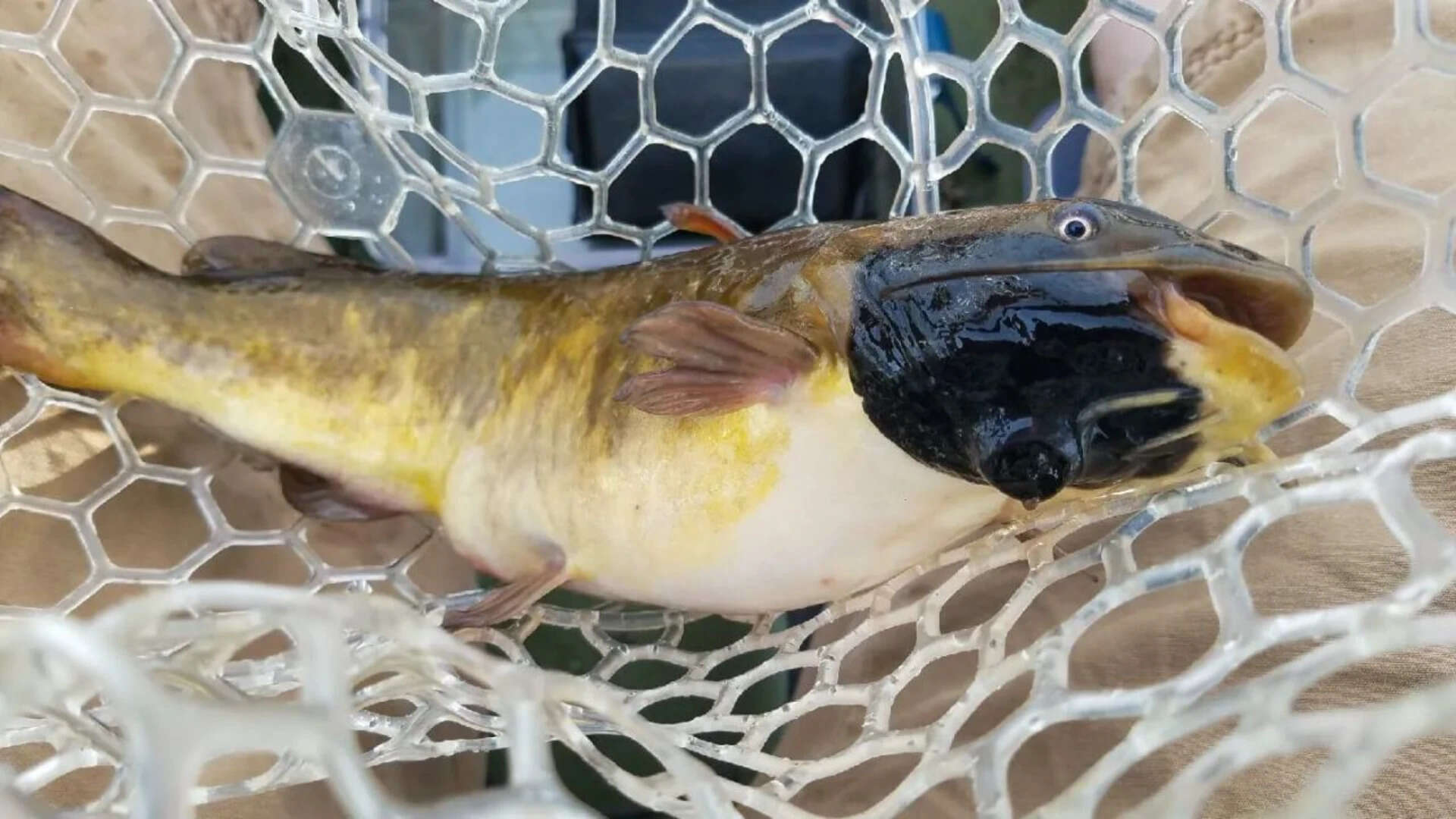
A recent study has discovered a new type of transmissible cancer affecting catfish in a Vermont lake, with approximately 30% of the population showing signs of the disease. The cancer is characterized by skin lesions that can spread from one fish to another, a rare occurrence in the animal kingdom.
The study's findings have significant implications for the understanding of transmissible cancers, which are extremely rare in animals. Researchers are now working to understand the mechanisms of the disease's transmission, which has already been found in numerous lakes throughout New England and Canada.
The discovery of this contagious cancer has placed catfish among a rare group of animals susceptible to transmissible cancers. This group includes dogs, which can contract a type of transmissible cancer known as canine transmissible venereal tumor, as well as Tasmanian devils, which are affected by a type of facial tumor.
The researchers behind the study are eager to learn more about the disease and its impact on catfish populations. They believe that understanding the transmission mechanisms of the cancer could provide valuable insights into the development of similar diseases in other animals.
The study's findings have also raised concerns about the potential impact of the disease on catfish populations in other lakes and rivers. As a result, researchers are calling for further study and monitoring of the disease to determine its full extent and potential consequences.
In addition to its implications for catfish populations, the study's discovery of a new type of transmissible cancer could also have significant implications for human health. While the disease is not transmissible to humans, the study of transmissible cancers in animals could provide valuable insights into the development of similar diseases in humans.
The study's researchers are now working to develop a better understanding of the disease and its transmission mechanisms, with the goal of developing effective strategies for preventing and treating the disease. This could involve the development of new treatments or vaccines, as well as efforts to reduce the spread of the disease through changes in fishing practices or other environmental factors.
Overall, the discovery of a new type of transmissible cancer in catfish is an important finding that could have significant implications for our understanding of cancer and its transmission. Further study and research are needed to fully understand the disease and its impact on catfish populations, as well as its potential implications for human health.
The study's findings are a reminder of the importance of continued research and monitoring of animal populations, particularly in the face of emerging diseases. By working to understand and address the causes and consequences of these diseases, researchers can help to develop effective strategies for preventing and treating them, and reducing their impact on animal populations and human health.
In conclusion, the discovery of a new type of transmissible cancer in catfish is a significant finding that highlights the importance of continued research and monitoring of animal populations. The study's findings have significant implications for our understanding of cancer and its transmission, and could potentially lead to the development of new treatments or vaccines for the disease.
However, it is worth noting that this story is not directly related to Mumbai or India, and its relevance to the local audience may be limited. Nevertheless, the story is an important one that highlights the ongoing efforts of researchers to understand and address emerging diseases in animal populations, and its findings could have significant implications for our understanding of cancer and its transmission.
Frequently asked questions
What is the name of the disease affecting catfish in Vermont lake?
The disease is a new type of transmissible cancer characterized by skin lesions.
Can the disease be transmitted to humans?
No, the disease is not transmissible to humans.