Modi Credits Rail Electrification for Energy Security
PM Modi highlights Indian Railways' progress, Middle East crisis impact minimal
'%3E%3Crect%20width%3D'96'%20height%3D'96'%20fill%3D'%231A5276'%2F%3E%3Ccircle%20cx%3D'30'%20cy%3D'24'%20r%3D'44'%20fill%3D'%23fff'%20opacity%3D'.12'%2F%3E%3Ccircle%20cx%3D'60'%20cy%3D'74'%20r%3D'40'%20fill%3D'%23000'%20opacity%3D'.10'%2F%3E%3C%2Fg%3E%3Cg%20fill%3D'%23fff'%3E%3Cpath%20d%3D'M31%2041%20L48%2031%20L65%2041%20Z'%2F%3E%3Crect%20x%3D'33'%20y%3D'43'%20width%3D'4'%20height%3D'17'%2F%3E%3Crect%20x%3D'41'%20y%3D'43'%20width%3D'4'%20height%3D'17'%2F%3E%3Crect%20x%3D'51'%20y%3D'43'%20width%3D'4'%20height%3D'17'%2F%3E%3Crect%20x%3D'59'%20y%3D'43'%20width%3D'4'%20height%3D'17'%2F%3E%3Crect%20x%3D'30'%20y%3D'62'%20width%3D'36'%20height%3D'4'%20rx%3D'1'%2F%3E%3C%2Fg%3E%3C%2Fsvg%3E)
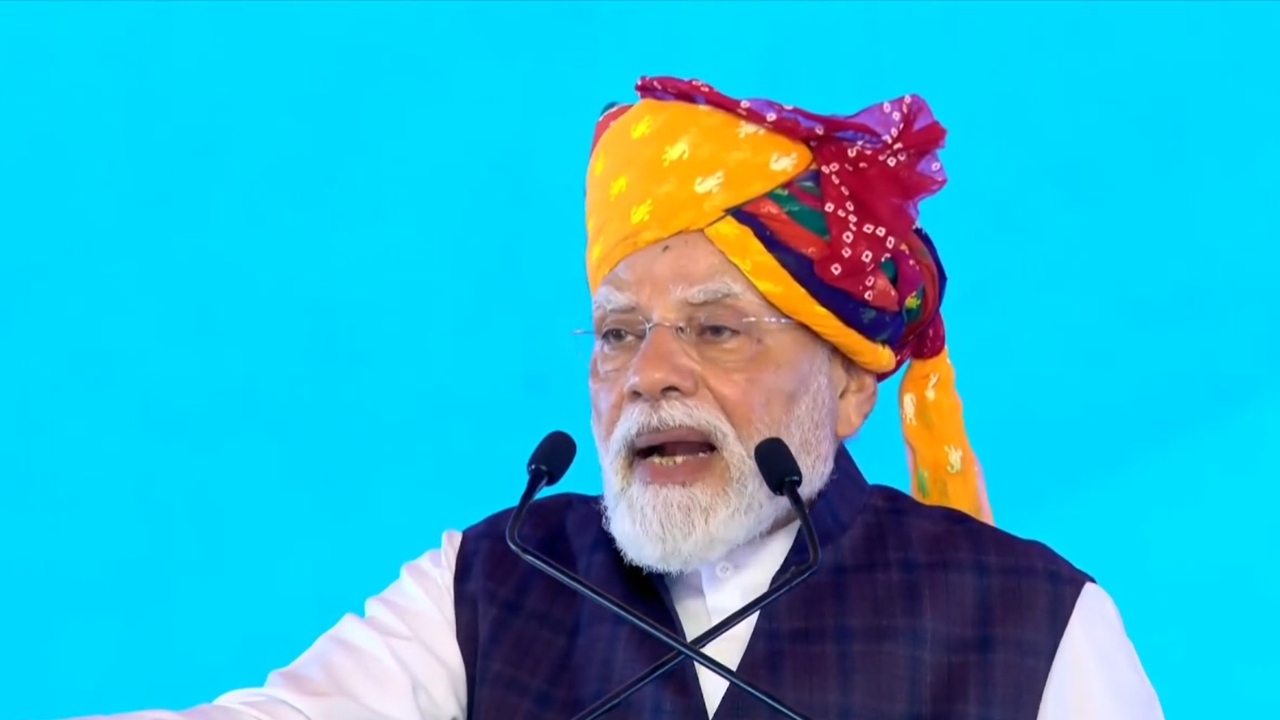
Prime Minister Narendra Modi recently emphasized the significance of Indian Railways' rapid electrification in ensuring national energy security. According to Modi, the extensive electrification of the rail network over the past twelve years has prevented a potential standstill during crises in the Middle East, such as the Hormuz crisis.
The Prime Minister noted that prior to 2014, less than thirty percent of the rail network was electrified. However, through concerted efforts, nearly ninety-nine percent of India's rail network is now electrified. This remarkable transformation has enabled uninterrupted train operations despite global energy challenges.
Modi's statement underscores the importance of strategic planning and investment in critical infrastructure. The electrification of the rail network has not only enhanced energy security but also contributed to a reduction in greenhouse gas emissions.
The Indian Railways' electrification drive is a testament to the government's commitment to modernizing the country's transportation sector. The initiative has also generated employment opportunities and stimulated economic growth in various regions.
In the context of global energy dynamics, India's progress in electrifying its rail network assumes greater significance. The country's ability to maintain uninterrupted train operations during times of crisis demonstrates its resilience and preparedness.
The Middle East, a critical region for global energy supplies, has experienced several crises in recent years. The Hormuz crisis, in particular, had significant implications for international trade and energy security. However, India's electrified rail network has helped mitigate the impact of such crises on the country's transportation sector.
As India continues to navigate the complexities of global energy politics, its investments in strategic infrastructure, such as the electrification of the rail network, will play a crucial role in ensuring energy security and economic stability.
In conclusion, Prime Minister Modi's statement highlights the importance of forward thinking and strategic planning in addressing national energy security challenges. The Indian Railways' electrification drive serves as a model for other countries seeking to enhance their energy security and reduce dependence on fossil fuels.
The success of this initiative also underscores the significance of continued investment in critical infrastructure, particularly in the transportation sector. As India strives to achieve its economic and environmental goals, the electrification of the rail network will remain a vital component of its strategy.
The implications of this achievement extend beyond the realm of energy security, as it demonstrates India's capacity to adapt to changing global circumstances and ensure the continuity of essential services. This, in turn, contributes to the country's overall economic resilience and competitiveness.
In the broader context of India's development trajectory, the electrification of the rail network represents a significant milestone. It reflects the government's commitment to leveraging technology and infrastructure to drive growth, enhance energy security, and promote sustainable development.
Ultimately, the Indian Railways' electrification drive serves as a testament to the power of strategic planning and investment in critical infrastructure. As the country continues to evolve and grow, initiatives like this will remain essential in ensuring India's energy security, economic stability, and environmental sustainability.