Rafale Fighter Jet's Stealth Capabilities Revealed
India's Rafale boasts advanced avionics and sensor fusion. Its stealth capabilities protect it in combat.
'%3E%3Crect%20width%3D'96'%20height%3D'96'%20fill%3D'%23B3261E'%2F%3E%3Ccircle%20cx%3D'30'%20cy%3D'24'%20r%3D'44'%20fill%3D'%23fff'%20opacity%3D'.12'%2F%3E%3Ccircle%20cx%3D'60'%20cy%3D'74'%20r%3D'40'%20fill%3D'%23000'%20opacity%3D'.10'%2F%3E%3C%2Fg%3E%3Cg%20fill%3D'%23fff'%3E%3Crect%20x%3D'29'%20y%3D'49'%20width%3D'8'%20height%3D'19'%20rx%3D'1'%2F%3E%3Crect%20x%3D'39'%20y%3D'40'%20width%3D'9'%20height%3D'28'%20rx%3D'1'%2F%3E%3Crect%20x%3D'50'%20y%3D'45'%20width%3D'8'%20height%3D'23'%20rx%3D'1'%2F%3E%3Crect%20x%3D'60'%20y%3D'53'%20width%3D'7'%20height%3D'15'%20rx%3D'1'%2F%3E%3Crect%20x%3D'41'%20y%3D'34'%20width%3D'5'%20height%3D'6'%2F%3E%3C%2Fg%3E%3C%2Fsvg%3E)
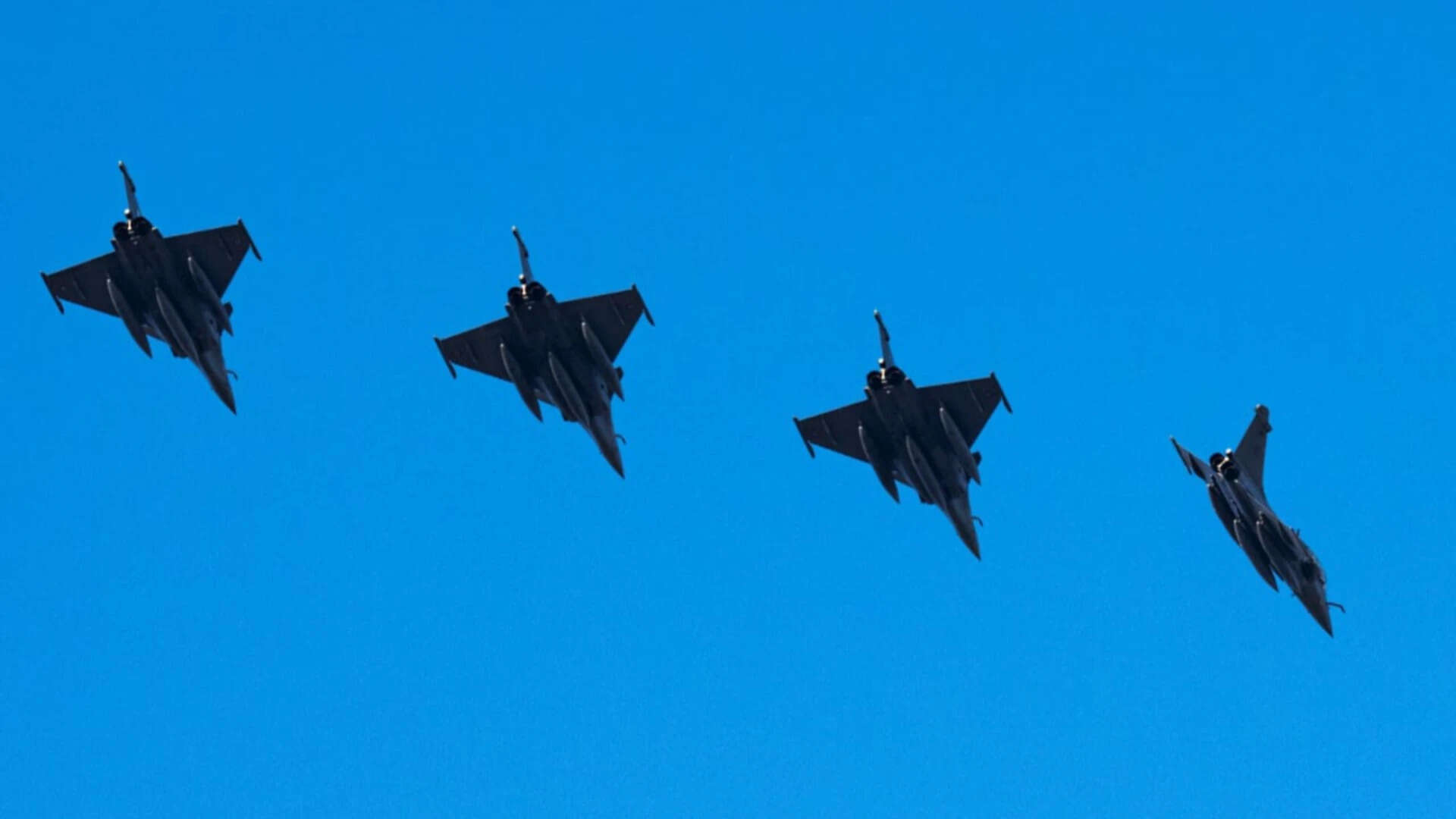
The Indian Air Force's Rafale fighter jet is its most advanced combat aircraft, offering a range of cutting-edge features that make it a formidable opponent in the skies. As a 4.5-generation platform, the Rafale provides advanced avionics and sensor fusion for its pilots, enabling them to perform multiple mission types within a single sortie and enhancing operational flexibility.
The Rafale's ability to undertake a variety of missions is a significant advantage, allowing it to adapt to different scenarios and respond effectively to emerging threats. At the heart of its capabilities is its advanced avionics system, which integrates a range of sensors and systems to provide pilots with a comprehensive view of the battlefield.
One of the key features of the Rafale is its reliance on electronic means and integrated systems for radar evasion. This approach enables the aircraft to operate in a variety of environments, using its advanced sensors and systems to detect and respond to hostile threats. The Rafale's survivability architecture is designed to operate in both passive and active modes, providing pilots with a range of options for evading enemy radar and defending against missile attacks.
The use of electronic warfare and stealth technologies is a critical aspect of the Rafale's design, allowing it to penetrate hostile airspace and undertake missions with a high degree of survivability. By leveraging these advanced capabilities, the Indian Air Force is able to project power and protect its interests in a rapidly changing security environment.
The Rafale's advanced avionics and sensor fusion capabilities are also supported by a range of other systems, including advanced radar and communication systems. These systems enable the aircraft to operate as part of a network-centric warfare system, sharing data and coordinating with other assets to achieve strategic objectives.
In the context of India's evolving security landscape, the Rafale is a significant addition to the country's military capabilities. As a major power with a growing economy and strategic interests, India faces a range of security challenges, from counter-terrorism to great power competition. The Rafale's advanced capabilities make it an important asset in addressing these challenges, providing the Indian Air Force with a flexible and potent platform for undertaking a range of missions.
The Indian Air Force's acquisition of the Rafale is also significant in terms of its implications for the country's defense industry. As a major purchaser of defense equipment, India is seeking to develop its own domestic capabilities, leveraging partnerships with foreign companies to acquire new technologies and build its own industrial base. The Rafale program is an important part of this effort, providing India with access to advanced technologies and expertise that can be used to support the development of its own defense industry.
In conclusion, the Rafale fighter jet is a significant addition to the Indian Air Force's capabilities, offering advanced avionics, sensor fusion, and stealth technologies that make it a formidable opponent in the skies. As India continues to evolve its military capabilities and address emerging security challenges, the Rafale is likely to play an important role in supporting the country's strategic objectives.
The Rafale's capabilities have significant implications for Mumbai, as the city is home to a major Indian Air Force base and plays a critical role in the country's defense strategy. The presence of the Rafale in India's military arsenal is a reminder of the country's commitment to defending its interests and protecting its citizens, and underscores the importance of continued investment in defense modernization and capability development.
Overall, the Rafale's advanced capabilities make it an important asset for the Indian Air Force, providing a flexible and potent platform for undertaking a range of missions. As India continues to evolve its military capabilities and address emerging security challenges, the Rafale is likely to play a critical role in supporting the country's strategic objectives.