Arctic Ice Thickens with Seawater Spray
Scientists find promising results in Arctic ice preservation, but challenges remain. Initial tests show thicker, more reflective ice.

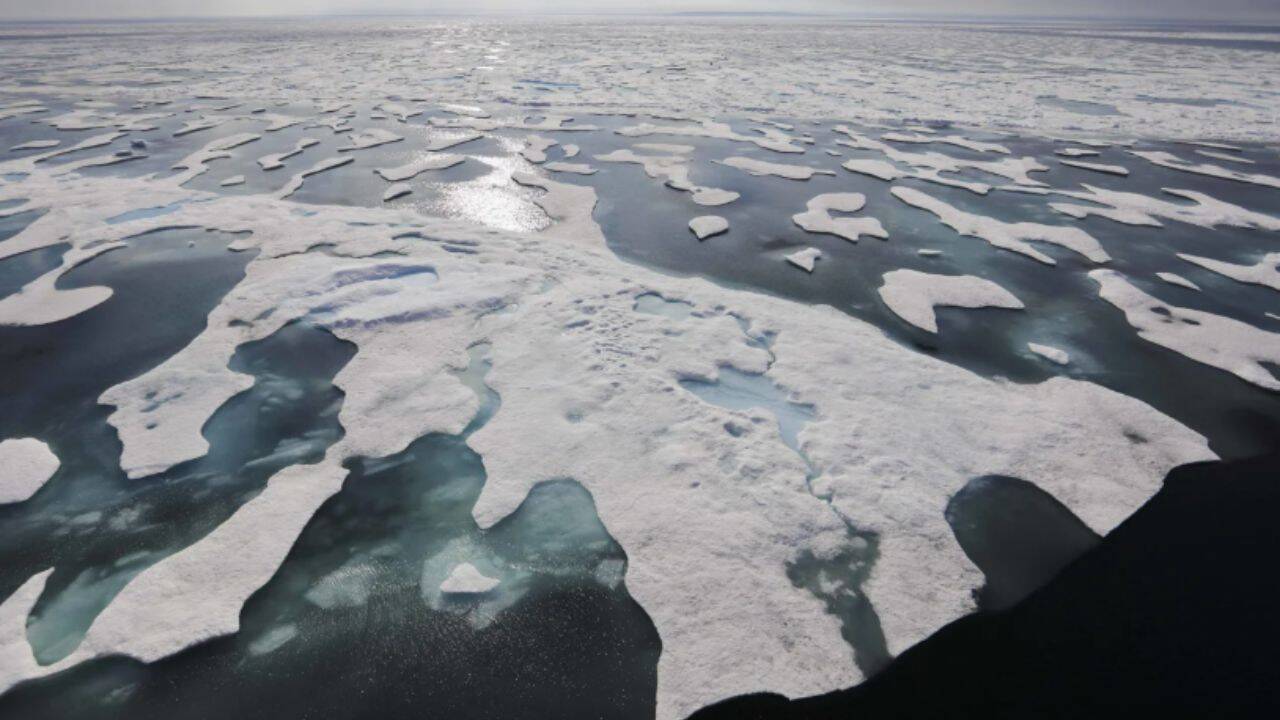
In a recent experiment, scientists successfully thickened Arctic ice by spraying seawater onto its surface. The treatment resulted in the ice becoming more resistant to summer melting, with the treated area showing increased thickness and reflectivity. This innovative approach offers a potential alternative to more controversial geoengineering methods aimed at preserving Arctic ice.
The research team involved in the project has expressed cautious optimism about the initial results, noting that the technique shows promise for ice preservation. According to the scientists, the use of seawater to thicken Arctic ice could provide a more environmentally friendly solution compared to other geoengineering approaches. However, they also emphasize that significant challenges must be addressed before this method can be considered for large-scale implementation across the Arctic region.
One of the primary concerns is the feasibility of scaling up the process to cover vast areas of Arctic ice. The logistics of spraying seawater over such large distances pose considerable technical and practical difficulties. Furthermore, the potential environmental impacts of such a large-scale operation must be carefully assessed to ensure that the technique does not inadvertently cause harm to the delicate Arctic ecosystem.
The successful initial results of this experiment have important implications for the preservation of Arctic ice, which plays a critical role in regulating global climate patterns. As the planet continues to experience the effects of climate change, innovative solutions like this are crucial for mitigating the loss of polar ice caps. While the seawater spraying technique is still in its infancy, it represents a promising avenue for further research and development.
As researchers continue to explore and refine this method, they will need to collaborate with experts from various fields to overcome the challenges associated with its large-scale implementation. This includes working with engineers to develop efficient spraying systems, with environmental scientists to assess potential ecological impacts, and with policymakers to ensure that any future applications are regulated and safe.
In conclusion, the use of seawater to thicken Arctic ice has shown promising initial results, offering a potential new tool in the fight against climate change. However, much work remains to be done before this technique can be widely adopted. As scientists and policymakers move forward with this research, they must prioritize careful consideration of the challenges and potential consequences of such a large-scale environmental intervention.
The next steps for this research will involve more extensive testing and evaluation of the seawater spraying technique. This will include assessing its effectiveness over longer periods and in different Arctic environments, as well as conducting thorough environmental impact assessments. By pursuing this innovative approach and addressing the challenges it presents, scientists hope to contribute to the preservation of Arctic ice and the mitigation of climate change effects.