Scientists Discover Ancient Sea Worm's Mysterious Bio-Metal Jaws
Ancient sea worms had powerful jaws made of bio-metal, scientists find. This discovery could inspire new materials.
'%3E%3Crect%20width%3D'96'%20height%3D'96'%20fill%3D'%23B3261E'%2F%3E%3Ccircle%20cx%3D'30'%20cy%3D'24'%20r%3D'44'%20fill%3D'%23fff'%20opacity%3D'.12'%2F%3E%3Ccircle%20cx%3D'60'%20cy%3D'74'%20r%3D'40'%20fill%3D'%23000'%20opacity%3D'.10'%2F%3E%3C%2Fg%3E%3Cg%20fill%3D'%23fff'%3E%3Crect%20x%3D'29'%20y%3D'49'%20width%3D'8'%20height%3D'19'%20rx%3D'1'%2F%3E%3Crect%20x%3D'39'%20y%3D'40'%20width%3D'9'%20height%3D'28'%20rx%3D'1'%2F%3E%3Crect%20x%3D'50'%20y%3D'45'%20width%3D'8'%20height%3D'23'%20rx%3D'1'%2F%3E%3Crect%20x%3D'60'%20y%3D'53'%20width%3D'7'%20height%3D'15'%20rx%3D'1'%2F%3E%3Crect%20x%3D'41'%20y%3D'34'%20width%3D'5'%20height%3D'6'%2F%3E%3C%2Fg%3E%3C%2Fsvg%3E)
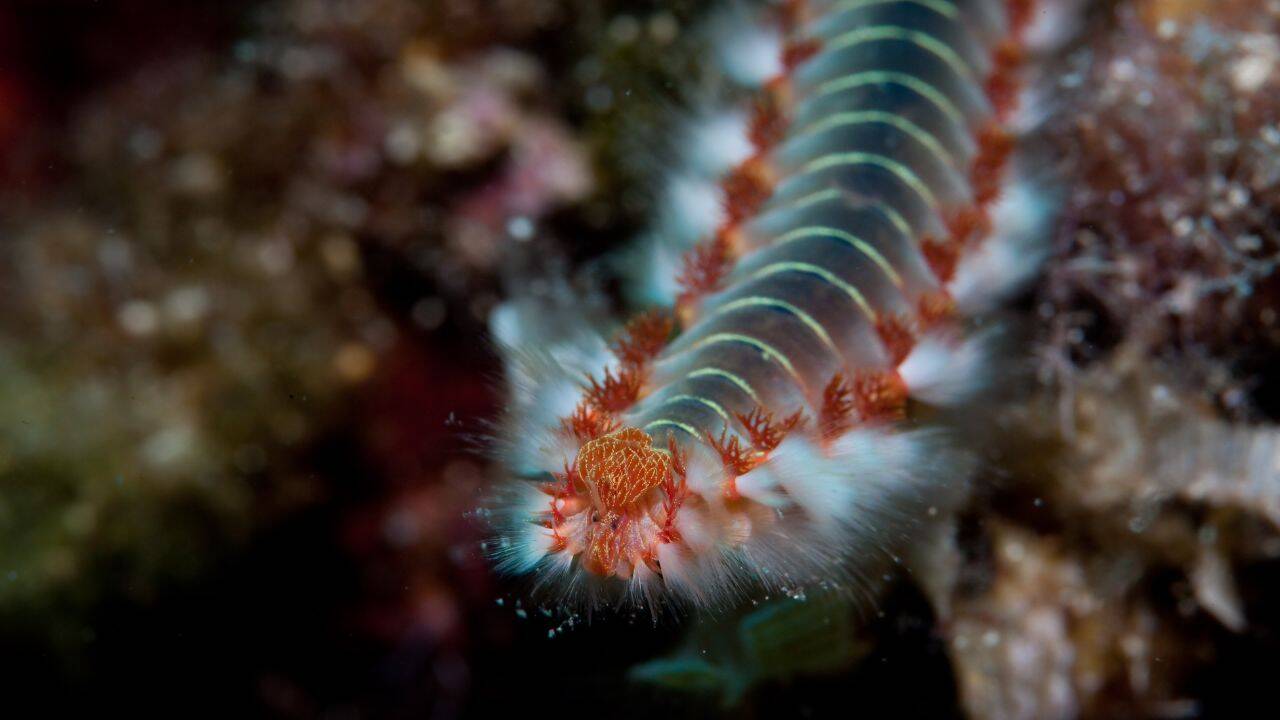
Scientists have made a groundbreaking discovery about the composition of ancient sea worm jaws. The research revealed that these marine worms possess jaws built from a combination of proteins and metal ions, creating a unique bio-metal.
These bio-metals exhibit high hardness and a specific response to strain, making them similar to traditional metals like copper and silver. The study found a size-dependent elasticity in the worm jaws, which is a phenomenon also observed in human-made metals.
The discovery of these natural bio-metals could have significant implications for the development of new human-made materials. By studying the properties and composition of these ancient sea worm jaws, researchers may be able to create new materials with unique properties.
Marine worms have been on the planet for millions of years, and their ability to adapt to their environment has led to the development of these remarkable bio-metals. The jaws of these worms are capable of withstanding the harsh conditions of the ocean, including extreme pressure and corrosion.
The researchers behind the study are excited about the potential applications of their discovery. They believe that the study of these natural bio-metals could lead to the development of new materials with improved strength, durability, and elasticity.
The discovery of the ancient sea worm's bio-metal jaws is a significant breakthrough in the field of materials science. It highlights the importance of studying natural materials and the potential for inspiration they can provide for the development of new human-made materials.
As researchers continue to study these bio-metals, they may uncover even more secrets about the composition and properties of these unique materials. This could lead to a new generation of materials with unprecedented properties, revolutionizing industries such as construction, aerospace, and healthcare.
In conclusion, the discovery of the ancient sea worm's mysterious bio-metal jaws is a significant finding that could have far-reaching implications for the development of new materials. By studying these natural bio-metals, researchers may be able to create new materials with unique properties, leading to breakthroughs in a variety of fields.
The study of these bio-metals also highlights the importance of preserving and protecting our planet's biodiversity. The discovery of these unique materials is a reminder of the many secrets that still remain to be uncovered in the natural world, and the potential for inspiration they can provide for human innovation.
The potential applications of these bio-metals are vast, and researchers are eager to continue studying these materials to unlock their secrets. As we continue to learn more about these ancient sea worms and their remarkable bio-metal jaws, we may uncover even more surprises about the natural world and its potential to inspire human innovation.
In the end, the discovery of the ancient sea worm's bio-metal jaws is a testament to the power of nature to inspire human innovation. By studying these unique materials, researchers may be able to create new materials with unprecedented properties, leading to breakthroughs in a variety of fields and improving our daily lives.