Japan Shifts Away from Pacifism, China Takes Notice
Japan enhances military, sparks China concern. New defense strategy emerges.
'%3E%3Crect%20width%3D'96'%20height%3D'96'%20fill%3D'%234A235A'%2F%3E%3Ccircle%20cx%3D'30'%20cy%3D'24'%20r%3D'44'%20fill%3D'%23fff'%20opacity%3D'.12'%2F%3E%3Ccircle%20cx%3D'60'%20cy%3D'74'%20r%3D'40'%20fill%3D'%23000'%20opacity%3D'.10'%2F%3E%3C%2Fg%3E%3Cg%20fill%3D'none'%20stroke%3D'%23fff'%20stroke-width%3D'3'%3E%3Ccircle%20cx%3D'48'%20cy%3D'48'%20r%3D'16'%2F%3E%3Cellipse%20cx%3D'48'%20cy%3D'48'%20rx%3D'6.5'%20ry%3D'16'%2F%3E%3Cline%20x1%3D'32'%20y1%3D'42'%20x2%3D'64'%20y2%3D'42'%2F%3E%3Cline%20x1%3D'32'%20y1%3D'54'%20x2%3D'64'%20y2%3D'54'%2F%3E%3C%2Fg%3E%3C%2Fsvg%3E)
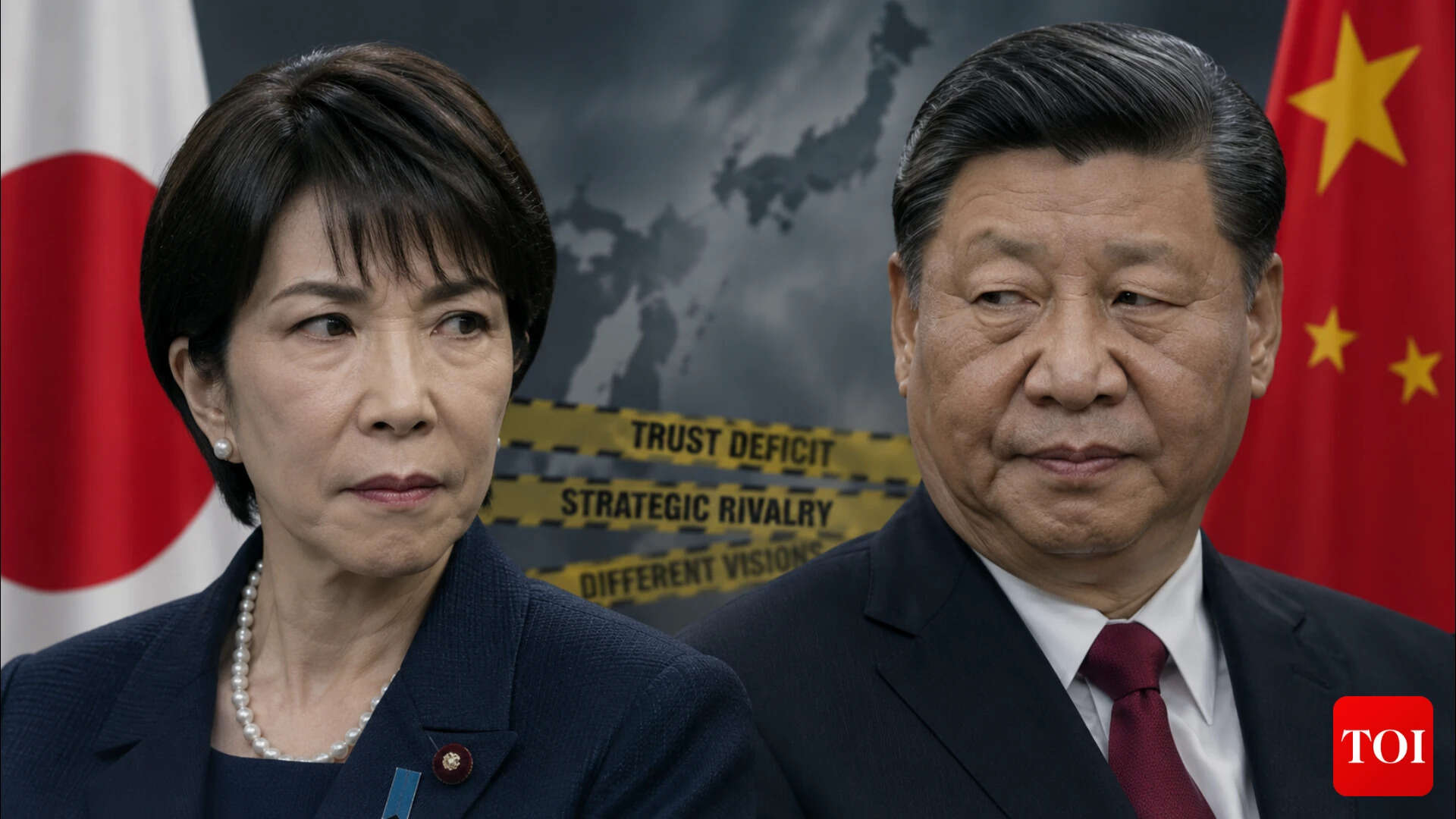
Japan is making significant changes to its long-standing pacifist security doctrine, adopting a more proactive approach to defense. This shift is marked by increasing defense budgets and a major enhancement of military skills. The nation has also restarted arms exports, which were previously restricted, and is in the process of forming a dedicated intelligence agency.
The driving force behind these changes is the evolving geopolitical landscape and the emergence of modern threats. Japan's leaders believe that the country's traditional pacifist stance is no longer sufficient to ensure its security in a rapidly changing world. As a result, Japan is seeking to strengthen its military capabilities and play a more active role in regional affairs.
China is closely watching these developments and perceives them as a profound provocation. The Chinese government views Japan's new defense strategy as an emerging threat and a challenge to its own regional influence. This has sparked concerns in Beijing about the potential for a more assertive Japan to disrupt the balance of power in the region.
Japan's decision to restart arms exports is also seen as a significant move, as it will allow the country to strengthen its relationships with other nations and potentially counterbalance China's growing military presence. The formation of a dedicated intelligence agency will also enhance Japan's ability to gather and analyze information, allowing it to make more informed decisions about its defense strategy.
The shift away from pacifism is a significant departure from Japan's post-World War II security doctrine, which emphasized avoidance of conflict and reliance on the United States for defense. However, with the changing geopolitical landscape and the rise of new threats, Japan's leaders believe that a more proactive approach is necessary to ensure the country's security.
The implications of Japan's new defense strategy are far-reaching and will likely have a significant impact on the region. As Japan continues to enhance its military capabilities and play a more active role in regional affairs, it is likely to face increasing scrutiny and concern from China. However, Japan's leaders believe that this new approach is necessary to ensure the country's security and prosperity in a rapidly changing world.
In the context of the current geopolitical landscape, Japan's shift away from pacifism is a significant development that will likely have far-reaching consequences. The move is seen as a response to the growing military presence of China and the need for Japan to strengthen its own defense capabilities. As the situation continues to evolve, it is likely that Japan's new defense strategy will be closely watched by nations around the world.
The significance of Japan's new defense strategy cannot be overstated. It marks a major shift away from the country's traditional pacifist stance and towards a more proactive approach to defense. This change is likely to have significant implications for the region and will be closely watched by nations around the world.
In conclusion, Japan's shift away from pacifism is a significant development that reflects the changing geopolitical landscape and the need for the country to strengthen its defense capabilities. As Japan continues to enhance its military skills and play a more active role in regional affairs, it is likely to face increasing scrutiny and concern from China. However, Japan's leaders believe that this new approach is necessary to ensure the country's security and prosperity in a rapidly changing world.
Frequently asked questions
Why is Japan shifting away from its pacifist security doctrine?
Japan is shifting away from its pacifist security doctrine due to the evolving geopolitical landscape and the emergence of modern threats.
How is China responding to Japan's new defense strategy?
China perceives Japan's new defense strategy as a profound provocation and an emerging threat, and is closely watching the developments.