BMC Probe Blames Cement Concretisation for Chembur Tree Collapse
Cement concretisation weakened tree roots, probe finds. Recommendations to leave space around tree bases.

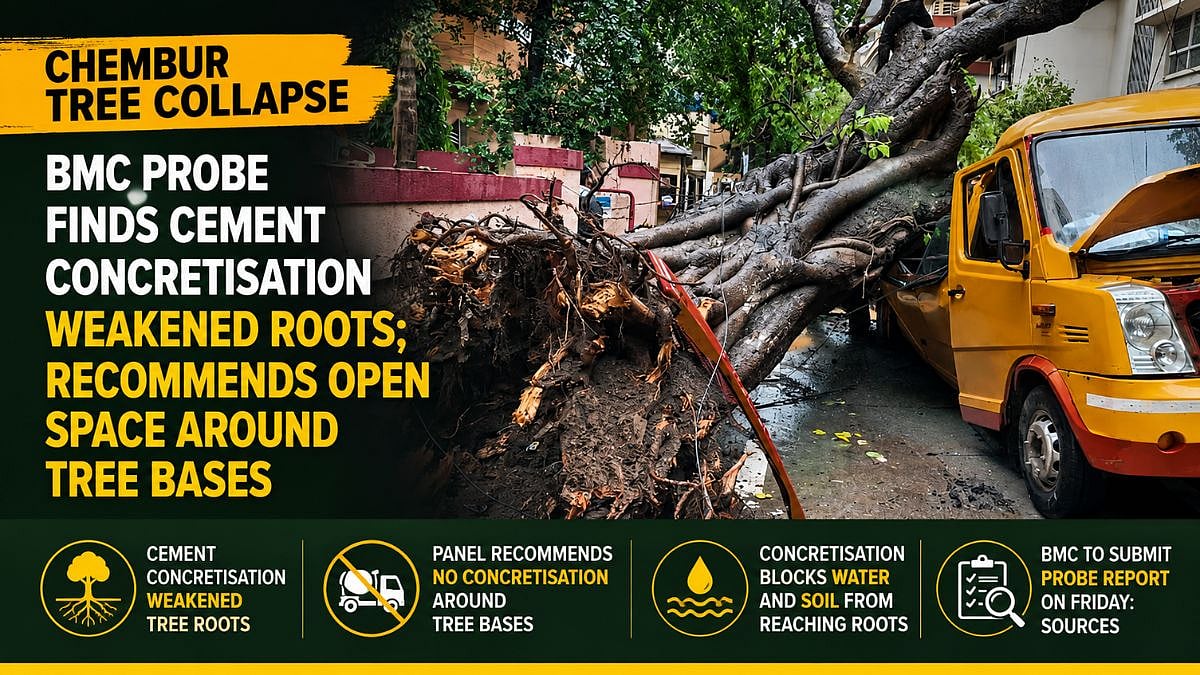
A recent investigation by the Brihanmumbai Municipal Corporation (BMC) has revealed that cement concretisation around the base of a tree in Chembur was the primary cause of its collapse on June 30, which resulted in the death of 11-year-old Vihan Shrivastav. The incident occurred when a 60-year-old Peepal tree uprooted and fell onto a bus carrying 13 children.
The probe committee, formed in the aftermath of the incident, found that the cement concretisation had weakened the tree's roots, making it unstable. The committee has recommended that cement concretisation should not be carried out around tree roots and that a mandatory space should be left around tree bases to prevent similar incidents in the future.
According to civic sources, the committee's report will be officially submitted to Additional Municipal Commissioner Avinash Dhakane on Friday. The report is expected to be discussed at a special general body meeting, where Dhakane may make a statement.
The investigation highlighted the damage caused to tree roots due to the expanding network of cement concretisation roads in Mumbai. While coconut trees along sea coasts remain stable due to their strong roots, the lack of water and soil reaching tree roots in the city causes severe damage.
The BMC's investigation team had inspected the tree collapse site in Chembur and found that the storm water drain had been diverted during the road concretisation work, killing the tree roots. The tree pit and base appeared hollow, with no free space around the tree base.
Following the incident, Municipal Commissioner Ashwini Bhide suspended three officials for prima facie negligence. A two-member committee was formed to investigate the incident and submit a report within eight days.
The issue of tree collapses in Mumbai has sparked concern, with Leader of the BMC House and BJP leader Ganesh Khankar calling for a special House meeting to discuss the matter. Khankar stated that while cement concretisation of roads may be one reason for weakening tree roots, it is not the sole cause. He attributed the collapses to a combination of factors, including the old age of trees, high winds, and the type of trees planted.
The BMC is planning to consult with experts from IIT Bombay and Mumbai University to find solutions to prevent tree collapses in the future. The civic body is taking steps to address the issue and ensure the safety of citizens.
The incident has highlighted the need for careful planning and maintenance of trees in urban areas. The BMC's recommendations to leave space around tree bases and avoid cement concretisation around tree roots are expected to help prevent similar incidents in the future.
In the context of Mumbai's urban development, the issue of tree collapses is a significant concern. The city's rapid growth and infrastructure development have led to the destruction of natural habitats and the degradation of tree roots. The BMC's efforts to address this issue are crucial to maintaining the city's green cover and ensuring the safety of its citizens.
The incident has also sparked a wider discussion about the importance of preserving trees in urban areas. Trees play a vital role in maintaining the ecological balance and providing shade and shelter to citizens. The BMC's initiatives to plant more trees and maintain existing ones are essential to maintaining the city's environmental sustainability.
In conclusion, the BMC's probe into the Chembur tree collapse has highlighted the need for careful planning and maintenance of trees in urban areas. The recommendations to leave space around tree bases and avoid cement concretisation around tree roots are expected to help prevent similar incidents in the future. The civic body's efforts to address this issue are crucial to maintaining the city's green cover and ensuring the safety of its citizens.
The significance of this incident extends beyond the local community, as it highlights the importance of urban planning and environmental sustainability in India's rapidly growing cities. As Mumbai continues to develop and grow, it is essential to prioritize the preservation of trees and green spaces to maintain the city's ecological balance and ensure the well-being of its citizens.