China May Use Economic Isolation On Taiwan
China considers a gray zone strategy, isolating Taiwan economically and psychologically without firing a shot. This approach includes naval and cyber operations.

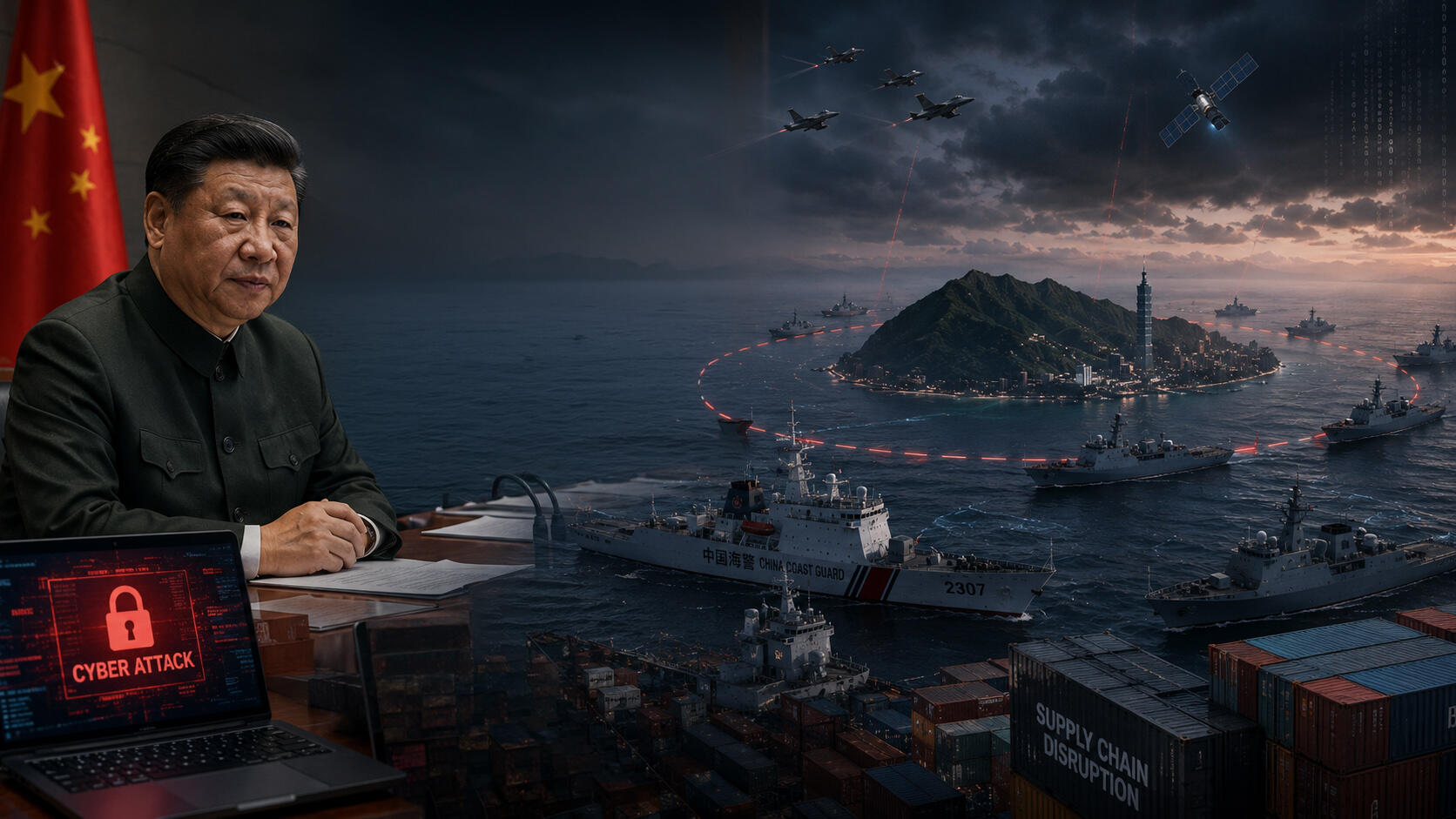
China is exploring a gray zone strategy to bring Taiwan to its knees without resorting to military action. This approach involves a combination of naval, cyber, and information operations that fall below the threshold of war.
By employing such a strategy, China aims to isolate Taiwan economically and psychologically, making it difficult for the island to sustain itself. One of the key components of this strategy is a potential blockade, which would restrict Taiwan's access to vital imports, including energy and other essential supplies.
This would have a significant impact on Taiwan's supply chains, making it challenging for the island to maintain its economic stability. In addition to the blockade, China may also launch cyberattacks and disinformation campaigns to further destabilize Taiwanese society.
The Taiwanese government is aware of these potential threats and has been conducting resilience drills to prepare for a multifaceted siege that goes beyond conventional military conflict. These drills are designed to test the island's ability to respond to a range of scenarios, including economic and psychological warfare.
China's gray zone strategy is a reflection of its growing military and economic power, which has enabled it to project its influence across the region. The strategy is also a testament to China's willingness to use non-kinetic means to achieve its objectives, rather than resorting to traditional military force.
The situation between China and Taiwan is complex and has significant implications for regional stability. Taiwan is an island with its own government, economy, and military, but China considers it a part of its territory. The two sides have been governed separately since the end of the Chinese Civil War in 1949.
The international community is watching the situation closely, with many countries calling for a peaceful resolution to the dispute. The United States, in particular, has a significant interest in the region and has been strengthening its ties with Taiwan in recent years.
As the situation continues to evolve, it is likely that China will continue to use a range of tactics to pressure Taiwan into accepting its terms. However, the Taiwanese government has made it clear that it will not compromise on its sovereignty and will continue to defend its independence.
In the end, the outcome of this situation will have significant implications for the region and the world. It will depend on a range of factors, including the actions of China, Taiwan, and the international community.
The use of a gray zone strategy by China is a significant development in the region, and its implications will be closely watched by governments and analysts around the world. It highlights the need for a nuanced understanding of the complex geopolitical dynamics at play and the importance of finding peaceful solutions to disputes.