RWAs Can Ban Some Activities, But Not Others
Find out what your RWA can and can't ban. Know your rights.
'%3E%3Crect%20width%3D'96'%20height%3D'96'%20fill%3D'%23B3261E'%2F%3E%3Ccircle%20cx%3D'30'%20cy%3D'24'%20r%3D'44'%20fill%3D'%23fff'%20opacity%3D'.12'%2F%3E%3Ccircle%20cx%3D'60'%20cy%3D'74'%20r%3D'40'%20fill%3D'%23000'%20opacity%3D'.10'%2F%3E%3C%2Fg%3E%3Cg%20fill%3D'%23fff'%3E%3Crect%20x%3D'29'%20y%3D'49'%20width%3D'8'%20height%3D'19'%20rx%3D'1'%2F%3E%3Crect%20x%3D'39'%20y%3D'40'%20width%3D'9'%20height%3D'28'%20rx%3D'1'%2F%3E%3Crect%20x%3D'50'%20y%3D'45'%20width%3D'8'%20height%3D'23'%20rx%3D'1'%2F%3E%3Crect%20x%3D'60'%20y%3D'53'%20width%3D'7'%20height%3D'15'%20rx%3D'1'%2F%3E%3Crect%20x%3D'41'%20y%3D'34'%20width%3D'5'%20height%3D'6'%2F%3E%3C%2Fg%3E%3C%2Fsvg%3E)
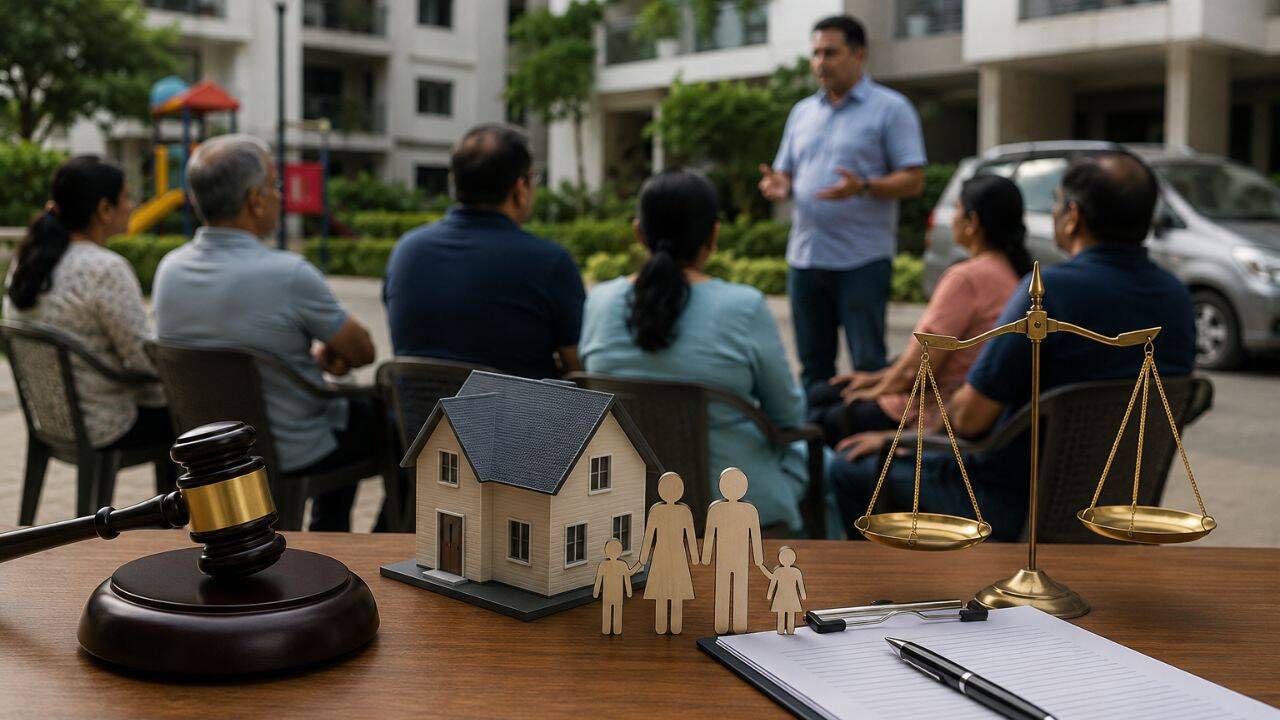
Resident welfare associations (RWAs) in India have limited powers governed by law and their own governing documents. They are responsible for managing common areas and enforcing valid bye-laws that promote community well-being. However, RWAs cannot override individual legal or proprietary rights of residents, and any rules they impose must have a proper basis and be applied fairly to all members.
RWAs can legally ban certain activities that disturb the peace or compromise the safety of residents. For instance, they can prohibit loud music or gatherings that exceed a certain number of people. They can also regulate the use of common facilities, such as parks or clubhouses, to ensure they are used for their intended purpose.
On the other hand, RWAs cannot ban activities that are legally permitted, such as owning a dog or cooking a certain type of food, like biryani. They also cannot discriminate against certain groups of people, such as bachelors or families with children. Any rules that are imposed must be reasonable and not arbitrary.
Disputes often arise between RWAs and residents due to unclear rules or a lack of transparency. It is essential for RWAs to communicate clearly with residents and provide them with a copy of the bye-laws and rules. Residents should also be given an opportunity to provide feedback and suggestions on the rules.
In cases where disputes arise, residents can approach the RWA committee to resolve the issue. If the issue is not resolved, residents can approach the local consumer court or the district collector's office. It is also important for residents to know their rights and responsibilities as members of the RWA.
The role of RWAs is to promote community well-being and maintain harmony among residents. While they have limited powers, they play a crucial role in ensuring that residents live in a safe and peaceful environment. By understanding what RWAs can and cannot ban, residents can work together with their RWA to create a harmonious community.
In conclusion, RWAs have limited powers, but they can still play a significant role in maintaining community well-being. By knowing what they can and cannot ban, residents can work together with their RWA to create a safe and peaceful living environment.
Frequently asked questions
What can my RWA legally ban?
Your RWA can ban activities that disturb the peace or compromise safety, but not activities that are legally permitted.
How can I resolve a dispute with my RWA?
You can approach the RWA committee, local consumer court, or district collector's office to resolve a dispute.