Nashik Protest Supports Sonam Wangchuk, Jantar Mantar Agitation
Progressive groups protest in Nashik, condemning action against Sonam Wangchuk. They support Jantar Mantar agitation, demanding education reforms.
'%3E%3Crect%20width%3D'96'%20height%3D'96'%20fill%3D'%231A5276'%2F%3E%3Ccircle%20cx%3D'30'%20cy%3D'24'%20r%3D'44'%20fill%3D'%23fff'%20opacity%3D'.12'%2F%3E%3Ccircle%20cx%3D'60'%20cy%3D'74'%20r%3D'40'%20fill%3D'%23000'%20opacity%3D'.10'%2F%3E%3C%2Fg%3E%3Cg%20fill%3D'%23fff'%3E%3Cpath%20d%3D'M31%2041%20L48%2031%20L65%2041%20Z'%2F%3E%3Crect%20x%3D'33'%20y%3D'43'%20width%3D'4'%20height%3D'17'%2F%3E%3Crect%20x%3D'41'%20y%3D'43'%20width%3D'4'%20height%3D'17'%2F%3E%3Crect%20x%3D'51'%20y%3D'43'%20width%3D'4'%20height%3D'17'%2F%3E%3Crect%20x%3D'59'%20y%3D'43'%20width%3D'4'%20height%3D'17'%2F%3E%3Crect%20x%3D'30'%20y%3D'62'%20width%3D'36'%20height%3D'4'%20rx%3D'1'%2F%3E%3C%2Fg%3E%3C%2Fsvg%3E)
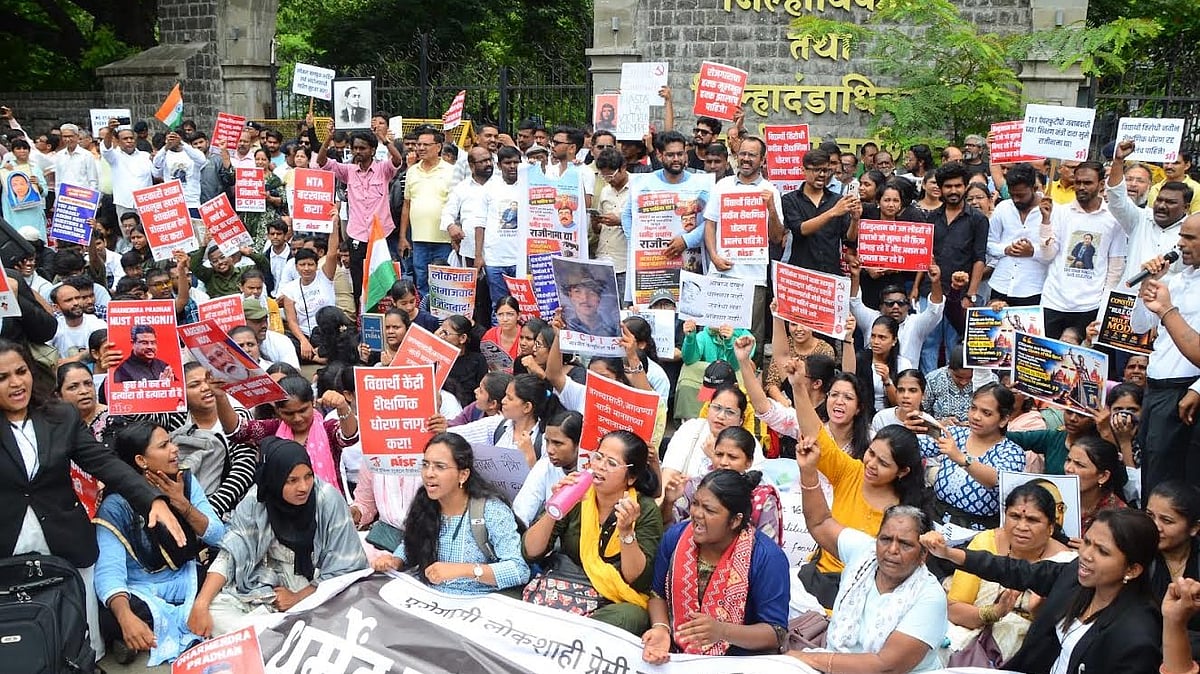
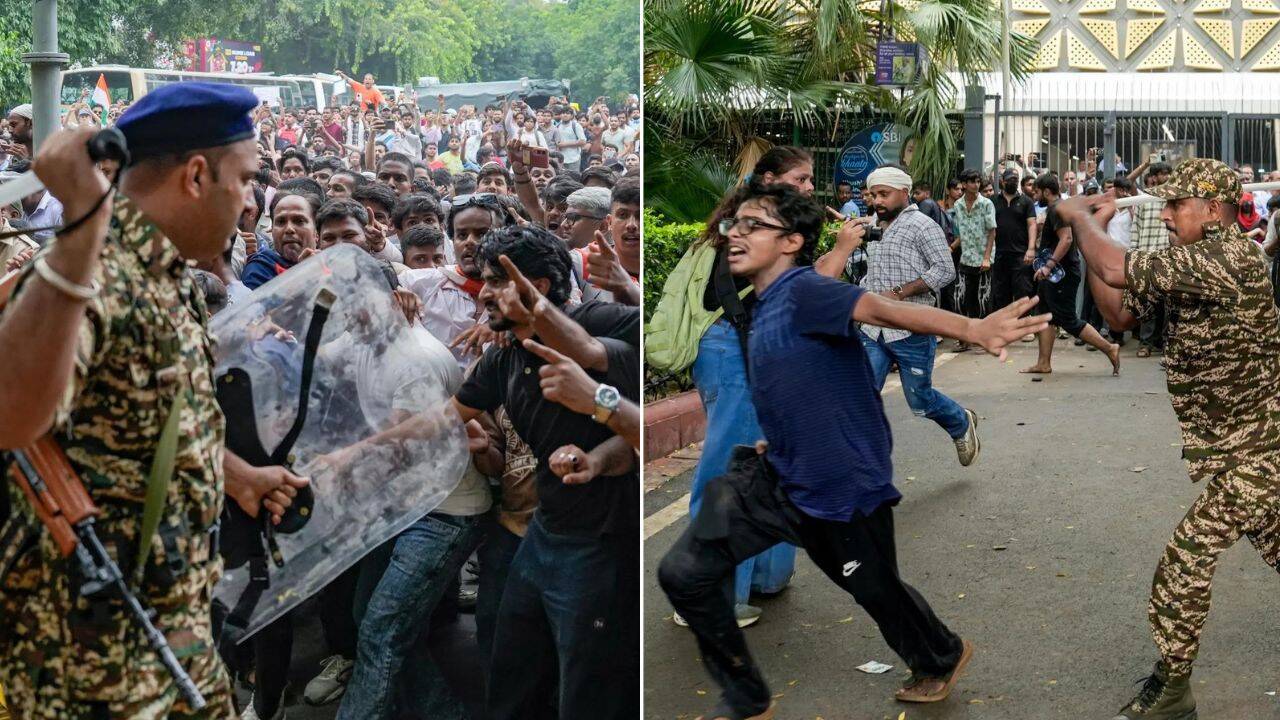
A protest was held outside the District Collector's office in Nashik on Monday, condemning the action taken against social activist Sonam Wangchuk and expressing support for the ongoing agitation at Jantar Mantar in New Delhi.
The protest was organised by various progressive, democratic and political organisations, including the CPI(M), in solidarity with the demonstration in the national capital. The protesters alleged that Wangchuk was detained by police and forcibly admitted to a hospital while participating in a peaceful demonstration in New Delhi.
The demonstration in Nashik was led by prominent leaders, including CPI(M) leader Dr D. L. Karad, Comrade Raju Desale, and Advocate Krishna Shilawat of RPI Secular. Representatives from several organisations, such as CITU, AITUC, and Marathi Vidnyan Parishad, also participated in the protest.
The protesters demanded that the Centre reconsider the 'One Nation, One Examination' policy and allow states to conduct their own entrance examinations. They also called for professional course admissions to be based primarily on Class 12 marks instead of only entrance tests.
The demonstrators further sought a thorough investigation into the Maharashtra Teacher Eligibility Test (TET) scam, a review of the National Education Policy, and the resignation of the Union Education Minister. They held the ministry morally responsible for issues affecting students.
The protesters also urged the government to protect citizens' constitutional right to peaceful protest. They described the action against Wangchuk as an attack on democratic rights guaranteed under the Constitution and demanded that peaceful protests be allowed without police intervention.
The agitation at Jantar Mantar in New Delhi, led by Wangchuk, has been raising concerns over issues related to education, including the alleged NEET paper leak and corruption in the education sector. The protesters in Nashik expressed their support for the agitation, demanding education reforms and an end to corruption in the education sector.
The protest in Nashik reflects the growing concern among citizens over the state of education in the country. The demonstrators' demands for education reforms and an end to corruption in the education sector are likely to resonate with many Indians.
In conclusion, the protest in Nashik is a significant development in the ongoing debate over education reforms in India. The demonstrators' demands for education reforms, an end to corruption in the education sector, and the protection of citizens' constitutional right to peaceful protest are likely to have a significant impact on the national discourse over education policy.
The protest also highlights the importance of citizens' right to peaceful protest, which is guaranteed under the Constitution. The action against Wangchuk and other protesters has been widely condemned, and the demonstrators' demand for an end to police intervention in peaceful protests is likely to gain widespread support.
Overall, the protest in Nashik is an important development in the ongoing struggle for education reforms and citizens' rights in India. It reflects the growing concern among citizens over the state of education in the country and the need for urgent reforms to address the issues affecting students and the education sector as a whole.