NCP Leadership Disputed
NCP faces rift, leadership challenged. Party's election process questioned.
'%3E%3Crect%20width%3D'96'%20height%3D'96'%20fill%3D'%231A5276'%2F%3E%3Ccircle%20cx%3D'30'%20cy%3D'24'%20r%3D'44'%20fill%3D'%23fff'%20opacity%3D'.12'%2F%3E%3Ccircle%20cx%3D'60'%20cy%3D'74'%20r%3D'40'%20fill%3D'%23000'%20opacity%3D'.10'%2F%3E%3C%2Fg%3E%3Cg%20fill%3D'%23fff'%3E%3Cpath%20d%3D'M31%2041%20L48%2031%20L65%2041%20Z'%2F%3E%3Crect%20x%3D'33'%20y%3D'43'%20width%3D'4'%20height%3D'17'%2F%3E%3Crect%20x%3D'41'%20y%3D'43'%20width%3D'4'%20height%3D'17'%2F%3E%3Crect%20x%3D'51'%20y%3D'43'%20width%3D'4'%20height%3D'17'%2F%3E%3Crect%20x%3D'59'%20y%3D'43'%20width%3D'4'%20height%3D'17'%2F%3E%3Crect%20x%3D'30'%20y%3D'62'%20width%3D'36'%20height%3D'4'%20rx%3D'1'%2F%3E%3C%2Fg%3E%3C%2Fsvg%3E)
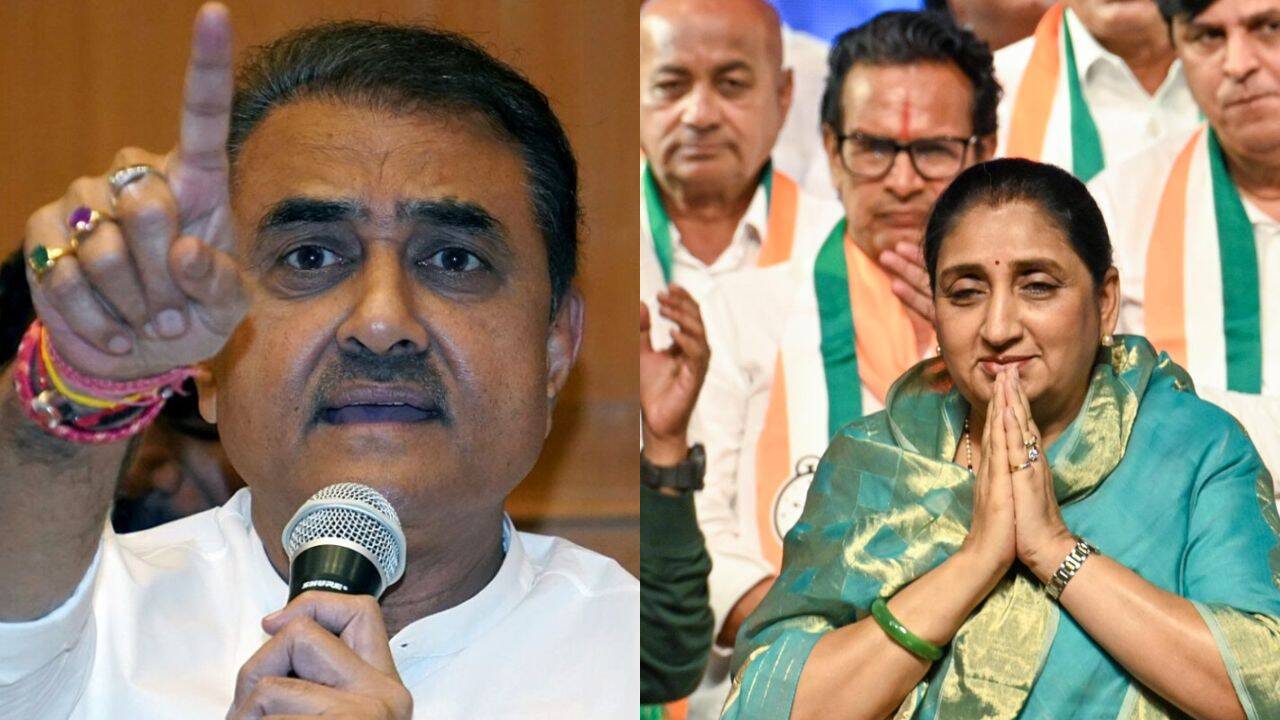
A significant development has taken place within the Nationalist Congress Party (NCP) as a legal notice has been served, challenging the election of Sunetra Pawar as the party's national president. This move comes amidst a acknowledged leadership vacuum within the party, with senior leader Praful Patel highlighting the need for corrective measures to address the issue.
The legal notice in question raises important concerns regarding the validity of the election process that led to Sunetra Pawar's takeover. It specifically points out inconsistencies in the party's submissions to the Election Commission of India, suggesting that the constitutional protocols may not have been followed as required. This challenge to the leadership is a clear indication of the rift within the party, with different factions having differing opinions on the matter.
Praful Patel's acknowledgement of a leadership vacuum underscores the gravity of the situation. His call for corrective measures implies that the party is at a critical juncture, requiring swift and decisive action to restore stability and unity. The fact that a legal notice has been served adds a layer of complexity, as it involves legal implications and potential repercussions for the party's internal governance.
The notice gives the party a fifteen-day window to declare the election and the list of office-bearers null and void. This deadline sets a ticking clock for the NCP to resolve its internal disputes and come to a consensus on the way forward. The party's response to this challenge will be closely watched, as it will have significant implications for its future trajectory and internal dynamics.
The NCP, as a key player in Indian politics, especially in the state of Maharashtra, faces a critical test of its resilience and ability to manage internal conflicts. The party's history and its role in coalition governments make this development particularly noteworthy. As the party navigates this challenging period, it must balance the need for strong leadership with the imperative of maintaining unity among its ranks.
In the broader context of Indian politics, the NCP's internal rift reflects the larger challenges faced by political parties in managing succession, leadership transitions, and internal democracy. The ability of parties to address these challenges effectively will be crucial in determining their long-term viability and relevance in the political landscape.
The significance of this development extends beyond the NCP, as it highlights the importance of transparent and democratic processes within political parties. The health of India's democracy is closely tied to the functioning of its political parties, making incidents like the NCP rift a matter of public interest and concern.
In conclusion, the dispute over the NCP's leadership is a significant event that underscores the complexities and challenges of political party management in India. As the party moves forward, its ability to resolve its internal conflicts and adhere to democratic principles will be under scrutiny, with implications not just for the NCP, but for the broader political ecosystem in India.