Maharashtra Regulates School Bus Fares, Makes Safety Features Mandatory
School bus fares now regulated, CCTV and GPS made mandatory
'%3E%3Crect%20width%3D'96'%20height%3D'96'%20fill%3D'%23B3261E'%2F%3E%3Ccircle%20cx%3D'30'%20cy%3D'24'%20r%3D'44'%20fill%3D'%23fff'%20opacity%3D'.12'%2F%3E%3Ccircle%20cx%3D'60'%20cy%3D'74'%20r%3D'40'%20fill%3D'%23000'%20opacity%3D'.10'%2F%3E%3C%2Fg%3E%3Cg%20fill%3D'%23fff'%3E%3Crect%20x%3D'29'%20y%3D'49'%20width%3D'8'%20height%3D'19'%20rx%3D'1'%2F%3E%3Crect%20x%3D'39'%20y%3D'40'%20width%3D'9'%20height%3D'28'%20rx%3D'1'%2F%3E%3Crect%20x%3D'50'%20y%3D'45'%20width%3D'8'%20height%3D'23'%20rx%3D'1'%2F%3E%3Crect%20x%3D'60'%20y%3D'53'%20width%3D'7'%20height%3D'15'%20rx%3D'1'%2F%3E%3Crect%20x%3D'41'%20y%3D'34'%20width%3D'5'%20height%3D'6'%2F%3E%3C%2Fg%3E%3C%2Fsvg%3E)
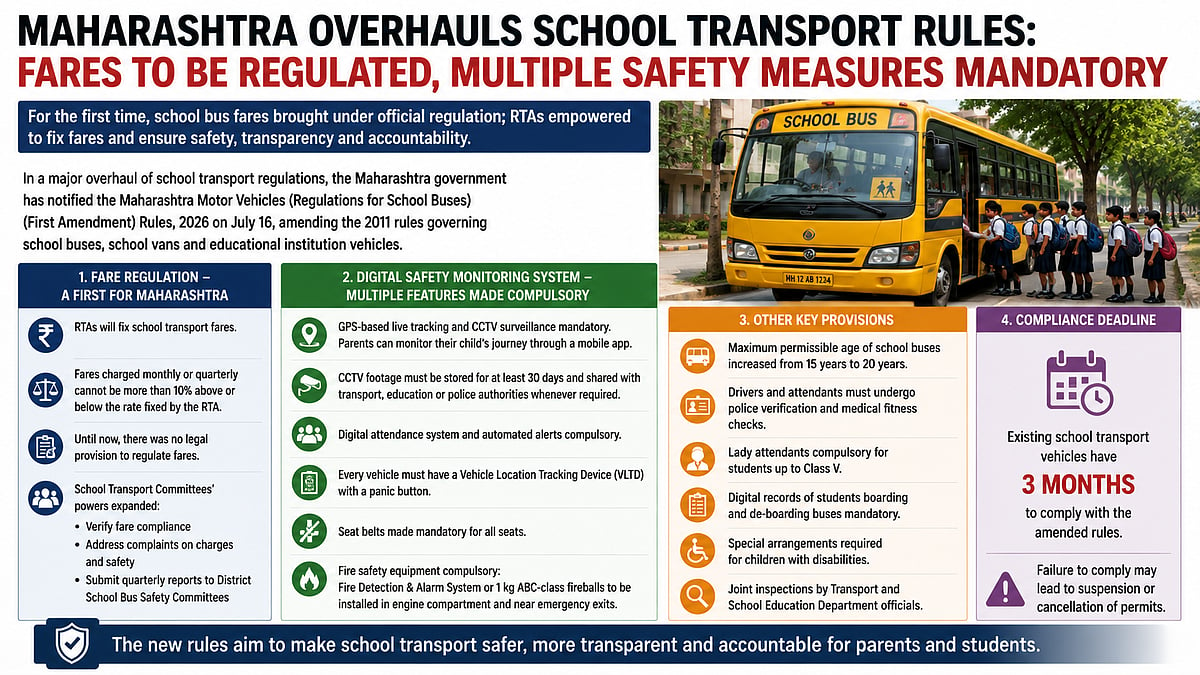
In a significant move, the Maharashtra government has introduced regulations for school bus fares for the first time. The new rules, which came into effect on July 16, empower Regional Transport Authorities (RTAs) to fix school transport fares, ensuring transparency and accountability for parents.
The amended rules, known as the Maharashtra Motor Vehicles (Regulations for School Buses) (First Amendment) Rules, 2026, make several safety measures mandatory. These include the installation of CCTV cameras, GPS tracking, seat belts, digital attendance systems, and emergency safety features in school buses and vans.
The RTAs will now fix the fare limits, and the fare charged on a monthly or quarterly basis cannot be more than 10 per cent above or below the rate fixed by the concerned authority. This move aims to prevent exorbitant fares and ensure that parents are not exploited.
The new provisions also introduce a Digital Safety Monitoring System, which makes GPS-based live tracking, CCTV surveillance, digital attendance, and automated alerts compulsory. Parents will be able to monitor their child's journey through a mobile application, while CCTV footage must be stored for at least 30 days and shared with transport, education, or police authorities whenever required.
Every school transport vehicle must be fitted with a Vehicle Location Tracking Device (VLTD) with a panic button. Seat belts have been made mandatory for all seats, and fire safety equipment, including a Fire Detection and Alarm System or 1 kg ABC-class fireballs, must be installed in the engine compartment and near emergency exits.
The government has also increased the maximum permissible age of school buses from 15 years to 20 years. Drivers and attendants must undergo police verification and medical fitness checks, while lady attendants have been made compulsory for students up to Class V.
The rules require digital records of students boarding and de-boarding buses, special arrangements for children with disabilities, and joint inspections by Transport and School Education Department officials. Existing school transport vehicles have been given three months to comply with the new regulations, failing which their permits may be suspended or cancelled.
The introduction of these regulations is a significant step towards ensuring the safety and well-being of school children in Maharashtra. The move is expected to bring relief to parents who have been concerned about the safety of their children while traveling to and from school.
The Maharashtra government's decision to regulate school bus fares and make safety features mandatory is a welcome move. It is expected to have a positive impact on the education sector and provide a safer and more secure environment for school children.
In the context of the state's efforts to improve education and transportation, this move is a significant step forward. The government's emphasis on safety and transparency is likely to boost confidence among parents and students, and contribute to the overall development of the state's education system.
The new regulations will also have a positive impact on the state's transportation sector, as it will encourage the use of safer and more modern vehicles. The introduction of digital safety monitoring systems and vehicle location tracking devices will also help to reduce accidents and ensure that school children are safe while traveling.
Overall, the Maharashtra government's decision to regulate school bus fares and make safety features mandatory is a significant move towards ensuring the safety and well-being of school children in the state. It is expected to have a positive impact on the education and transportation sectors, and contribute to the overall development of the state.
The significance of this move cannot be overstated, as it addresses a critical concern for parents and students in Maharashtra. The introduction of these regulations is a major overhaul of school transport regulations, and it is expected to bring about a significant improvement in the safety and security of school children in the state.
In conclusion, the Maharashtra government's decision to regulate school bus fares and make safety features mandatory is a welcome move that is expected to have a positive impact on the education and transportation sectors in the state. It is a significant step towards ensuring the safety and well-being of school children, and it is likely to contribute to the overall development of the state's education system.