Mumbai Ganesh Idols: Clay Loses to PoP
Clay idols struggle to compete, Eco-friendly push falters
'%3E%3Crect%20width%3D'96'%20height%3D'96'%20fill%3D'%23B3261E'%2F%3E%3Ccircle%20cx%3D'30'%20cy%3D'24'%20r%3D'44'%20fill%3D'%23fff'%20opacity%3D'.12'%2F%3E%3Ccircle%20cx%3D'60'%20cy%3D'74'%20r%3D'40'%20fill%3D'%23000'%20opacity%3D'.10'%2F%3E%3C%2Fg%3E%3Cg%20fill%3D'%23fff'%3E%3Crect%20x%3D'29'%20y%3D'49'%20width%3D'8'%20height%3D'19'%20rx%3D'1'%2F%3E%3Crect%20x%3D'39'%20y%3D'40'%20width%3D'9'%20height%3D'28'%20rx%3D'1'%2F%3E%3Crect%20x%3D'50'%20y%3D'45'%20width%3D'8'%20height%3D'23'%20rx%3D'1'%2F%3E%3Crect%20x%3D'60'%20y%3D'53'%20width%3D'7'%20height%3D'15'%20rx%3D'1'%2F%3E%3Crect%20x%3D'41'%20y%3D'34'%20width%3D'5'%20height%3D'6'%2F%3E%3C%2Fg%3E%3C%2Fsvg%3E)
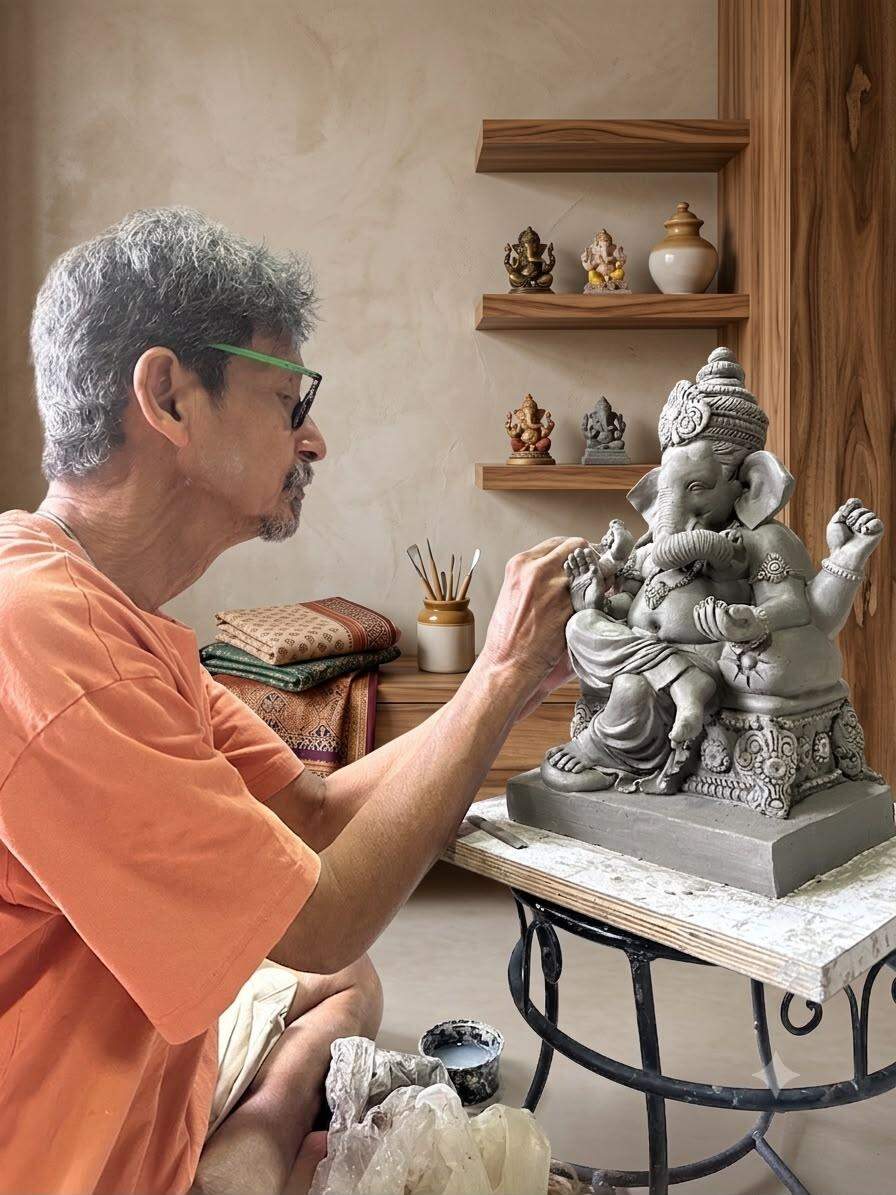
In Mumbai, the traditional clay Ganesh idols are facing a tough challenge from their PoP counterparts, despite the ecological benefits they offer. The main reasons behind this are the constraints of time, cost, and space.
The city's iconic Ganesh festivals are just around the corner, and the idol makers are busy creating the idols that will be worshipped by millions. However, the demand for clay idols is not as high as it used to be, and the artisans are finding it difficult to compete with the cheaper and more durable PoP idols.
One of the main reasons behind the decline of clay idols is the time it takes to create them. The process of making a clay idol is labor-intensive and requires a lot of skill and patience. The artisans have to spend hours shaping and molding the clay to create the perfect idol, which can be a daunting task, especially when the demand is high.
Another reason is the cost. Clay idols are more expensive than PoP idols, which makes them less attractive to the customers. The cost of the raw materials, the labor, and the time it takes to create the idol all add up, making it difficult for the artisans to compete with the cheaper PoP idols.
The space constraint is also a major issue. The city's artisans are struggling to find space to create the idols, and the ones who do have space are finding it difficult to store the idols once they are created. This has led to a decrease in the number of clay idols being created, and the PoP idols are filling the gap.
Despite the challenges, there are some artisans who are still creating clay idols. The GSB Seva Mandal, a renowned organization in Mumbai, has been creating handcrafted giant Shadu clay Ganesh idols for years. Their idols are a testament to the skill and craftsmanship of the artisans and are a reminder of the traditional methods of creating Ganesh idols.
The ecological benefits of clay idols are well-known. They are biodegradable, non-toxic, and can be easily dissolved in water, making them a more environmentally friendly option. However, the demand for PoP idols is still high, and the artisans are struggling to compete.
The Mumbai municipal corporation has been trying to promote the use of clay idols by providing subsidies and incentives to the artisans. However, more needs to be done to promote the use of eco-friendly idols and to support the artisans who are still creating them.
In conclusion, the traditional clay Ganesh idols are facing a tough challenge from their PoP counterparts in Mumbai. The constraints of time, cost, and space are making it difficult for the artisans to compete, despite the ecological benefits of clay idols. It is essential to promote the use of eco-friendly idols and to support the artisans who are still creating them, to keep the traditional methods alive.
Frequently asked questions
Why are clay Ganesh idols losing popularity in Mumbai?
The main reasons are the constraints of time, cost, and space, making it difficult for artisans to compete with cheaper and more durable PoP idols.
What are the ecological benefits of clay Ganesh idols?
Clay idols are biodegradable, non-toxic, and can be easily dissolved in water, making them a more environmentally friendly option.