MP High Court Orders 50% Quota Ceiling Across Departments
Madhya Pradesh High Court directs chief secretary to ensure 50% quota ceiling. Next hearing on Dec 01.
'%3E%3Crect%20width%3D'96'%20height%3D'96'%20fill%3D'%231A5276'%2F%3E%3Ccircle%20cx%3D'30'%20cy%3D'24'%20r%3D'44'%20fill%3D'%23fff'%20opacity%3D'.12'%2F%3E%3Ccircle%20cx%3D'60'%20cy%3D'74'%20r%3D'40'%20fill%3D'%23000'%20opacity%3D'.10'%2F%3E%3C%2Fg%3E%3Cg%20fill%3D'%23fff'%3E%3Cpath%20d%3D'M31%2041%20L48%2031%20L65%2041%20Z'%2F%3E%3Crect%20x%3D'33'%20y%3D'43'%20width%3D'4'%20height%3D'17'%2F%3E%3Crect%20x%3D'41'%20y%3D'43'%20width%3D'4'%20height%3D'17'%2F%3E%3Crect%20x%3D'51'%20y%3D'43'%20width%3D'4'%20height%3D'17'%2F%3E%3Crect%20x%3D'59'%20y%3D'43'%20width%3D'4'%20height%3D'17'%2F%3E%3Crect%20x%3D'30'%20y%3D'62'%20width%3D'36'%20height%3D'4'%20rx%3D'1'%2F%3E%3C%2Fg%3E%3C%2Fsvg%3E)
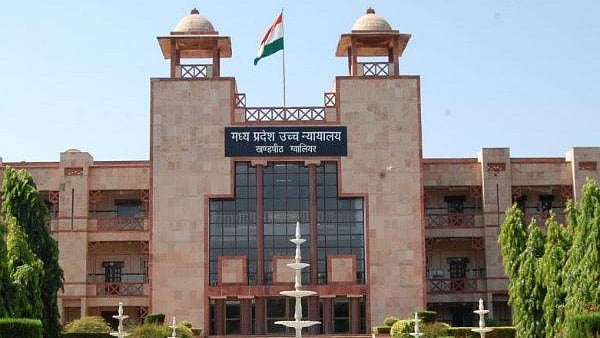
The Madhya Pradesh High Court has directed the state's chief secretary to personally monitor and ensure that the 50% reservation ceiling is not breached in any department. This direction was given during a recent hearing on reservation in promotion, with the next hearing scheduled for December 1.
The court's order comes in response to a case concerning the state's move to increase the Other Backward Classes (OBC) reservation from 14% to 27%, which would exceed the 50% ceiling. The High Court observed that while consideration for promotion is a fundamental right of an employee, the law laid down by the Supreme Court in the Indra Sawhney case must be respected.
According to the Supreme Court's ruling, the upper ceiling for reservation is 50%, and this ceiling cannot be breached directly or indirectly. The High Court has directed the chief secretary to supervise compliance and ensure that no department promotes more than 50% of incumbents from reserved categories until the petition is decided or the Supreme Court decides on related cases.
The Advocate General, Prashant Singh, informed the High Court that the Supreme Court's April 2026 order in the Jarnail Singh case had directed that appeals be placed before appropriate benches within three months. However, the matter is still pending before the Supreme Court.
The Madhya Pradesh government's move to increase OBC reservation has been a subject of controversy, with some arguing that it would lead to a breach of the 50% ceiling. The High Court's order is seen as an attempt to balance the competing interests of different groups and ensure that the rule of law is respected.
The reservation policy in India is a complex and contentious issue, with different states having different policies. The Supreme Court's ruling in the Indra Sawhney case has been a landmark judgment in this regard, establishing the 50% ceiling for reservation.
The Madhya Pradesh High Court's order is significant, as it highlights the need for states to respect the rule of law and ensure that their policies are in line with the Supreme Court's rulings. The case is likely to have implications for other states as well, and its outcome will be closely watched.
In the context of Madhya Pradesh, the reservation policy has been a subject of debate, with different groups having different demands. The state government's move to increase OBC reservation was seen as an attempt to address the concerns of the OBC community, but it has also been criticized for potentially breaching the 50% ceiling.
The High Court's order is a reminder that the rule of law must be respected, and that policies must be formulated in accordance with the Supreme Court's rulings. The case will continue to be heard on December 1, and its outcome will have significant implications for the state's reservation policy.
The significance of the High Court's order lies in its attempt to balance competing interests and ensure that the rule of law is respected. The case highlights the complexities of the reservation policy in India and the need for states to formulate policies that are in line with the Supreme Court's rulings. The outcome of the case will be closely watched, and it is likely to have implications for other states as well.
In conclusion, the Madhya Pradesh High Court's order is a significant development in the ongoing debate over reservation policy in India. The case highlights the need for states to respect the rule of law and ensure that their policies are in line with the Supreme Court's rulings. The outcome of the case will have significant implications for the state's reservation policy and will be closely watched by other states as well.
Frequently asked questions
What is the current reservation ceiling in Madhya Pradesh?
The current reservation ceiling in Madhya Pradesh is 50%.
What is the Madhya Pradesh government's move on OBC reservation?
The Madhya Pradesh government has moved to increase OBC reservation from 14% to 27%.