Mumbai Court Denies Bail To Accused In ₹22 Lakh Counterfeit Stamp Racket
Mumbai sessions court rejects bail, counterfeit postal stamps seized, accused part of organised syndicate
'%3E%3Crect%20width%3D'96'%20height%3D'96'%20fill%3D'%23B3261E'%2F%3E%3Ccircle%20cx%3D'30'%20cy%3D'24'%20r%3D'44'%20fill%3D'%23fff'%20opacity%3D'.12'%2F%3E%3Ccircle%20cx%3D'60'%20cy%3D'74'%20r%3D'40'%20fill%3D'%23000'%20opacity%3D'.10'%2F%3E%3C%2Fg%3E%3Cg%20fill%3D'%23fff'%3E%3Crect%20x%3D'29'%20y%3D'49'%20width%3D'8'%20height%3D'19'%20rx%3D'1'%2F%3E%3Crect%20x%3D'39'%20y%3D'40'%20width%3D'9'%20height%3D'28'%20rx%3D'1'%2F%3E%3Crect%20x%3D'50'%20y%3D'45'%20width%3D'8'%20height%3D'23'%20rx%3D'1'%2F%3E%3Crect%20x%3D'60'%20y%3D'53'%20width%3D'7'%20height%3D'15'%20rx%3D'1'%2F%3E%3Crect%20x%3D'41'%20y%3D'34'%20width%3D'5'%20height%3D'6'%2F%3E%3C%2Fg%3E%3C%2Fsvg%3E)

A Mumbai sessions court has refused bail to Sahabuddin Shaikh, a 42-year-old IT sector employee, who was arrested in a counterfeit postal stamp racket. The court observed that Shaikh was part of an organised syndicate involved in manufacturing and circulating fake postal stamps.
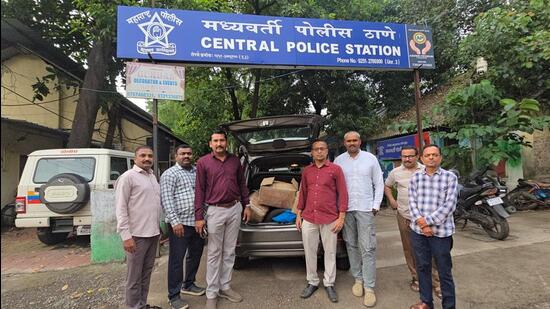
The accused was arrested in Delhi on February 8 after police busted the racket, recovering alleged counterfeit postal stamps worth ₹22 lakh from him. Shaikh's lawyer argued that the stamps were yet to be proved counterfeit and contended that there was no chain of evidence linking him to the offence.
However, Special Sessions Judge AD Kshirsagar rejected Shaikh's bail plea, stating that the scam had deprived the government of legitimate revenue and weakened the economy. The judge noted that the use of counterfeit postal stamps was a mode of preventing the government from obtaining legitimate revenue, similar to the circulation of counterfeit currency notes and the Telgi Stamp Scam.
The public prosecutor, Anand Sukhdeve, opposed the plea, alleging that Shaikh's father and another man, Akbar, ran the racket across several states, with transactions worth ₹7-8 crore in the accused's accounts. The court found prima facie evidence against the accused, as he did not disclose the source of the postal stamps seized from him.
The court noted that the allegations required thorough examination before relief could be considered further. The defence had argued that custodial interrogation was complete, nothing remained to be recovered, the investigation had concluded, and a chargesheet had been filed.
The counterfeit postal stamp racket is a significant concern for the government, as it results in the loss of legitimate revenue. The court's decision to reject bail highlights the seriousness of the offence and the need for thorough investigation.
The case is a reminder of the Telgi Stamp Scam, which involved the use of counterfeit stamps for making various instruments. The scam had widespread implications, and the government had to take drastic measures to prevent such scams.
In this case, the accused's involvement in the counterfeit postal stamp racket has serious implications, and the court's decision to reject bail is a step towards ensuring that those involved in such scams are held accountable.
The rejection of bail also highlights the importance of thorough investigation and the need for the government to take measures to prevent such scams. The case is a significant development in the efforts to prevent the use of counterfeit postal stamps and to protect the government's revenue.
In conclusion, the Mumbai sessions court's decision to reject bail to the accused in the counterfeit postal stamp racket is a significant step towards ensuring that those involved in such scams are held accountable. The case highlights the need for thorough investigation and the importance of protecting the government's revenue.