Maharashtra Restores Heritage Forts One Stone At A Time
Maharashtra's heritage forts get restored, Ghangad fort sees increase in visitors
'%3E%3Crect%20width%3D'96'%20height%3D'96'%20fill%3D'%23B3261E'%2F%3E%3Ccircle%20cx%3D'30'%20cy%3D'24'%20r%3D'44'%20fill%3D'%23fff'%20opacity%3D'.12'%2F%3E%3Ccircle%20cx%3D'60'%20cy%3D'74'%20r%3D'40'%20fill%3D'%23000'%20opacity%3D'.10'%2F%3E%3C%2Fg%3E%3Cg%20fill%3D'%23fff'%3E%3Crect%20x%3D'29'%20y%3D'49'%20width%3D'8'%20height%3D'19'%20rx%3D'1'%2F%3E%3Crect%20x%3D'39'%20y%3D'40'%20width%3D'9'%20height%3D'28'%20rx%3D'1'%2F%3E%3Crect%20x%3D'50'%20y%3D'45'%20width%3D'8'%20height%3D'23'%20rx%3D'1'%2F%3E%3Crect%20x%3D'60'%20y%3D'53'%20width%3D'7'%20height%3D'15'%20rx%3D'1'%2F%3E%3Crect%20x%3D'41'%20y%3D'34'%20width%3D'5'%20height%3D'6'%2F%3E%3C%2Fg%3E%3C%2Fsvg%3E)
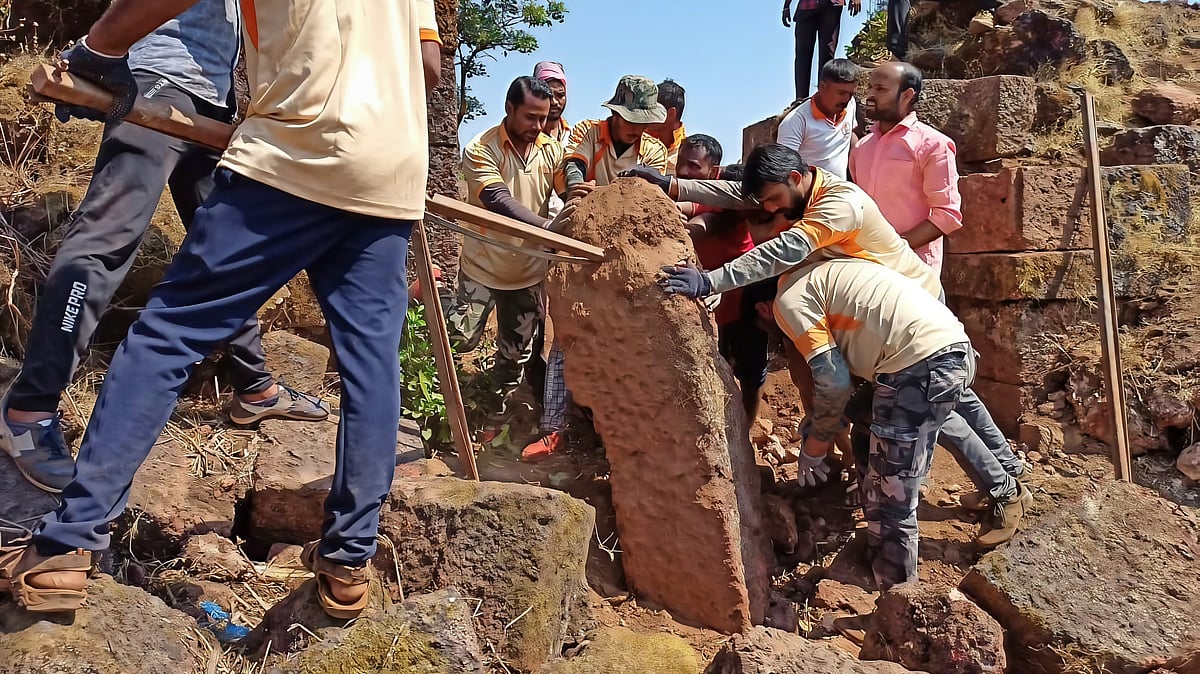
Maharashtra's 17th-century Ghangad fort, located 35 kilometres from Lonavala, has undergone significant restoration efforts. Until 2010, the fort was a source of pride for the nearby hamlet of Ekole, but it drew fewer than a dozen visitors a month due to its steep rock face. However, with the installation of a ladder to the top, restoration of old steps, and cleaning of the fort's seven water tanks by Milind Kshirsagar, founder of the conservation group Shivaji Trails, the fort has seen a significant increase in visitors.
The restoration efforts, which took three years and lakhs of rupees from Kshirsagar's own pocket, have brought much-needed income to the residents of Ekole. The hamlet, which has a population of around 70 residents, has seen an increase in tourist footfall, with busloads of visitors converging on the area during weekends. This has enabled the residents to earn a modest income from selling daily provisions, emergency supplies, home-cooked meals, and refreshments to tourists.
The extra income has helped the residents of Ekole to improve their living conditions, with many switching from mud-and-thatch houses to brick-and-cement homes. However, the income is still restricted to certain months and is not enough for a complete turnaround. Despite this, the residents are proud of the fort and the income it generates.
Ghangad is one of Maharashtra's over 350 forts, which reflect a poignant reality of fort conservation. These forts, which are a testament to the state's rich history, are often neglected by the authorities, but are cared for by passionate citizens who are devoted to their conservation. There are around 200-250 organisations and citizen groups active in fort conservation in Maharashtra, with Shivaji Trails being one of them.
Founded in 1996, Shivaji Trails was established by Kshirsagar to promote citizen participation in conserving forts. Kshirsagar's fascination with forts has led him on a journey to over 950 forts across 17 states, covering a distance of 1.75 lakh kilometres on a two-wheeler. Despite facing numerous challenges, including nine major accidents and 60 fractures, Kshirsagar remains undeterred in his efforts to conserve Maharashtra's heritage forts.
The restoration of Ghangad fort is a testament to the potential of citizen participation in conserving heritage sites. With the help of volunteers from history clubs set up by Kshirsagar in schools across Pune, the fort has been restored to its former glory. The efforts of Kshirsagar and his team demonstrate that with dedication and passion, it is possible to conserve Maharashtra's rich cultural heritage.
The conservation of Maharashtra's heritage forts is not just important for preserving the state's history, but also for promoting tourism and generating income for local communities. The increase in tourist footfall at Ghangad fort has shown that with proper conservation and promotion, these sites can become significant tourist attractions, generating revenue and creating employment opportunities for local residents.
In conclusion, the restoration of Maharashtra's heritage forts, such as Ghangad, is a significant step towards preserving the state's rich cultural heritage. With the help of citizen groups and organisations, such as Shivaji Trails, it is possible to conserve these sites and promote tourism, generating income and creating employment opportunities for local communities.
The efforts of Milind Kshirsagar and his team serve as an inspiration to others to take up the cause of conserving Maharashtra's heritage forts. With their dedication and passion, it is possible to ensure that these sites are preserved for future generations to appreciate and enjoy.
The conservation of heritage forts is a collective responsibility, and it requires the efforts of not just the government, but also citizens and organisations. By working together, it is possible to preserve Maharashtra's rich cultural heritage and promote tourism, generating revenue and creating employment opportunities for local communities.
In the end, the restoration of Ghangad fort and other heritage sites in Maharashtra serves as a reminder of the importance of preserving our cultural heritage. It is a testament to the power of citizen participation and the impact that dedicated individuals can have on conserving our history and promoting tourism.
Frequently asked questions
How many forts are there in Maharashtra?
There are over 350 forts in Maharashtra, with over 600 fortified structures when smaller forts and outposts are included.
What is Shivaji Trails?
Shivaji Trails is a conservation group founded by Milind Kshirsagar to promote citizen participation in conserving forts in Maharashtra.