Kiran Bedi Suggests Civil Defence For Student Protests
Former IPS Kiran Bedi proposes alternative approach, Civil Defence as first line of response
'%3E%3Crect%20width%3D'96'%20height%3D'96'%20fill%3D'%231A5276'%2F%3E%3Ccircle%20cx%3D'30'%20cy%3D'24'%20r%3D'44'%20fill%3D'%23fff'%20opacity%3D'.12'%2F%3E%3Ccircle%20cx%3D'60'%20cy%3D'74'%20r%3D'40'%20fill%3D'%23000'%20opacity%3D'.10'%2F%3E%3C%2Fg%3E%3Cg%20fill%3D'%23fff'%3E%3Cpath%20d%3D'M31%2041%20L48%2031%20L65%2041%20Z'%2F%3E%3Crect%20x%3D'33'%20y%3D'43'%20width%3D'4'%20height%3D'17'%2F%3E%3Crect%20x%3D'41'%20y%3D'43'%20width%3D'4'%20height%3D'17'%2F%3E%3Crect%20x%3D'51'%20y%3D'43'%20width%3D'4'%20height%3D'17'%2F%3E%3Crect%20x%3D'59'%20y%3D'43'%20width%3D'4'%20height%3D'17'%2F%3E%3Crect%20x%3D'30'%20y%3D'62'%20width%3D'36'%20height%3D'4'%20rx%3D'1'%2F%3E%3C%2Fg%3E%3C%2Fsvg%3E)
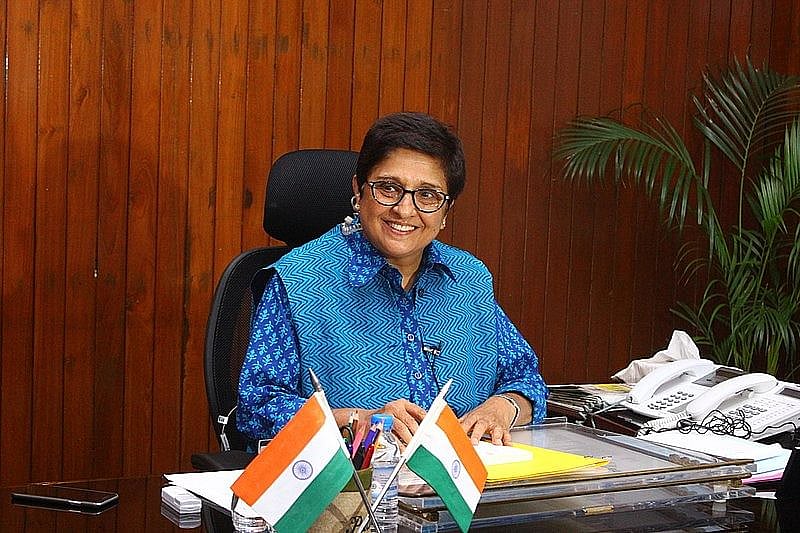
Former IPS officer and former Puducherry Lieutenant Governor Kiran Bedi has suggested an alternative approach to handling student-led demonstrations.
She proposed that trained Civil Defence personnel should serve as the first line of response during student agitations, with riot police deployed only as a backup in case the situation escalates beyond the Civil Defence's control.
Bedi made this suggestion in a post on X, where she drew a comparison with the country's border security framework. She said the arrangement would be similar to the Border Security Force (BSF) acting as the first line before the Army is engaged.
According to Bedi, every state already has Civil Defence and Home Guard departments with trained young men and women on the payroll, who could be retrained for crowd management duties. She proposed equipping them with cane shields, body armour and helmets for protection against stone-pelting, while avoiding the use of batons.
Bedi noted that such a model would reduce the chances of an immediate face-off between students and riot police, placing the responsibility on demonstrators to ensure protests remain peaceful. She added that armed police intervention should be limited to situations where there is a clear justification to protect lives and property.
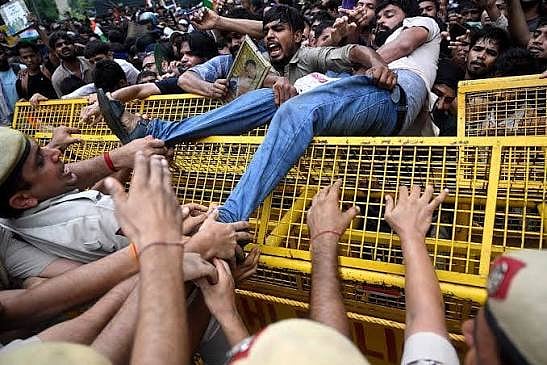
The proposal comes amid the ongoing Cockroach Janta Party (CJP) protest, where student-led demonstrations have raised concerns about direct confrontations between protesters and the police. Bedi argued that Civil Defence personnel could act as neutral witnesses during protests, helping minimise allegations and counter-allegations over the handling of demonstrations.
She suggested that governments examine the proposal and consider experimenting with the model in future student protests. Bedi's suggestion is aimed at reducing direct confrontations between protesters and the police, and promoting a safer and more peaceful approach to handling student-led demonstrations.
The use of Civil Defence personnel as the first line of response could also help to reduce the perception of police brutality and promote a more positive image of law enforcement. By providing a safer and more peaceful approach to handling student-led demonstrations, Bedi's proposal could help to reduce tensions and promote a more constructive dialogue between protesters and the authorities.
In the context of the ongoing CJP protest, Bedi's proposal could provide a useful alternative approach to handling student-led demonstrations. The protest has raised concerns about the use of force by police and the potential for direct confrontations between protesters and the police. By using Civil Defence personnel as the first line of response, the authorities could help to reduce the risk of violence and promote a more peaceful and constructive approach to handling the protest.
Overall, Bedi's proposal offers a potentially useful alternative approach to handling student-led demonstrations. By using Civil Defence personnel as the first line of response, the authorities could help to reduce the risk of violence and promote a more peaceful and constructive approach to handling protests.
The significance of Bedi's proposal lies in its potential to reduce direct confrontations between protesters and the police, and promote a safer and more peaceful approach to handling student-led demonstrations. This could help to reduce tensions and promote a more constructive dialogue between protesters and the authorities, ultimately contributing to a more peaceful and stable society.
Frequently asked questions
What is Kiran Bedi's proposal for handling student protests?
Kiran Bedi proposes using trained Civil Defence personnel as the first line of response during student agitations, with riot police deployed only as a backup.
Why does Bedi suggest using Civil Defence personnel?
Bedi suggests using Civil Defence personnel to reduce the chances of an immediate face-off between students and riot police, and to promote a safer and more peaceful approach to handling student-led demonstrations.