Bangladesh Open to Joining Islamic Nato
Bangladesh considers joining Islamic alliance, Mecca Pact sparks interest
'%3E%3Crect%20width%3D'96'%20height%3D'96'%20fill%3D'%234A235A'%2F%3E%3Ccircle%20cx%3D'30'%20cy%3D'24'%20r%3D'44'%20fill%3D'%23fff'%20opacity%3D'.12'%2F%3E%3Ccircle%20cx%3D'60'%20cy%3D'74'%20r%3D'40'%20fill%3D'%23000'%20opacity%3D'.10'%2F%3E%3C%2Fg%3E%3Cg%20fill%3D'none'%20stroke%3D'%23fff'%20stroke-width%3D'3'%3E%3Ccircle%20cx%3D'48'%20cy%3D'48'%20r%3D'16'%2F%3E%3Cellipse%20cx%3D'48'%20cy%3D'48'%20rx%3D'6.5'%20ry%3D'16'%2F%3E%3Cline%20x1%3D'32'%20y1%3D'42'%20x2%3D'64'%20y2%3D'42'%2F%3E%3Cline%20x1%3D'32'%20y1%3D'54'%20x2%3D'64'%20y2%3D'54'%2F%3E%3C%2Fg%3E%3C%2Fsvg%3E)
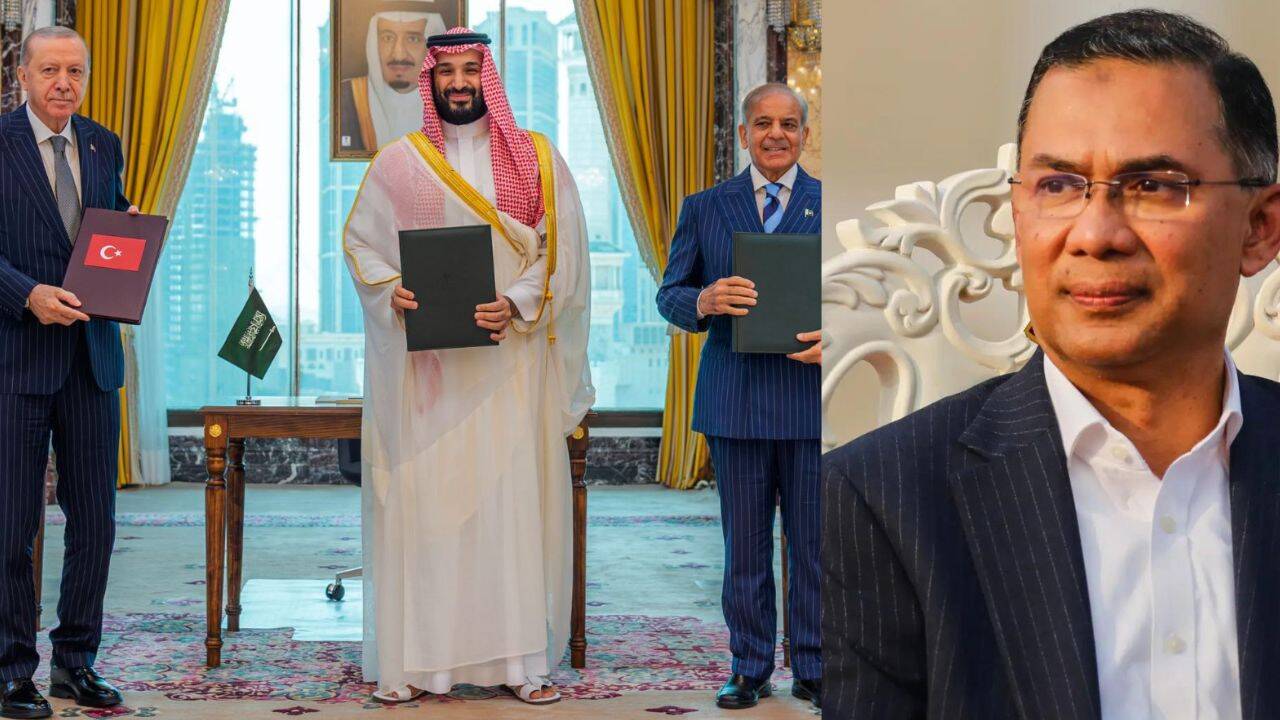
Bangladesh is keeping its options open regarding the possibility of joining the Islamic Military Counter Terrorism Coalition, also known as the 'Islamic Nato'. The coalition, which was formed in 2015, aims to combat terrorism and extremism in the Middle East and other parts of the world.
The Mecca Pact, a Saudi-led initiative, has sparked interest in Bangladesh, with the country's government considering the potential benefits of joining the coalition. Bangladesh has been dealing with its own share of terrorism and extremism, and joining the coalition could provide the country with access to resources and expertise to help combat these issues.
The Islamic Military Counter Terrorism Coalition is a group of 41 countries that have come together to share intelligence and coordinate efforts to combat terrorism. The coalition is led by Saudi Arabia and includes other countries such as Pakistan, Egypt, and the United Arab Emirates.
Bangladesh's decision to keep the door open to joining the coalition is likely due to the country's desire to strengthen its relationships with other Muslim-majority countries and to gain access to resources and expertise to help combat terrorism. The country's government has stated that it is committed to combating terrorism and extremism, and joining the coalition could be seen as a way to further this goal.
The Mecca Pact has been seen as a way for Saudi Arabia to increase its influence in the region and to counter the growing influence of other countries, such as Iran. Bangladesh's decision to consider joining the coalition could be seen as a way for the country to balance its relationships with other countries in the region and to avoid being drawn into conflicts between rival powers.
In recent years, Bangladesh has faced a number of terrorist attacks, including the 2016 attack on the Holey Artisan Bakery in Dhaka, which killed 22 people. The country's government has taken steps to combat terrorism, including the formation of a new counter-terrorism unit and the passage of laws to prevent the financing of terrorism.
The potential benefits of Bangladesh joining the Islamic Military Counter Terrorism Coalition are clear. The country could gain access to resources and expertise to help combat terrorism, and could also strengthen its relationships with other Muslim-majority countries. However, there are also potential risks to consider, including the possibility of being drawn into conflicts between rival powers.
Overall, Bangladesh's decision to keep the door open to joining the Islamic Military Counter Terrorism Coalition is a significant development, and one that could have important implications for the country's relationships with other countries in the region.
The move is also seen as an attempt by Bangladesh to strengthen its position in the global fight against terrorism and to demonstrate its commitment to combating extremism. By considering joining the coalition, Bangladesh is signaling its willingness to work with other countries to address the global threat of terrorism.
In conclusion, Bangladesh's decision to consider joining the Islamic Military Counter Terrorism Coalition is a complex issue, with both potential benefits and risks. The country's government will need to carefully weigh these factors as it considers its next steps.
Frequently asked questions
What is the Islamic Military Counter Terrorism Coalition?
The Islamic Military Counter Terrorism Coalition is a group of 41 countries that have come together to share intelligence and coordinate efforts to combat terrorism.
Why is Bangladesh considering joining the coalition?
Bangladesh is considering joining the coalition to gain access to resources and expertise to help combat terrorism and to strengthen its relationships with other Muslim-majority countries.