Ratlam Spa Racket Exposes Interstate Human Trafficking Network
Thai women rescued, sent back home. Interstate network busted.
'%3E%3Crect%20width%3D'96'%20height%3D'96'%20fill%3D'%23B3261E'%2F%3E%3Ccircle%20cx%3D'30'%20cy%3D'24'%20r%3D'44'%20fill%3D'%23fff'%20opacity%3D'.12'%2F%3E%3Ccircle%20cx%3D'60'%20cy%3D'74'%20r%3D'40'%20fill%3D'%23000'%20opacity%3D'.10'%2F%3E%3C%2Fg%3E%3Cg%20fill%3D'%23fff'%3E%3Crect%20x%3D'29'%20y%3D'49'%20width%3D'8'%20height%3D'19'%20rx%3D'1'%2F%3E%3Crect%20x%3D'39'%20y%3D'40'%20width%3D'9'%20height%3D'28'%20rx%3D'1'%2F%3E%3Crect%20x%3D'50'%20y%3D'45'%20width%3D'8'%20height%3D'23'%20rx%3D'1'%2F%3E%3Crect%20x%3D'60'%20y%3D'53'%20width%3D'7'%20height%3D'15'%20rx%3D'1'%2F%3E%3Crect%20x%3D'41'%20y%3D'34'%20width%3D'5'%20height%3D'6'%2F%3E%3C%2Fg%3E%3C%2Fsvg%3E)
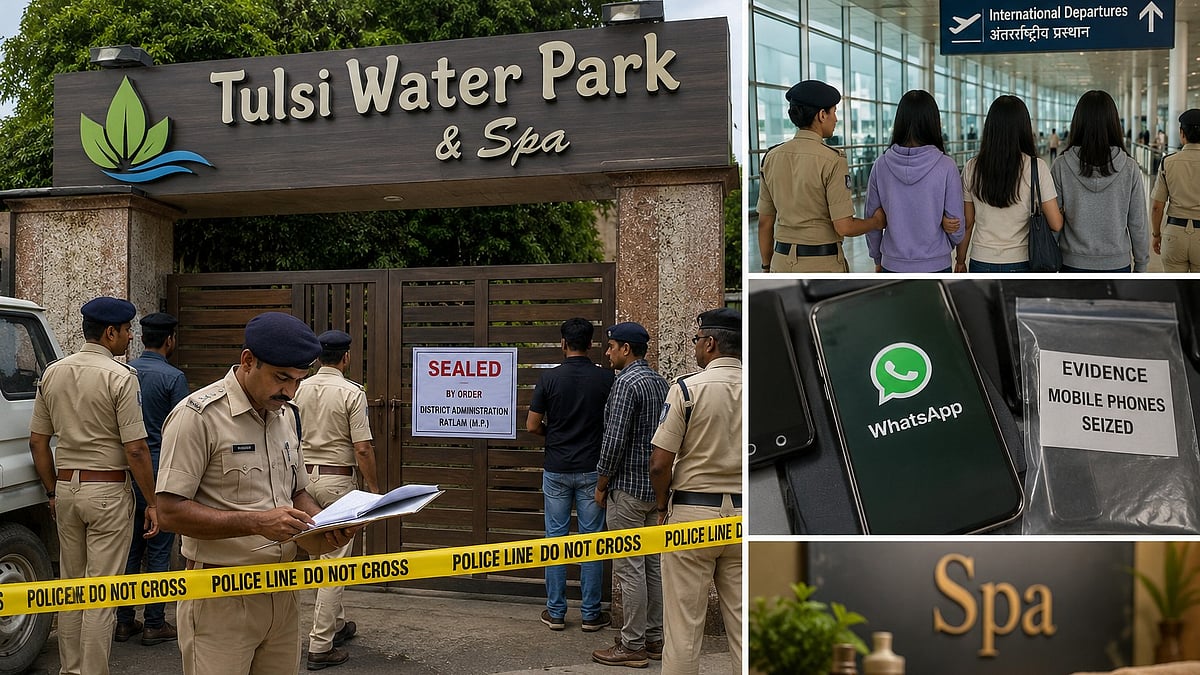
A recent investigation into an alleged prostitution racket operating at a spa in Ratlam, Madhya Pradesh, has uncovered a large interstate network involved in trafficking foreign women. The spa, located at Tulsi Water Park in Namli, was raided on June 5, leading to the arrest of several individuals and the rescue of three Thai women.
The women, who had entered India on tourist visas, were found to have overstayed their visas by several months. One woman had overstayed by seven months, another by three months, and the third by nearly a month. As a result, fines of Rs 1 lakh, Rs 50,000, and Rs 20,000 were imposed on them, respectively.
After completing the necessary legal formalities, the women were sent back to Thailand on July 3. They were taken to Mumbai, where they completed the exit process at the Foreigners Regional Registration Office before flying home. The police clarified that the women were not deported, but rather returned to their home country after completing the necessary procedures.
The investigation into the racket gained momentum after police examined mobile phones seized from one of the accused, Bharat Mewara. The phones contained photos and videos showing Mewara performing wedding-like rituals with a Thai woman, who is believed to have facilitated the arrival of the three rescued women.
Further investigation revealed that the women were connected through a common WhatsApp group, which was used to coordinate their movement between cities. One of the women had stayed at spa centers in several cities, including Jaipur, Chittorgarh, Bhavnagar, Anand, and Mandsaur, before reaching Ratlam. The police suspect that Jaipur may have been the main hub of the network.
The case began with the arrest of Naresh Chauhan, Bharat Mewara, and water park manager Dilip Thakur on June 5. Co-accused Yogita Singh was later arrested in Indore, while Yogesh Singh remains absconding.
The rescue of the three Thai women and the exposure of the interstate network highlight the need for increased vigilance and cooperation between law enforcement agencies to combat human trafficking. The use of technology, such as WhatsApp groups, to coordinate the movement of trafficked individuals also underscores the need for police to stay ahead of the curve in terms of technology and tactics.
The incident also raises questions about the effectiveness of India's visa system and the need for stricter controls to prevent overstaying and human trafficking. The fact that the women were able to enter India on tourist visas and then stay on after their visas expired suggests that there may be gaps in the system that need to be addressed.
In terms of context, human trafficking is a significant problem in India, with thousands of people being trafficked every year. The country has a large and complex network of traffickers, and it is often difficult for police to track and prosecute those involved.
The exposure of the interstate network and the rescue of the three Thai women are significant steps forward in the fight against human trafficking. However, more needs to be done to address the root causes of the problem and to prevent further cases of trafficking.
In conclusion, the investigation into the Ratlam spa racket has highlighted the existence of a large and complex interstate network involved in human trafficking. The rescue of the three Thai women and the exposure of the network are significant achievements, but more needs to be done to address the problem of human trafficking in India.
The case has significant implications for Mumbai, as the city is a major hub for human trafficking. The fact that the women were taken to Mumbai to complete their exit formalities highlights the city's role in the trafficking network. It is essential for the authorities to increase vigilance and cooperation to combat human trafficking and prevent further cases.
The incident also underscores the need for increased awareness and education about human trafficking. It is essential for people to be aware of the signs of trafficking and to report any suspicious activity to the authorities. By working together, we can prevent further cases of human trafficking and ensure that those involved are brought to justice.
In the end, the exposure of the interstate network and the rescue of the three Thai women are significant steps forward in the fight against human trafficking. However, more needs to be done to address the root causes of the problem and to prevent further cases of trafficking. It is essential for the authorities to continue to work together to combat human trafficking and to ensure that those involved are brought to justice.