Sonam Wangchuk's Eco-Friendly Ladakh Home
Sonam Wangchuk's home in Ladakh is a model of sustainable living. The engineer and climate activist's residence is built with mud walls and features a passive solar heating system.
'%3E%3Crect%20width%3D'96'%20height%3D'96'%20fill%3D'%23B3261E'%2F%3E%3Ccircle%20cx%3D'30'%20cy%3D'24'%20r%3D'44'%20fill%3D'%23fff'%20opacity%3D'.12'%2F%3E%3Ccircle%20cx%3D'60'%20cy%3D'74'%20r%3D'40'%20fill%3D'%23000'%20opacity%3D'.10'%2F%3E%3C%2Fg%3E%3Cg%20fill%3D'%23fff'%3E%3Crect%20x%3D'29'%20y%3D'49'%20width%3D'8'%20height%3D'19'%20rx%3D'1'%2F%3E%3Crect%20x%3D'39'%20y%3D'40'%20width%3D'9'%20height%3D'28'%20rx%3D'1'%2F%3E%3Crect%20x%3D'50'%20y%3D'45'%20width%3D'8'%20height%3D'23'%20rx%3D'1'%2F%3E%3Crect%20x%3D'60'%20y%3D'53'%20width%3D'7'%20height%3D'15'%20rx%3D'1'%2F%3E%3Crect%20x%3D'41'%20y%3D'34'%20width%3D'5'%20height%3D'6'%2F%3E%3C%2Fg%3E%3C%2Fsvg%3E)
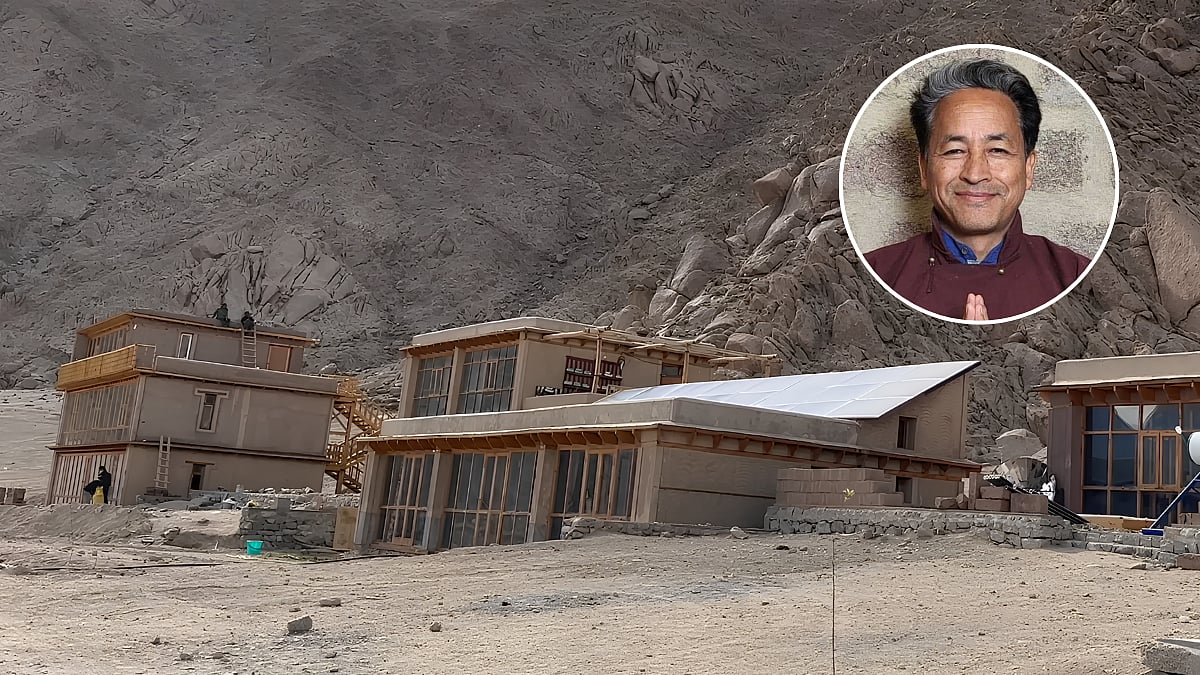
Sonam Wangchuk, a renowned engineer and climate activist, has been making headlines for his advocacy of sustainable living. His home in Ladakh, often referred to as a 'tribal house', is a testament to his commitment to eco-friendly living. The residence, built using traditional mud construction techniques, has recently gained attention after a three-year-old home tour resurfaced online.
The house is constructed with mud walls, which replace the conventional concrete and steel used in urban homes. The wooden roof complements the natural materials, helping to insulate the house while preserving the region's architectural heritage. The result is a structure that blends seamlessly with the rugged Himalayan landscape while remaining environmentally responsible.
The thick earthen walls of the house serve as thermal barriers, keeping the indoor spaces cool during the scorching summers and retaining warmth during the harsh winters. This reduces the need for artificial heating and makes the house energy-efficient throughout the year. One of the most fascinating features of the home is its passive solar heating system, which uses a 'black wall' with embedded water bottles to store heat during the day and release it at night.
The home's design is centered around community living, with a low-seating living area and an open kitchen that encourages family interactions. The interiors offer contemporary comforts, including sofas, vintage wooden furniture, and a modular kitchen. The house also features a zero-waste sanitation system, where human waste is collected, composted, and converted into fertiliser, significantly reducing water consumption.
Sonam Wangchuk's home is a model of sustainable living, showcasing the possibility of living in harmony with the environment. The use of natural materials, passive solar heating, and zero-waste sanitation makes it an eco-friendly residence that reduces its carbon footprint. The house is a testament to Wangchuk's commitment to climate activism and his efforts to promote sustainable living.
The home's design and construction are a reflection of the local culture and traditions of Ladakh. The use of mud walls and wooden roofs is a nod to the region's architectural heritage, while the modern conveniences and comforts ensure a comfortable living space. The house is a perfect blend of traditional and modern elements, making it a unique and inspiring example of sustainable living.
In a world where climate change is a pressing concern, Sonam Wangchuk's home in Ladakh is a beacon of hope. It shows that it is possible to live in harmony with the environment, reducing our carbon footprint and promoting sustainable living. The house is a testament to Wangchuk's vision and commitment to creating a better future for our planet.
The significance of Sonam Wangchuk's home in Ladakh extends beyond its eco-friendly features. It is a symbol of the possibility of living in harmony with the environment, and it inspires us to rethink our approach to sustainable living. As we face the challenges of climate change, Wangchuk's home is a reminder that small changes can make a big difference, and that individual actions can contribute to a larger movement towards a more sustainable future.
In conclusion, Sonam Wangchuk's home in Ladakh is a model of sustainable living that showcases the possibility of living in harmony with the environment. The use of natural materials, passive solar heating, and zero-waste sanitation makes it an eco-friendly residence that reduces its carbon footprint. The house is a testament to Wangchuk's commitment to climate activism and his efforts to promote sustainable living, and it inspires us to rethink our approach to sustainable living.
Frequently asked questions
What is the main material used in the construction of Sonam Wangchuk's home in Ladakh?
The main material used is mud, which replaces conventional concrete and steel.
How does the passive solar heating system in Sonam Wangchuk's home work?
The system uses a 'black wall' with embedded water bottles to store heat during the day and release it at night.