India May Reintroduce E10 Fuel
Government considers E10 return, E20 concerns rise
'%3E%3Crect%20width%3D'96'%20height%3D'96'%20fill%3D'%23B3261E'%2F%3E%3Ccircle%20cx%3D'30'%20cy%3D'24'%20r%3D'44'%20fill%3D'%23fff'%20opacity%3D'.12'%2F%3E%3Ccircle%20cx%3D'60'%20cy%3D'74'%20r%3D'40'%20fill%3D'%23000'%20opacity%3D'.10'%2F%3E%3C%2Fg%3E%3Cg%20fill%3D'%23fff'%3E%3Crect%20x%3D'29'%20y%3D'49'%20width%3D'8'%20height%3D'19'%20rx%3D'1'%2F%3E%3Crect%20x%3D'39'%20y%3D'40'%20width%3D'9'%20height%3D'28'%20rx%3D'1'%2F%3E%3Crect%20x%3D'50'%20y%3D'45'%20width%3D'8'%20height%3D'23'%20rx%3D'1'%2F%3E%3Crect%20x%3D'60'%20y%3D'53'%20width%3D'7'%20height%3D'15'%20rx%3D'1'%2F%3E%3Crect%20x%3D'41'%20y%3D'34'%20width%3D'5'%20height%3D'6'%2F%3E%3C%2Fg%3E%3C%2Fsvg%3E)
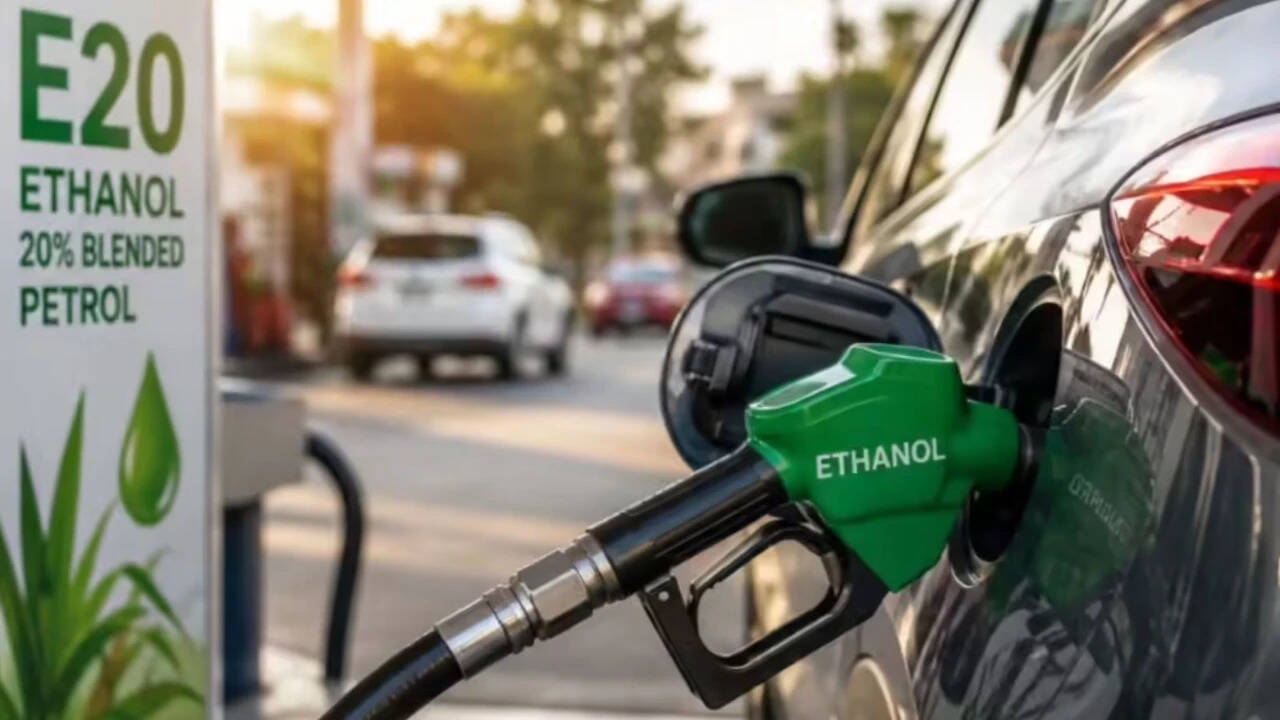
The Indian government is contemplating the reintroduction of E10 fuel, a blend of 10% ethanol and 90% petrol, following concerns from vehicle owners about the recently implemented E20 fuel. E20, which contains 20% ethanol and 80% petrol, was introduced as part of the government's efforts to reduce crude oil imports and improve energy security.
The government had successfully achieved its target of 20% ethanol blending ahead of the original 2030 deadline. However, the nationwide shift to E20 has generated concerns among some vehicle owners, particularly those with older vehicles. These concerns have prompted a top bureaucrat to suggest that the government may reconsider the reintroduction of E10 fuel.
The promotion of higher ethanol blending is a key component of the government's strategy to reduce dependence on crude oil imports and save foreign exchange. By increasing the use of ethanol, a renewable energy source, the government aims to improve India's energy security and reduce its carbon footprint.
The introduction of E20 fuel has been a significant milestone in the government's efforts to increase ethanol blending. However, the concerns raised by vehicle owners highlight the need for a balanced approach that takes into account the needs of all stakeholders. The government must weigh the benefits of higher ethanol blending against the potential impact on vehicle owners and the environment.
In recent years, India has made significant progress in increasing ethanol production and blending. The country has set ambitious targets to increase ethanol blending to 20% by 2025 and 30% by 2030. The achievement of these targets is crucial to reducing India's dependence on crude oil imports and improving its energy security.
The potential reintroduction of E10 fuel is a significant development that could have far-reaching implications for the Indian automotive industry. Vehicle owners, particularly those with older vehicles, may welcome the move as it could help alleviate concerns about the compatibility of E20 fuel with their vehicles.
The government's decision on E10 fuel will depend on various factors, including the feedback from vehicle owners, the environmental impact, and the overall energy security considerations. As the government considers its options, it is essential to strike a balance between the need to reduce dependence on crude oil imports and the need to protect the interests of vehicle owners.
In conclusion, the potential reintroduction of E10 fuel in India is a significant development that highlights the complexities of the country's energy security strategy. As the government navigates the challenges and opportunities of higher ethanol blending, it is crucial to consider the needs of all stakeholders and strive for a balanced approach that promotes energy security, environmental sustainability, and economic growth.
The government's decision on E10 fuel will be closely watched by vehicle owners, the automotive industry, and environmental groups. The outcome will have significant implications for India's energy security, the environment, and the economy. As the country continues to navigate the challenges of energy security, it is essential to prioritize a balanced approach that takes into account the needs of all stakeholders.
The Indian government's efforts to promote higher ethanol blending are part of a broader strategy to reduce dependence on crude oil imports and improve energy security. The reintroduction of E10 fuel could be a significant step in this direction, but it is crucial to consider the potential impact on vehicle owners, the environment, and the economy. By striking a balance between these competing interests, the government can promote energy security, environmental sustainability, and economic growth.
In the coming months, the government is expected to make a decision on the reintroduction of E10 fuel. The outcome will depend on various factors, including the feedback from vehicle owners, the environmental impact, and the overall energy security considerations. As the government considers its options, it is essential to prioritize a balanced approach that promotes energy security, environmental sustainability, and economic growth.
The potential reintroduction of E10 fuel is a significant development that highlights the complexities of India's energy security strategy. As the government navigates the challenges and opportunities of higher ethanol blending, it is crucial to consider the needs of all stakeholders and strive for a balanced approach that promotes energy security, environmental sustainability, and economic growth.
The government's decision on E10 fuel will have significant implications for India's energy security, the environment, and the economy. As the country continues to navigate the challenges of energy security, it is essential to prioritize a balanced approach that takes into account the needs of all stakeholders. By doing so, the government can promote energy security, environmental sustainability, and economic growth, and ensure a brighter future for India.
In the end, the government's decision on E10 fuel will depend on its ability to balance the competing interests of vehicle owners, the environment, and the economy. By considering the needs of all stakeholders and striving for a balanced approach, the government can promote energy security, environmental sustainability, and economic growth, and ensure a brighter future for India.
The Indian government's efforts to promote higher ethanol blending are part of a broader strategy to reduce dependence on crude oil imports and improve energy security. The reintroduction of E10 fuel could be a significant step in this direction, but it is crucial to consider the potential impact on vehicle owners, the environment, and the economy. By striking a balance between these competing interests, the government can promote energy security, environmental sustainability, and economic growth.
As the government considers its options, it is essential to prioritize a balanced approach that promotes energy security, environmental sustainability, and economic growth. The outcome will depend on various factors, including the feedback from vehicle owners, the environmental impact, and the overall energy security considerations. By considering the needs of all stakeholders and striving for a balanced approach, the government can promote energy security, environmental sustainability, and economic growth, and ensure a brighter future for India.
The potential reintroduction of E10 fuel is a significant development that highlights the complexities of India's energy security strategy. As the government navigates the challenges and opportunities of higher ethanol blending, it is crucial to consider the needs of all stakeholders and strive for a balanced approach that promotes energy security, environmental sustainability, and economic growth.
The government's decision on E10 fuel will be closely watched by vehicle owners, the automotive industry, and environmental groups. The outcome will have significant implications for India's energy security, the environment, and the economy. As the country continues to navigate the challenges of energy security, it is essential to prioritize a balanced approach that takes into account the needs of all stakeholders.
In conclusion, the potential reintroduction of E10 fuel in India is a significant development that highlights the complexities of the country's energy security strategy. As the government navigates the challenges and opportunities of higher ethanol blending, it is crucial to consider the needs of all stakeholders and strive for a balanced approach that promotes energy security, environmental sustainability, and economic growth.
The Indian government's efforts to promote higher ethanol blending are part of a broader strategy to reduce dependence on crude oil imports and improve energy security. The reintroduction of E10 fuel could be a significant step in this direction, but it is crucial to consider the potential impact on vehicle owners, the environment, and the economy. By striking a balance between these competing interests, the government can promote energy security, environmental sustainability, and economic growth.
The government's decision on E10 fuel will depend on various factors, including the feedback from vehicle owners, the environmental impact, and the overall energy security considerations. As the government considers its options, it is essential to prioritize a balanced approach that promotes energy security, environmental sustainability, and economic growth.
The potential reintroduction of E10 fuel is a significant development that highlights the complexities of India's energy security strategy. As the government navigates the challenges and opportunities of higher ethanol blending, it is crucial to consider the needs of all stakeholders and strive for a balanced approach that promotes energy security, environmental sustainability, and economic growth.
The government's decision on E10 fuel will have significant implications for India's energy security, the environment, and the economy. As the country continues to navigate the challenges of energy security, it is essential to prioritize a balanced approach that takes into account the needs of all stakeholders. By doing so, the government can promote energy security, environmental sustainability, and economic growth, and ensure a brighter future for India.
What it means for India is that the government's decision on E10 fuel will have a significant impact on the country's energy security, environment, and economy. The government must consider the needs of all stakeholders and strive for a balanced approach that promotes energy security, environmental sustainability, and economic growth. By doing so, the government can ensure a brighter future for India and reduce its dependence on crude oil imports.
Frequently asked questions
What is E10 fuel
E10 fuel is a blend of 10% ethanol and 90% petrol
Why is the government considering reintroducing E10 fuel
The government is considering reintroducing E10 fuel due to concerns from vehicle owners about the compatibility of E20 fuel with their vehicles