Tanks Evolve Over 110 Years
Tanks mark 110 years, transforming warfare. From basic vehicles to critical components.
'%3E%3Crect%20width%3D'96'%20height%3D'96'%20fill%3D'%23B3261E'%2F%3E%3Ccircle%20cx%3D'30'%20cy%3D'24'%20r%3D'44'%20fill%3D'%23fff'%20opacity%3D'.12'%2F%3E%3Ccircle%20cx%3D'60'%20cy%3D'74'%20r%3D'40'%20fill%3D'%23000'%20opacity%3D'.10'%2F%3E%3C%2Fg%3E%3Cg%20fill%3D'%23fff'%3E%3Crect%20x%3D'29'%20y%3D'49'%20width%3D'8'%20height%3D'19'%20rx%3D'1'%2F%3E%3Crect%20x%3D'39'%20y%3D'40'%20width%3D'9'%20height%3D'28'%20rx%3D'1'%2F%3E%3Crect%20x%3D'50'%20y%3D'45'%20width%3D'8'%20height%3D'23'%20rx%3D'1'%2F%3E%3Crect%20x%3D'60'%20y%3D'53'%20width%3D'7'%20height%3D'15'%20rx%3D'1'%2F%3E%3Crect%20x%3D'41'%20y%3D'34'%20width%3D'5'%20height%3D'6'%2F%3E%3C%2Fg%3E%3C%2Fsvg%3E)
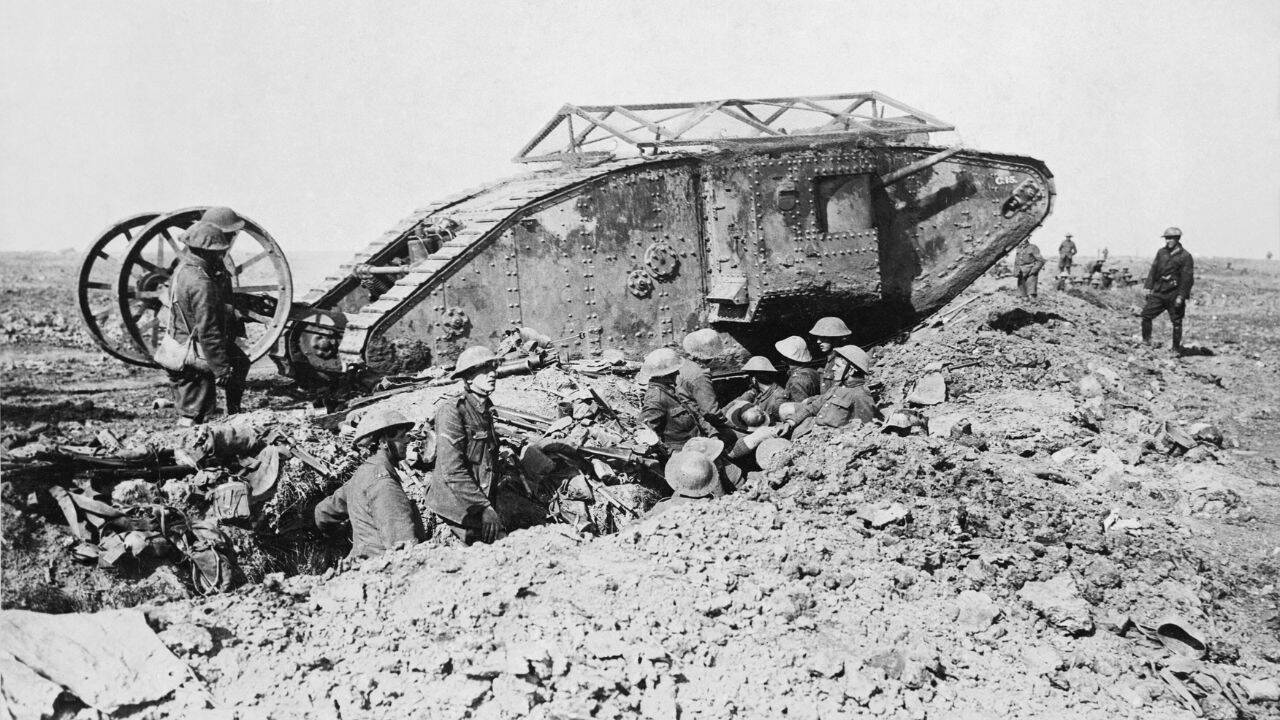
Tanks have been on the battlefield for 110 years, transforming from basic trench-crossing vehicles to critical components of combined-arms warfare.
The first tanks were introduced in 1916 and were used to cross trenches during World War I.
Over time, they evolved to become the backbone of armored formations in World War II.
The Cold War saw significant innovations in tank technology, leading to the development of main battle tanks.
These tanks were designed to be versatile and effective in various combat scenarios.
Today, tanks continue to play a crucial role in modern warfare, despite the introduction of new technologies such as drones and precision anti-tank weaponry.
They are often utilized at smaller unit levels, providing essential firepower and infantry support.
The evolution of tanks has been shaped by advances in technology and changes in the nature of warfare.
From the early days of World War I to the present day, tanks have remained a vital component of military forces around the world.
In recent years, the development of new technologies such as active protection systems and advanced armor has helped to improve the effectiveness and survivability of tanks on the battlefield.
As warfare continues to evolve, it is likely that tanks will remain an important part of military forces, adapting to new challenges and technologies.
The significance of tanks in modern warfare cannot be overstated, as they provide a unique combination of firepower, mobility, and protection.
As the nature of warfare continues to change, it will be interesting to see how tanks evolve to meet new challenges and remain a vital component of military forces.
Frequently asked questions
When were tanks first introduced?
Tanks were first introduced in 1916 during World War I.
What role do tanks play in modern warfare?
Tanks provide essential firepower and infantry support in modern warfare, often utilized at smaller unit levels.