Sweden Election Deadlocked: Ruling Bloc Tied With Opposition
Sweden's election is too close to call, exit polls show. The ruling bloc and centre-left opposition are neck and neck.
'%3E%3Crect%20width%3D'96'%20height%3D'96'%20fill%3D'%234A235A'%2F%3E%3Ccircle%20cx%3D'30'%20cy%3D'24'%20r%3D'44'%20fill%3D'%23fff'%20opacity%3D'.12'%2F%3E%3Ccircle%20cx%3D'60'%20cy%3D'74'%20r%3D'40'%20fill%3D'%23000'%20opacity%3D'.10'%2F%3E%3C%2Fg%3E%3Cg%20fill%3D'none'%20stroke%3D'%23fff'%20stroke-width%3D'3'%3E%3Ccircle%20cx%3D'48'%20cy%3D'48'%20r%3D'16'%2F%3E%3Cellipse%20cx%3D'48'%20cy%3D'48'%20rx%3D'6.5'%20ry%3D'16'%2F%3E%3Cline%20x1%3D'32'%20y1%3D'42'%20x2%3D'64'%20y2%3D'42'%2F%3E%3Cline%20x1%3D'32'%20y1%3D'54'%20x2%3D'64'%20y2%3D'54'%2F%3E%3C%2Fg%3E%3C%2Fsvg%3E)
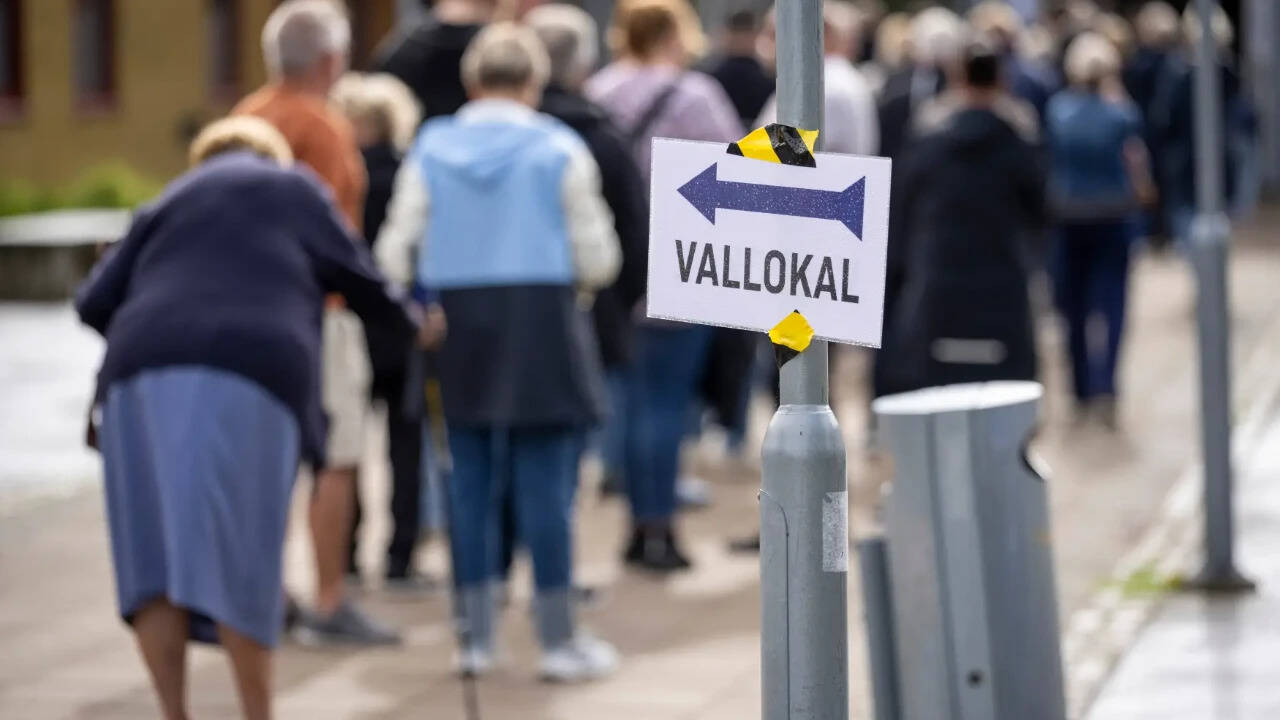
The Swedish election has ended in a deadlock, with the ruling bloc and the centre-left opposition almost evenly matched, according to exit polls. The election, which took place on Sunday, saw the ruling Moderate Party-led alliance and the centre-left opposition, led by the Social Democratic Party, locked in a tight contest.
The exit polls suggest that the two blocs are separated by a tiny margin, with neither side able to claim a clear victory. The ruling bloc, which includes the Moderate Party, the Christian Democrats, the Liberal Party, and the Centre Party, has been in power since 2010. The centre-left opposition, which includes the Social Democratic Party, the Green Party, and the Left Party, has been seeking to oust the government and take power.
The election campaign was marked by debates over issues such as immigration, healthcare, and the economy. The ruling bloc has been credited with managing the economy effectively, but has faced criticism over its handling of immigration and integration issues. The centre-left opposition, on the other hand, has promised to increase spending on healthcare and education, and to take a tougher stance on immigration.
The deadlock in the election result has sparked uncertainty over the future of the government. The two blocs will now have to negotiate with each other to form a coalition government, or attempt to form a minority government with the support of other parties. The outcome of these negotiations is far from certain, and it may take several days or even weeks to determine the final result.
The Swedish election has significant implications for the country's politics and economy. The ruling bloc has been a strong supporter of the European Union and has implemented policies to reduce carbon emissions and promote renewable energy. The centre-left opposition, on the other hand, has promised to take a more nuanced approach to EU membership and to prioritize social welfare policies.
The election result has also been closely watched by other European countries, which are facing similar challenges and debates over issues such as immigration and economic policy. The outcome of the Swedish election may have implications for the broader European political landscape, and may influence the policies and strategies of other governments in the region.
In the coming days and weeks, the Swedish political parties will engage in intense negotiations to form a new government. The outcome of these negotiations will determine the direction of the country's policies and the future of its government. For now, the result of the election remains uncertain, and the country waits with bated breath to see what the future holds.
The Swedish election deadlock has significant implications for the country's future, and the outcome of the negotiations will be closely watched by other European countries. The election result has highlighted the deep divisions within Swedish society, and the need for a government that can balance competing interests and priorities. As the negotiations continue, one thing is clear: the future of Sweden's government and politics hangs in the balance.
The final outcome of the election will depend on the ability of the parties to negotiate and compromise. The ruling bloc and the centre-left opposition will have to find common ground and work together to form a stable and effective government. The Swedish people will be watching closely, and the international community will be waiting to see how the country navigates this uncertain period.
In conclusion, the Swedish election has ended in a deadlock, with the ruling bloc and the centre-left opposition almost evenly matched. The outcome of the negotiations will determine the future of the government and the direction of the country's policies. The Swedish election has significant implications for the country's politics and economy, and the outcome will be closely watched by other European countries.
Frequently asked questions
What is the current state of the Swedish election result?
The Swedish election is deadlocked, with the ruling bloc and the centre-left opposition almost evenly matched, according to exit polls.
What are the implications of the Swedish election result?
The outcome of the election has significant implications for Sweden's politics and economy, and may influence the policies and strategies of other European governments.