NASA Targets Saturn's Rings with Two New Projects
NASA plans to explore Saturn's rings, a deadly destination. Two scientists lead the way.
'%3E%3Crect%20width%3D'96'%20height%3D'96'%20fill%3D'%23B3261E'%2F%3E%3Ccircle%20cx%3D'30'%20cy%3D'24'%20r%3D'44'%20fill%3D'%23fff'%20opacity%3D'.12'%2F%3E%3Ccircle%20cx%3D'60'%20cy%3D'74'%20r%3D'40'%20fill%3D'%23000'%20opacity%3D'.10'%2F%3E%3C%2Fg%3E%3Cg%20fill%3D'%23fff'%3E%3Crect%20x%3D'29'%20y%3D'49'%20width%3D'8'%20height%3D'19'%20rx%3D'1'%2F%3E%3Crect%20x%3D'39'%20y%3D'40'%20width%3D'9'%20height%3D'28'%20rx%3D'1'%2F%3E%3Crect%20x%3D'50'%20y%3D'45'%20width%3D'8'%20height%3D'23'%20rx%3D'1'%2F%3E%3Crect%20x%3D'60'%20y%3D'53'%20width%3D'7'%20height%3D'15'%20rx%3D'1'%2F%3E%3Crect%20x%3D'41'%20y%3D'34'%20width%3D'5'%20height%3D'6'%2F%3E%3C%2Fg%3E%3C%2Fsvg%3E)
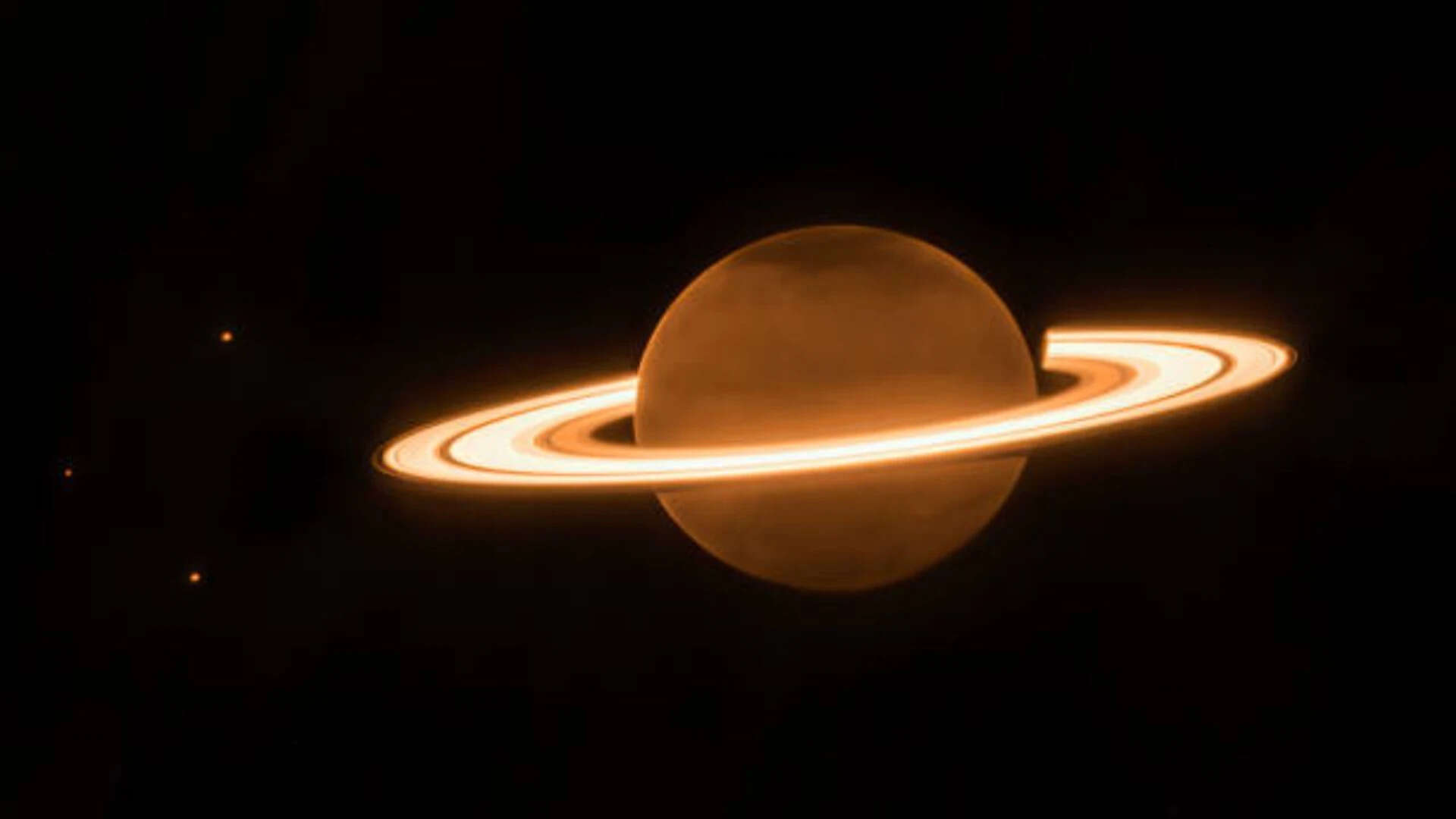
NASA has announced two ambitious projects to explore Saturn's rings, one of the most treacherous environments in the solar system. For centuries, humans have been fascinated by space and the possibility of exploring its many wonders. From the sun's intense heat to the moon's surface and the stunning rings of Saturn, the desire to venture into the unknown has driven innovation and discovery.
The two NASA-backed projects aim to take this fascination to the next level by sending scientists to touch Saturn's rings. This endeavor is particularly challenging due to the harsh conditions surrounding the rings. The environment is filled with debris, intense radiation, and extreme temperatures, making it a significant technological and scientific hurdle.
Despite these challenges, NASA is confident that the projects can be successful. The space agency has a long history of pushing the boundaries of space exploration, from landing on the moon to sending robotic missions to Mars. The exploration of Saturn's rings is the next logical step in this journey, offering a unique opportunity to gain insights into the formation and evolution of our solar system.
Saturn's rings are a complex and fascinating phenomenon, comprising ice particles, rock debris, and dust. They stretch across hundreds of thousands of kilometers, making them one of the most extensive and intricate structures in the solar system. By exploring the rings up close, scientists hope to learn more about their composition, dynamics, and behavior.
The projects are part of a broader effort by NASA to explore the outer reaches of the solar system. The space agency has already sent several missions to the outer planets, including the Cassini mission, which orbited Saturn from 2004 to 2017. The new projects will build on this knowledge, using advanced technologies and scientific instruments to gather data and conduct experiments.
The success of these projects will depend on the ability of scientists and engineers to design and build spacecraft that can withstand the harsh conditions surrounding Saturn's rings. This will require significant advances in materials science, propulsion systems, and radiation protection. However, if successful, the rewards will be substantial, offering new insights into the solar system and the potential for future human exploration.
In conclusion, NASA's plans to explore Saturn's rings represent a significant milestone in the history of space exploration. The challenges are substantial, but the potential rewards are enormous. As scientists and engineers work to overcome the technical hurdles, they will be driven by the same sense of curiosity and wonder that has inspired humans to explore space for centuries.
The exploration of Saturn's rings is not just a scientific endeavor; it also has the potential to inspire future generations of scientists, engineers, and explorers. By pushing the boundaries of what is possible, NASA is reminding us that the universe is full of mysteries waiting to be uncovered, and that the pursuit of knowledge and discovery is a fundamental part of the human experience.
The success of these projects will have significant implications for our understanding of the solar system and the potential for future space exploration. It will also demonstrate the power of human ingenuity and the importance of continued investment in scientific research and development. As we look to the future, it is clear that the exploration of Saturn's rings is just the beginning of a new era of space exploration, one that will take us to the outer reaches of the solar system and beyond.
Frequently asked questions
What is the main goal of NASA's new projects?
The main goal is to explore Saturn's rings, one of the most treacherous environments in the solar system.
Why is exploring Saturn's rings significant?
Exploring Saturn's rings will offer new insights into the formation and evolution of our solar system, and has the potential to inspire future generations of scientists and engineers.