SC Upholds Delhi HC Order On MEA's CPV Tender
SC refuses to interfere with Delhi HC's judgment, orders fresh bids within 3 months. Consular services to remain uninterrupted.
'%3E%3Crect%20width%3D'96'%20height%3D'96'%20fill%3D'%231A5276'%2F%3E%3Ccircle%20cx%3D'30'%20cy%3D'24'%20r%3D'44'%20fill%3D'%23fff'%20opacity%3D'.12'%2F%3E%3Ccircle%20cx%3D'60'%20cy%3D'74'%20r%3D'40'%20fill%3D'%23000'%20opacity%3D'.10'%2F%3E%3C%2Fg%3E%3Cg%20fill%3D'%23fff'%3E%3Cpath%20d%3D'M31%2041%20L48%2031%20L65%2041%20Z'%2F%3E%3Crect%20x%3D'33'%20y%3D'43'%20width%3D'4'%20height%3D'17'%2F%3E%3Crect%20x%3D'41'%20y%3D'43'%20width%3D'4'%20height%3D'17'%2F%3E%3Crect%20x%3D'51'%20y%3D'43'%20width%3D'4'%20height%3D'17'%2F%3E%3Crect%20x%3D'59'%20y%3D'43'%20width%3D'4'%20height%3D'17'%2F%3E%3Crect%20x%3D'30'%20y%3D'62'%20width%3D'36'%20height%3D'4'%20rx%3D'1'%2F%3E%3C%2Fg%3E%3C%2Fsvg%3E)
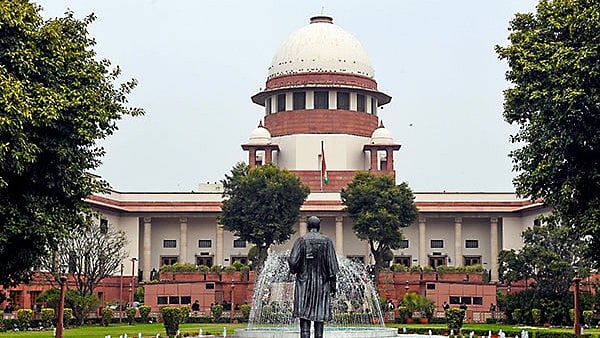
The Supreme Court on Monday upheld the Delhi High Court's order quashing the Ministry of External Affairs' (MEA) tender process for outsourcing Consular, Passport and Visa (CPV) services at Indian Missions in Abu Dhabi, Kuwait, Singapore, and Canberra.
A bench led by Chief Justice of India Surya Kant dismissed the Union Government's special leave petitions challenging the July 15 judgment. The Court, however, modified the High Court's directions to ensure that consular services remain uninterrupted until a fresh tender process is completed.
The Court permitted the Union of India and the MEA to continue the existing service providers at all four missions until fresh Requests for Proposal (RFPs) are issued and the work is reallocated. Alternatively, the Centre can temporarily allocate the work to the successful L-1 bidders whose allotments had been set aside by the High Court.
Solicitor General Tushar Mehta argued that the High Court's judgment had disrupted the functioning of Indian missions abroad as embassy officials had been diverted to perform work that was earlier handled by outsourced service providers. He submitted that the Centre had allowed even the existing service providers to participate in an open and competitive bidding process.
Defending the evaluation process, Mehta argued that the tenders related to four different Indian Missions and that technical assessments could legitimately vary from one mission to another. Each evaluation committee had independently assessed bidders based on competence after considering the requirements of the respective mission.
The Court directed the Union Government to comply with the Delhi High Court's directions and complete the fresh tender exercise within three months. The MEA has been granted liberty to evolve any other mechanism to ensure uninterrupted consular services at the four missions.
The Supreme Court's decision is significant as it ensures that consular services will continue uninterrupted at the four Indian Missions abroad. The fresh tender process is expected to be completed within three months, and the MEA has been given the liberty to evolve any other mechanism to ensure uninterrupted services.
The case highlights the importance of transparency and fairness in the tender process. The Supreme Court's decision upholds the principles of competitive bidding and ensures that the tender process is free from any irregularities.
In conclusion, the Supreme Court's decision is a significant development in the case, and it ensures that consular services will continue uninterrupted at the four Indian Missions abroad. The fresh tender process is expected to be completed within three months, and the MEA has been given the liberty to evolve any other mechanism to ensure uninterrupted services.
The decision also highlights the importance of transparency and fairness in the tender process, and it upholds the principles of competitive bidding. The case is a significant example of the judiciary's role in ensuring that the government's actions are transparent and fair.