OpenAI's Sam Altman Admits AI Timeline Mistake
Sam Altman regrets AI timeline error, cites economic inertia
'%3E%3Crect%20width%3D'96'%20height%3D'96'%20fill%3D'%23B3261E'%2F%3E%3Ccircle%20cx%3D'30'%20cy%3D'24'%20r%3D'44'%20fill%3D'%23fff'%20opacity%3D'.12'%2F%3E%3Ccircle%20cx%3D'60'%20cy%3D'74'%20r%3D'40'%20fill%3D'%23000'%20opacity%3D'.10'%2F%3E%3C%2Fg%3E%3Cg%20fill%3D'%23fff'%3E%3Crect%20x%3D'29'%20y%3D'49'%20width%3D'8'%20height%3D'19'%20rx%3D'1'%2F%3E%3Crect%20x%3D'39'%20y%3D'40'%20width%3D'9'%20height%3D'28'%20rx%3D'1'%2F%3E%3Crect%20x%3D'50'%20y%3D'45'%20width%3D'8'%20height%3D'23'%20rx%3D'1'%2F%3E%3Crect%20x%3D'60'%20y%3D'53'%20width%3D'7'%20height%3D'15'%20rx%3D'1'%2F%3E%3Crect%20x%3D'41'%20y%3D'34'%20width%3D'5'%20height%3D'6'%2F%3E%3C%2Fg%3E%3C%2Fsvg%3E)
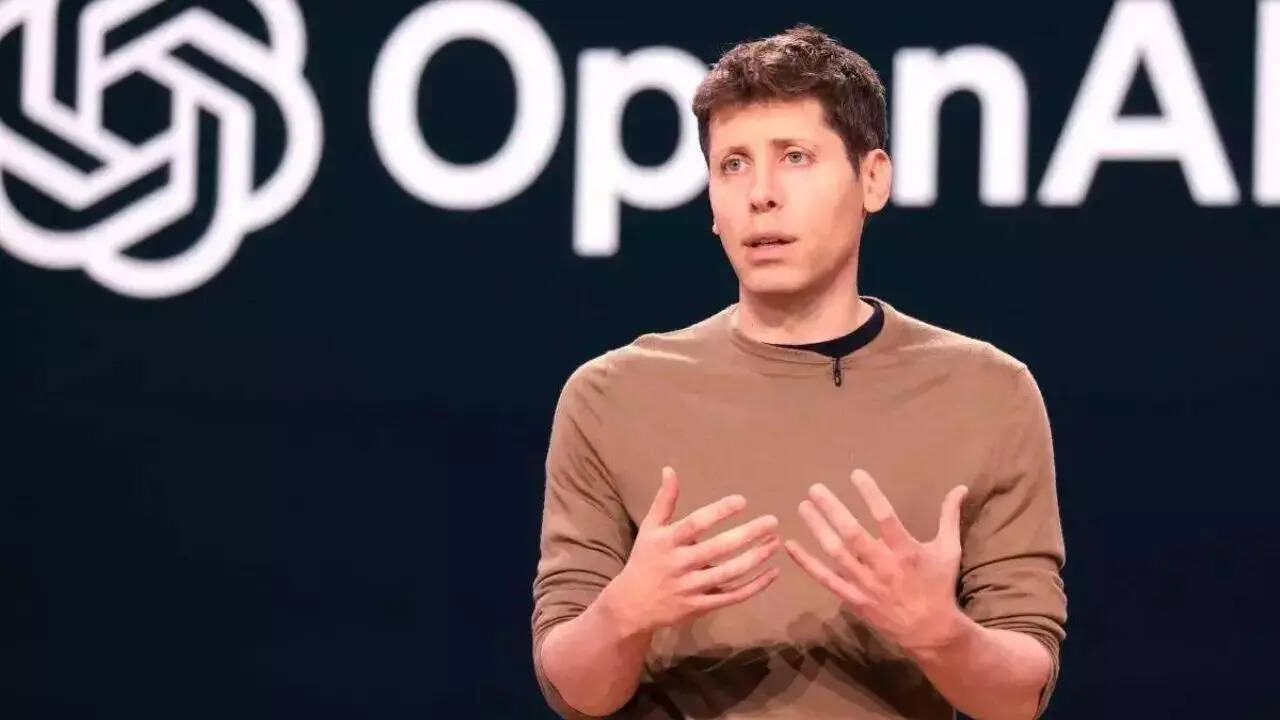
Sam Altman, the chief of OpenAI, has acknowledged that he was mistaken about the pace at which artificial intelligence (AI) would transform the economy. In a recent podcast conversation with David Senra, Altman expressed his surprise at the slow adoption of AI technologies, despite the release of GPT-4 in 2023.
Altman had initially expected a significant disruption in the economy soon after the arrival of GPT-4. However, he now attributes the slow pace of change to economic inertia, where people tend to stick with familiar tools and companies. This inertia, according to Altman, has hindered the rapid adoption of AI technologies.
The OpenAI chief's admission comes after he revised his forecast for the development of Artificial General Intelligence (AGI) to 2030. This revision indicates that even the most optimistic predictions about AI's impact may have been overly ambitious. Altman's comments suggest that the development and implementation of AI technologies are not the only factors determining their impact on the economy.
The release of GPT-4 in 2023 was seen as a significant milestone in the development of AI. However, the expected disruption in the economy has not materialized as quickly as anticipated. Altman's comments highlight the importance of considering the social and economic factors that influence the adoption of new technologies.
The development of AI has been rapid in recent years, with significant advancements in areas such as natural language processing and machine learning. However, the integration of these technologies into the economy has been slower than expected. Altman's admission serves as a reminder that the development of AI is not solely a technical challenge, but also a social and economic one.
As the development of AI continues, it is essential to consider the potential impact on the economy and society. Altman's comments emphasize the need for a more nuanced understanding of the factors that influence the adoption of new technologies. By acknowledging the complexity of this issue, we can work towards a more informed and effective integration of AI into our economy.
The admission by Altman also highlights the challenges faced by companies like OpenAI in predicting the timeline for AI's impact on the economy. The development of AI is a complex and multifaceted process, and predicting its exact timeline is difficult. However, by acknowledging the mistakes of the past, we can work towards a more accurate understanding of the future.
In conclusion, Sam Altman's admission of his mistake in predicting the AI timeline serves as a reminder of the complexity of this issue. The development of AI is not solely a technical challenge, but also a social and economic one. By considering the factors that influence the adoption of new technologies, we can work towards a more informed and effective integration of AI into our economy.
Frequently asked questions
What was Sam Altman's initial expectation for AI's impact on the economy?
He expected significant disruption soon after the release of GPT-4 in 2023.
What does Altman attribute the slow pace of AI adoption to?
Economic inertia, where people tend to stick with familiar tools and companies.