5 Errors That May Trigger Tax Notice Despite AIS & Form 26AS Match
Taxpayers may still receive notices even if AIS and Form 26AS match. Check for these 5 errors.
'%3E%3Crect%20width%3D'96'%20height%3D'96'%20fill%3D'%230B6E4F'%2F%3E%3Ccircle%20cx%3D'30'%20cy%3D'24'%20r%3D'44'%20fill%3D'%23fff'%20opacity%3D'.12'%2F%3E%3Ccircle%20cx%3D'60'%20cy%3D'74'%20r%3D'40'%20fill%3D'%23000'%20opacity%3D'.10'%2F%3E%3C%2Fg%3E%3Cg%20fill%3D'none'%20stroke%3D'%23fff'%20stroke-width%3D'3.2'%20stroke-linecap%3D'round'%20stroke-linejoin%3D'round'%3E%3Cpolyline%20points%3D'31%2C59%2041%2C49%2049%2C54%2063%2C37'%2F%3E%3Cpolyline%20points%3D'55%2C37%2063%2C37%2063%2C45'%2F%3E%3C%2Fg%3E%3C%2Fsvg%3E)
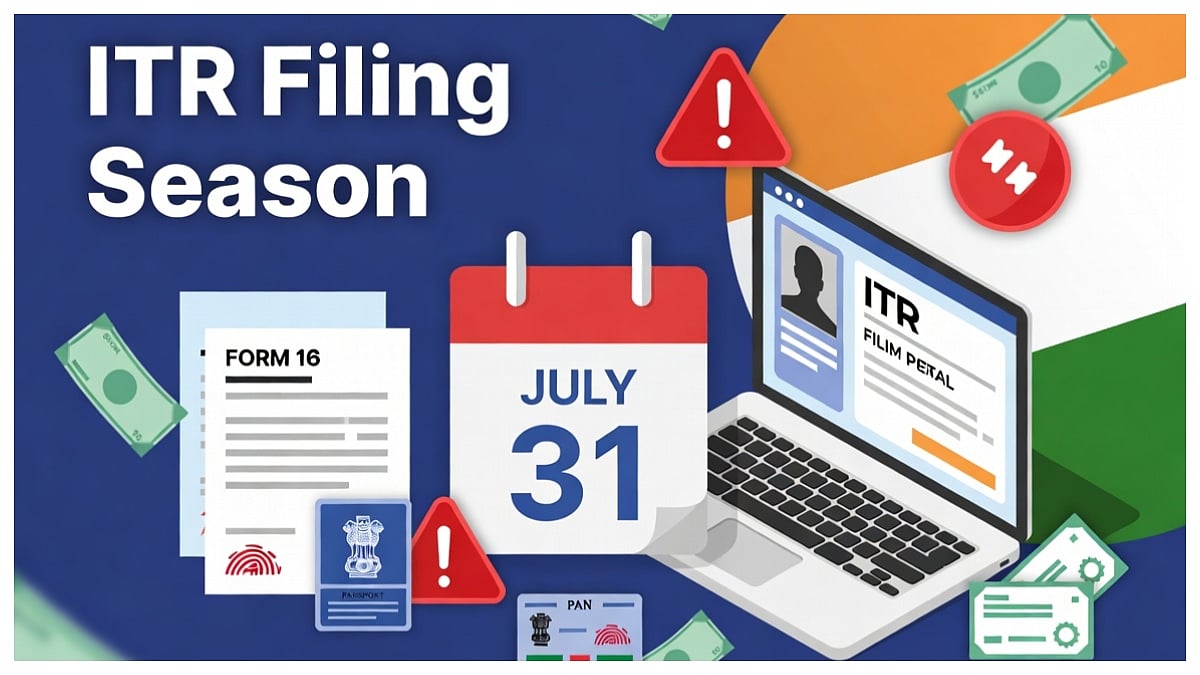
Mumbai taxpayers are advised to thoroughly review their income tax returns (ITR) before filing, as even a match between the Annual Information Statement (AIS) and Form 26AS does not guarantee avoidance of scrutiny.
The Income Tax Department may still send a notice if certain errors are found in the ITR. Tax experts emphasize the importance of checking both AIS and Form 26AS, but also highlight that this does not guarantee a taxpayer will avoid scrutiny.
AIS provides information linked to a PAN, including salary, interest, dividends, shares, mutual funds, and property transactions. Form 26AS, on the other hand, mainly contains details of tax deducted at source (TDS), tax collected at source (TCS), advance tax, and self-assessment tax.
There are five key reasons why a taxpayer may still receive a notice despite a match between AIS and Form 26AS. These include incorrect ITR details, such as missing, incomplete, or wrongly reported salary, interest, dividend income, or capital gains.
Another reason is reporting income under the wrong head, such as showing business income under an incorrect head or reporting capital gains as income from other sources.
Excessive deductions, such as unusually high claims under Section 80C, Section 80D, HRA, home loan interest, or capital gains exemptions, may also be checked closely by the department.
High-value transactions, including large bank deposits, property purchases, stock or mutual fund investments, foreign remittances, or heavy credit card spending, may trigger a notice if they do not match declared income.
Lastly, a difference between the TDS credit claimed in the ITR and the department's records may lead to an adjustment or notice during processing.
To avoid these errors, taxpayers should compare Form 16, salary slips, and bank statements. They should also carefully check capital gains statements, broker reports, and home loan interest certificates.
Investment proofs, tax challans, and records of foreign income or assets should also be reviewed. If a taxpayer receives a notice, they should read it carefully and compare it with the ITR and supporting records.
If the return is correct, they should reply within the deadline with proof. If there is an error, they should correct it by filing a revised return or using the applicable tax process.
In conclusion, while a match between AIS and Form 26AS is important, it is not the only factor in avoiding scrutiny. Taxpayers must ensure that their ITR is accurate and complete to minimize the risk of receiving a notice from the Income Tax Department.
Frequently asked questions
What are the 5 errors that may trigger a tax notice?
The 5 errors are incorrect ITR details, wrong income head, excessive deductions, high-value transactions, and TDS mismatch.
What should I do if I receive a tax notice?
Read the notice carefully, compare it with the ITR and supporting records, and reply within the deadline with proof or correct the error by filing a revised return.