Pune Man Charged Under Maharashtra's New Anti-Conversion Law
A 22-year-old Pune man has been charged, marking the first use of the law. The case involves alleged conversion by fraud.
'%3E%3Crect%20width%3D'96'%20height%3D'96'%20fill%3D'%231A5276'%2F%3E%3Ccircle%20cx%3D'30'%20cy%3D'24'%20r%3D'44'%20fill%3D'%23fff'%20opacity%3D'.12'%2F%3E%3Ccircle%20cx%3D'60'%20cy%3D'74'%20r%3D'40'%20fill%3D'%23000'%20opacity%3D'.10'%2F%3E%3C%2Fg%3E%3Cg%20fill%3D'%23fff'%3E%3Cpath%20d%3D'M31%2041%20L48%2031%20L65%2041%20Z'%2F%3E%3Crect%20x%3D'33'%20y%3D'43'%20width%3D'4'%20height%3D'17'%2F%3E%3Crect%20x%3D'41'%20y%3D'43'%20width%3D'4'%20height%3D'17'%2F%3E%3Crect%20x%3D'51'%20y%3D'43'%20width%3D'4'%20height%3D'17'%2F%3E%3Crect%20x%3D'59'%20y%3D'43'%20width%3D'4'%20height%3D'17'%2F%3E%3Crect%20x%3D'30'%20y%3D'62'%20width%3D'36'%20height%3D'4'%20rx%3D'1'%2F%3E%3C%2Fg%3E%3C%2Fsvg%3E)
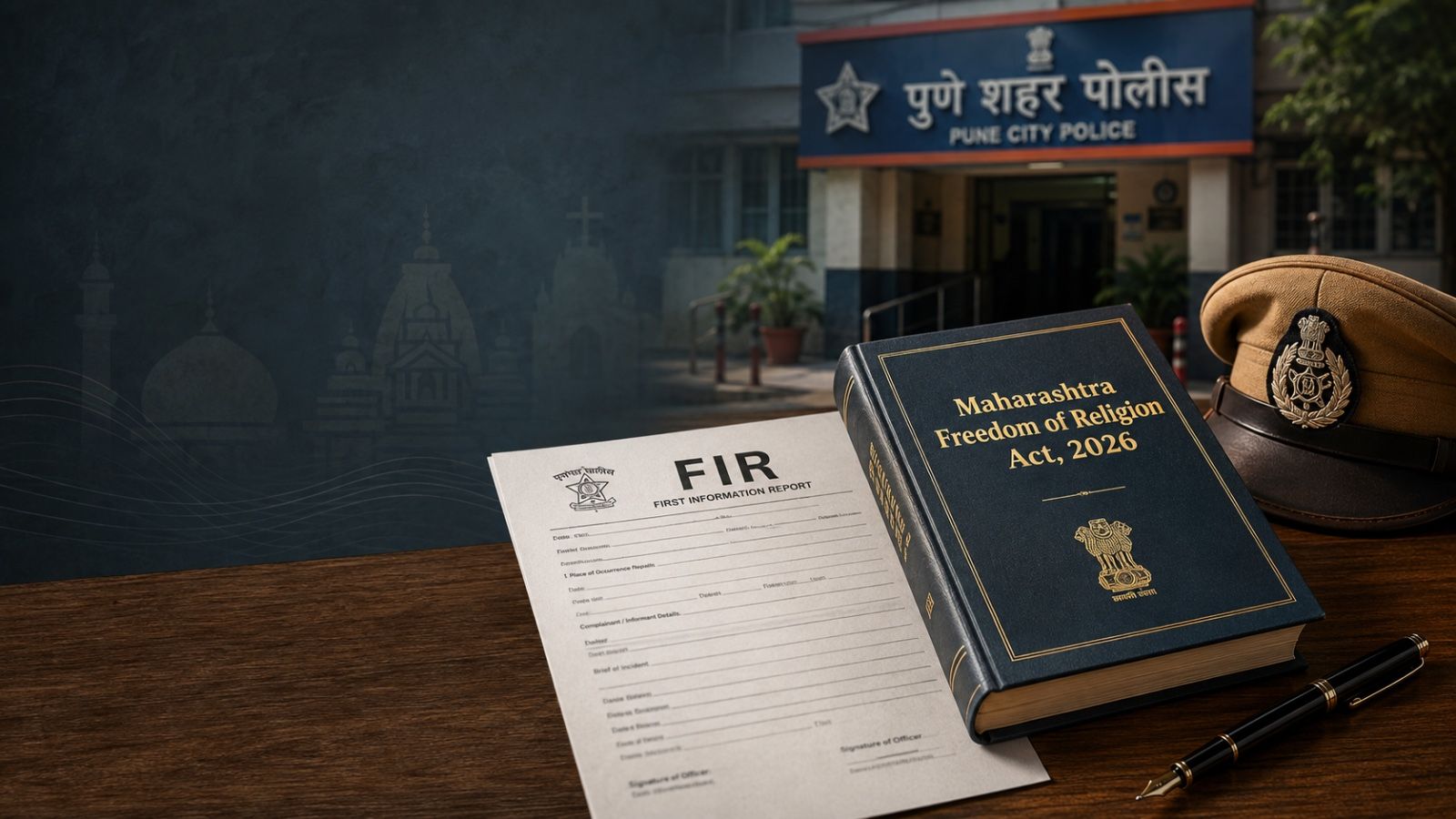
A 22-year-old man from Pune has been charged under Maharashtra's new anti-conversion law, marking the first instance of the law being invoked in the state. The man, whose identity has not been disclosed, is accused of converting a woman to another religion by fraudulent means.
According to the police, the complaint was filed by the woman's parents, who alleged that the man had promised to marry their daughter but instead converted her to another religion. The police have registered a case under Section 3 of the Maharashtra Freedom of Religion Act, 2023, which prohibits conversion by force, allurement, or fraudulent means.
The new law, which came into effect in January 2023, aims to prevent forced conversions and provides for punishment of up to five years in prison and a fine of up to Rs 50,000 for those found guilty. The law also requires individuals to provide prior notice to the district authorities before converting to another religion.
The case has sparked debate about the implementation of the law, with some arguing that it infringes upon individual freedom of choice. However, the government has maintained that the law is necessary to prevent forced conversions and protect vulnerable individuals.
Maharashtra is one of several states in India that have enacted anti-conversion laws, citing concerns about forced conversions and the need to protect religious freedom. The laws have been criticized by some as being discriminatory and targeting certain religious communities.
The Pune case is being closely watched, as it sets a precedent for the implementation of the law in Maharashtra. The police are investigating the allegations and have arrested the accused man. The case will be heard in court, where the accused will have the opportunity to defend himself against the charges.
The Maharashtra Freedom of Religion Act, 2023, is part of a broader trend of states enacting laws to regulate religious conversions. The laws have been controversial, with some arguing that they are necessary to prevent forced conversions, while others see them as an attempt to restrict individual freedom of choice.
In recent years, there have been several instances of individuals being accused of forced conversions in Maharashtra. The new law aims to provide a framework for dealing with such cases and to prevent vulnerable individuals from being exploited.
The case of the 22-year-old Pune man is a significant one, as it marks the first use of the law in Maharashtra. It will be important to watch how the case unfolds and how the law is implemented in the state.
The implementation of the law has significant implications for individual freedom of choice and the rights of vulnerable individuals. While the government has argued that the law is necessary to prevent forced conversions, others have raised concerns about its potential impact on religious minorities.
In conclusion, the charging of the 22-year-old Pune man under Maharashtra's new anti-conversion law marks an important development in the state's efforts to regulate religious conversions. The case will be closely watched, and its outcome will have significant implications for the implementation of the law in Maharashtra.
Frequently asked questions
What is the Maharashtra Freedom of Religion Act, 2023?
The Maharashtra Freedom of Religion Act, 2023, is a law that prohibits conversion by force, allurement, or fraudulent means and provides for punishment of up to five years in prison and a fine of up to Rs 50,000 for those found guilty.
What is the significance of the Pune case?
The Pune case marks the first use of the Maharashtra Freedom of Religion Act, 2023, and sets a precedent for the implementation of the law in the state.