NASA Explodes Water Tank 65 Miles Above Earth
NASA's 1962 experiment studied Earth's atmosphere. The test was part of early space travel research.
'%3E%3Crect%20width%3D'96'%20height%3D'96'%20fill%3D'%23B3261E'%2F%3E%3Ccircle%20cx%3D'30'%20cy%3D'24'%20r%3D'44'%20fill%3D'%23fff'%20opacity%3D'.12'%2F%3E%3Ccircle%20cx%3D'60'%20cy%3D'74'%20r%3D'40'%20fill%3D'%23000'%20opacity%3D'.10'%2F%3E%3C%2Fg%3E%3Cg%20fill%3D'%23fff'%3E%3Crect%20x%3D'29'%20y%3D'49'%20width%3D'8'%20height%3D'19'%20rx%3D'1'%2F%3E%3Crect%20x%3D'39'%20y%3D'40'%20width%3D'9'%20height%3D'28'%20rx%3D'1'%2F%3E%3Crect%20x%3D'50'%20y%3D'45'%20width%3D'8'%20height%3D'23'%20rx%3D'1'%2F%3E%3Crect%20x%3D'60'%20y%3D'53'%20width%3D'7'%20height%3D'15'%20rx%3D'1'%2F%3E%3Crect%20x%3D'41'%20y%3D'34'%20width%3D'5'%20height%3D'6'%2F%3E%3C%2Fg%3E%3C%2Fsvg%3E)
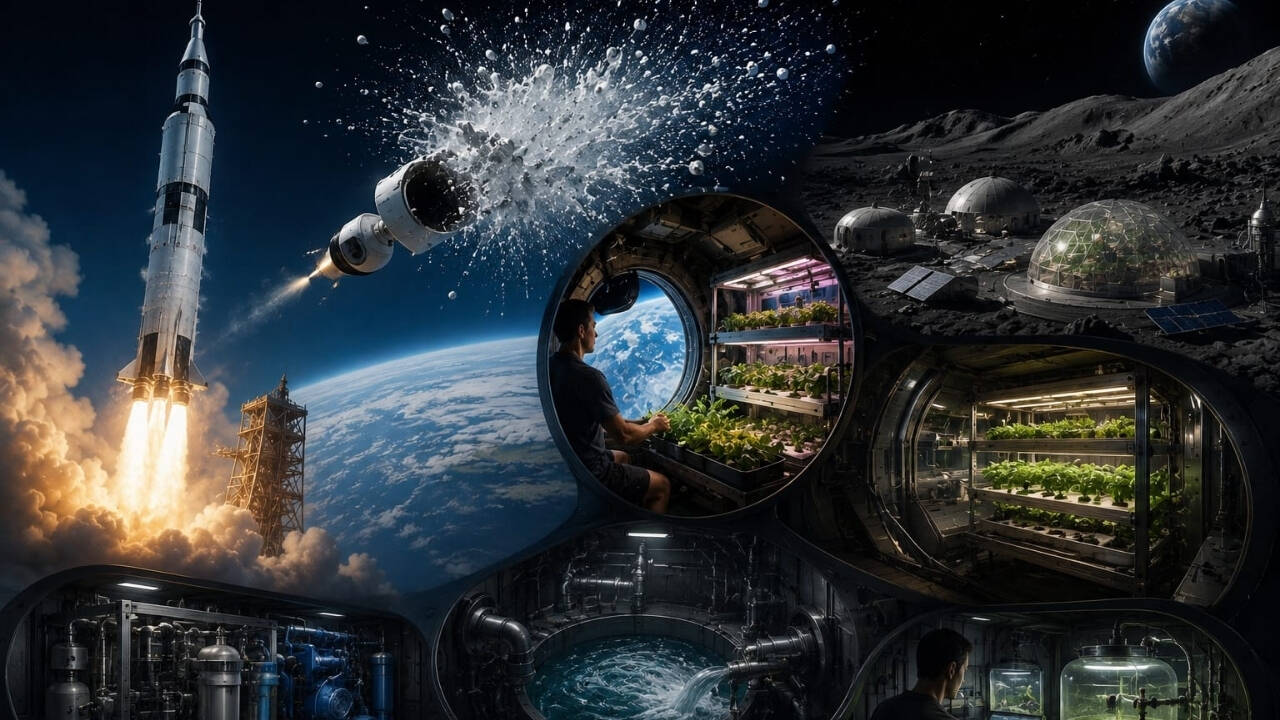
On a historic day in 1962, NASA conducted an unprecedented experiment, blowing up a water tank 65 miles above the Earth's surface. This bold move was part of the space agency's efforts to study the Earth's atmosphere and understand its behavior.
The experiment was a crucial step in NASA's quest to explore the possibilities of extended space travel. At the time, scientists were keen to develop biological life-support systems that could sustain astronauts on long-duration missions.
Researchers were particularly interested in recycling resources and utilizing living organisms to process waste and provide essential resources for space missions. The idea was to create a self-sustaining ecosystem that could support human life beyond Earth.
This pioneering work involved investigating the potential of plants and microorganisms to play a critical role in space exploration. By harnessing the power of these organisms, scientists hoped to develop innovative solutions for air, water, and food production in space.
The 1962 water tank experiment was a significant milestone in this journey, providing valuable insights into the Earth's atmosphere and its interaction with space. The data collected from this experiment helped lay the groundwork for future lunar and Martian settlements.
Today, the concept of sustainable living beyond Earth remains a major scientific and engineering challenge. As space agencies and private companies push the boundaries of space exploration, the need for reliable and self-sustaining life-support systems has become more pressing than ever.
The early work done by NASA in the 1960s has paved the way for modern researchers to develop innovative solutions for long-duration space missions. From advanced air recycling systems to cutting-edge hydroponics, the possibilities for sustainable space travel are vast and exciting.
As humans continue to venture further into space, the importance of understanding the Earth's atmosphere and developing sustainable life-support systems cannot be overstated. The 1962 water tank experiment may seem like a distant memory, but its impact on the field of space exploration is still being felt today.
Frequently asked questions
Why did NASA blow up a water tank in 1962?
NASA conducted the experiment to study the Earth's atmosphere and understand its behavior.
What was the significance of the 1962 water tank experiment?
The experiment laid the groundwork for future lunar and Martian settlements and paved the way for modern researchers to develop innovative solutions for long-duration space missions.